The Westerners Brand Book #24 (2020)
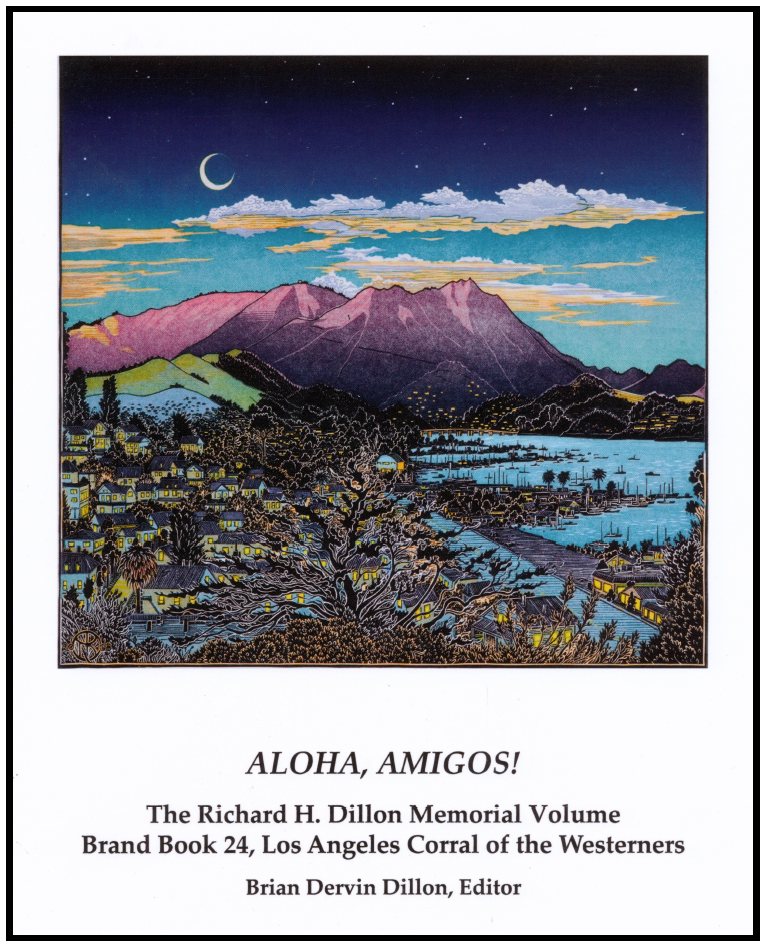
Aloha Amigos!
Brian Dervin Dillon, Editor
Synopsis
Los Angeles Corral Brand Book 24, Aloha, Amigos! Is the Richard H. Dillon Memorial Volume. Dick Dillon (1924-2016) was a world-famous western historian, librarian, teacher, and public speaker. He was the single most productive historical writer on California and the American West, who published dozens of full-length books, hundreds of scholarly journal and popular magazine articles, and thousands of book reviews over a longer period of time (82 years) than any other writer. Richard H. Dillon was a long-time member of both the Los Angeles and the San Francisco Corrals of Westerners International, and was made a W.I. Living Legend in 2003.
Aloha Amigos! Won the Westerner’s International Best Book Award in 2021. It features the first ever biography of Richard H. Dillon, culture-historical studies and paeans by his friends, colleagues, and admirers, and the first comprehensive bibliography of his published works. Contributors from four different Westerners International corrals include Will Bagley, Peter Blodgett, John Boessenecker, Matthew Boxt, Phil Brigandi, Robert Chandler, David Dary, James Delgado, Brian D. Dillon, Lynn Downey, Abraham Hoffman, Tommy Killion, Gary Kurutz, Valerie Sherer Mathes, James Shuttleworth, Kevin Starr, and Francis J. Weber. Brian Dervin Dillon, editor; hardbound, illustrated, 588 pages, 2020. To order: please use the multi-volume order form following this notice.
Contents
-
- Foreword — Kevin Starr
I: Biographical
-
- Duke Lopez in Sausalito (1924-1943) — Brian Dervin Dillon
- The Perfesser with his Uncle Samuel (1943-1946) — Brian Dervin Dillon
- Sutro Dick, the Kid in the Candy Store (1946-1959) — Brian Dervin Dillon
- Dick Dillon, the Literary Alchemist (1959-1979) — Brian Dervin Dillon
- Aloha, Amigos! the Latest Word from RHD (1979-2016) — Brian Dervin Dillon
- RHD Biographical Notes, Bibliography, Appendices — Brian Dervin Dillon
II: Culture-Historical Contributions
-
- Late Prehistory at La Venta, Tabasco, Mexico — Matthew A. Boxt
- California’s Twelve “Apostles” — Francis J. Weber
- Later Travel on the Southern Emigrant Trail — Phil Brigandi
- Black Rights and Squelched Secessionists in California — Robert J. Chandler
- San Francisco’s Old Ship Saloon — James P. Delgado
- Helen Hillyer Brown, the Comstock and Beyond — Lynn Downey
- The Pacific Mail Steamship Line — James Shuttleworth
- The Women’s National Indian Association in Northern California — Valerie Sherer Mathes
III: Paeans
-
- Historian, Librarian, and Biblio-Friend — Gary Turner and Tami Turner-Revel
- Postcards from Dick Dillon — David Dary
- Dillonography — John Boessenecker
- Richard H. Dillon, Book Reviewer — Abraham Hoffman
- Richard H. Dillon as Documentary Editor — Peter J. Blodgett
- Historian’s Historian — Will Bagley
IV: Dick Dillon’s Literary Legacy
-
- Richard H. Dillon’s Published Works — Brian Dervin Dillon
V: About the ContributorsVI: The Los Angeles Corral
Roundup: September 14 2022
Westerners-September-14-2022-Roundup-Flyer
Roundup Synopsis
Taken From Branding Iron 308 Fall 2022.
September’s Roundup saw the L.A. Corral welcome guest speaker George Geary as he cooked up a delectable feast for the palette of our nostalgia, guiding us on a trip down one of California’s best memory lanes. A celebrity chef with experience ranging from the kitchens of Disneyland to sets of “The Golden Girls”, Mr. Geary talked us through some of the highlights of his book, Made in California: the California-Born Burger Joints, Diners, Fast Food & Restaurants that Changed America. The book, available on Amazon (ISBN: 1945551917), features a plethora of California’s culinary quick-stop favorites, ranging from Bob’s Big Boy to Peet’s Coffee.
The theme of Mr. Geary’s lecture centered on the evolution, including name and location changes, of some of California’s most beloved casual eateries. One notable example was his charming anecdote about the early days of the McDonald’s restaurant. The McDonald brothers cut their teeth in the movie industry, and after not having much success in film, decided to purchase a theater in Glendora. When that venture went belly up, the brothers were left with a load of usherette uniforms. Rather than see their stock go to waste, they started a drive-in restaurant and clad some lovely carhops in the surplus duds. However, as Mr. Geary put it, “The boys liked the carhops too much… so they made the guys get out of their cars and order the food from the window.” Thus McDonald’s, originally called McDonald Brothers BBQ, was born.
Perhaps of particular interest to those of us familiar with the hot rods that descend on Burbank each week to show off their chrome at Bob’s Big Boy, is the somewhat unique story of that establishment’s early franchise model. Bob’s Pantry, as it was originally known, did not franchise its restaurants directly, but rather, it franchised the rights to its burger recipe. So, anyone among us familiar with the Eastern U.S. chains of Shoney’s or Frisch’s Big Boy now know why the burgers slung in those joints are so similar to those served at our beloved Burbank, California Bob’s… they’re actually cousins! George also told us about a similar situation with Dinah’s Family Restaurant near LAX. Apparently, Kentucky Fried Chicken once employed a similar model in franchising their product, and that’s why, long ago, Dinah’s had to pay the Colonel 4¢ for every chicken they sold.
George Geary deserves our thanks for his guided tour of California’s culinary heritage. His talk reminds us that these tasty treasures are fading fast from our California landscape. A fortunate few have been turned into landmarks and historic sites, but far too many are wasting away, awaiting the wrecking ball of progress. There are few things able to so viscerally connect us to our past as the old haunts of our youth. So, grab a copy of Made in California, call up your favorite guy or gal, hop in the old lead sled, and get out there to see these pieces of history before they’re all gone. Bon Appetit!
— Alan Griffin
Photos from the Roundup
To be posted soon!
Roundup: August 10 2022
august2022
Roundup Synopsis
Taken From Branding Iron 307 Summer 2022.
In August, the Westerners welcomed Jillian Moore to the Corral. The Wyoming native, and Ph.D. candidate in English at Duquesne University, spoke of subjects related to her forthcoming dissertation. Her talk, entitled “Selling the Image of ‘The West’: Frontier Economies,” challenged us to take stock of what we enjoy about the American West, to ponder the reasons for our interest, and to take care to be appreciative of the history and culture of its Native inhabitants, rather than appropriative. Speaking on such topics in front of a body founded almost solely on appreciation of the West posed some danger, but Ms. Moore rather deftly navigated those choppy waters to enlighten where others may have admonished. If we were to distill the thesis of her discussion into a single phrase, perhaps the most apt would be, “Give credit where credit is due.”
Perhaps the most impactful section of the presentation featured a historic, Blackfoot-made capote, juxtaposed against a modern, Native-”inspired” coat from the Pendleton company. Ms. Moore highlighted the specific elements of the historic garment, illustrating its connection to a specific time, place, and ethnic group. No such specificity was present in the Pendleton coat, as it was simply a mishmash of Native-like designs in a stereotypically Southwestern color scheme. This comparison served to drive home the point that we should be wary of objects and ideas formed from disparate bits of the art and history of marginalized groups, like America’s indigenous communities, and forcing them through a cultural meat-grinder to arrive at something more readily digestible to consumers unfamiliar with the originals.
In the question-and-answer section following the main presentation, Ms. Moore reiterated that the intention of efforts to mitigate this type of co-option is not to demonize those who occasionally stray from appreciation into appropriation (“Let he who is without sin,” etc.), but rather to properly attribute artifacts and ideas to the cultures that bore them. Most scholars would never use a source in their research without citing it. The same thinking could be applied to consumers in the context of the art and artifacts of our indigenous neighbors. It is possible, and likely preferable, to spend our money on goods made by the people whose culture such products represent. Or, at the very least, we can give credit where credit is due.
— Alan Griffin
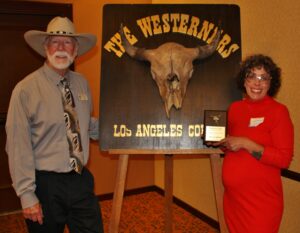
Speaker Jillian Moore and Sheriff Pete Fries
Roundup: July 13 2022
july22_roundup
Roundup Synopsis
July’s Roundup had Denny Thompson take us out on a history of Dodger Stadium. We enjoyed complimentary peanuts and Cracker Jack, but it was hard to root, root, root for the home team as Denny recounted the murky circumstances surrounding the Dodgers’ acquisition of the stadium site—the once vibrant community of Chavez Ravine. City councilman Julián Chávez purchased the rugged ravine in 1844. From its beginnings, Chavez Ravine was a refuge for many peoples. In the 1850s, it hosted a “Pest House” for Chinese and Mexican smallpox victims. Jewish-Americans settled the ravine in the 1860s, but were forced to relocate their cemetery to make room for oil derricks. By 1900, the area was largely Latino, closely knit, and civically engaged. Denny’s own father and grandparents lived in the Ravine at this time, between 1907 and 1922, before winning a dairy farm in Santa Clarita in a poker game. Chavez Ravine residents won a victory against the oil companies in 1926, when the city council banned industry there. However, the community could not resist the next challenges to its integrity. After WW2, city authorities designated Chavez Ravine a “blighted” neighborhood in need of redevelopment. In 1949, the new Los Angeles Housing Authority secured federal funding to build a public housing project on the site. Utilizing eminent domain, the city purchased the land for $10,300 per property. Homeowners felt pressured to accept this price, which dropped if they held out. As consolation, all former residents were promised preferential placement in the proposed housing project upon completion. Yet by the early 1950s, a specter haunted Los Angeles—the specter of communism. At least, that is how it was seen through the redtinted lens of McCarthyite paranoia. Several prominent “Citizens Against Socialistic Housing,” including then-actor Ronald Reagan, successfully pushed for a referendum that killed the Chavez Ravine housing project in 1952. However, Los Angeles had signed a housing contract with the U.S. government, and in 1954 the Feds only agreed to resell the property to the city for $1.3 million on condition the land be used for “a public purpose.” For 22-year-old city councilwoman Roz Wyman, that purpose was obvious. Los Angeles was a “Big League town” without a Big League baseball team, and needed one badly. Fortuitously for her, the Brooklyn Dodgers were an A-grade team with a D-grade home stadium. Wyman encouraged the Dodgers to move to L.A. in 1957, and team owner Walter O’Malley purchased Chavez Ravine from the city for $494,000 in order to build a new stadium. A 1958 ballot initiative to block the purchase narrowly failed, partly due to wording that confused voters. Sheriffs forcibly evicted the last remaining ten families from Chavez Ravine on May 9th, 1959, a day called “Black Friday” by some. Photos of the Archiga family being dragged out of their home made national headlines, but public sympathy diminished with the revelation that the family owned other properties elsewhere in L.A. Construction of Dodger Stadium was completed in 1962, to the tune of $20 million. The human cost was the exile of a thousand families from Chavez Ravine, the result of broken promises. No alternative public housing project was ever offered. These families were scattered all across Los Angeles, with many members having to split up as dictated by the availability of jobs and housing. The Dodgers, meanwhile, took two decades to find acceptance among Latino Angeleños, but the recruiting of Mexican southpaw pitcher Fernando Valenzuela finally broke the ice in 1980. The community of Chavez Ravine is now a fading memory, but their story is a timeless one concerning questions of eminent domain, public housing, and “public purpose” private property. Many thanks to Denny Thompson for this fascinating discussion. — John Dillon
Photos from the Roundup
TBD
Fandango Store
Fandango Form & Purchase
Instructions
To Inform our Registrar & Treasurer
1. Fill out the form below, review information, and click Submit below. (If you are planning on bringing more than four guests, please submit the form again with the additional guest’s names.) When you click the Submit button, this will confirm your reservation. This information will be sent via email to you, to our Treasurer and to our Registrar.
To pay & complete your purchase:
2. Click Buy Now below. You will be taken to PayPal. The following steps apply to the PayPal checkout process.
3. Enter total quantity of meals being purchased/guests attending under Your order summary then click Update.
4. If you have a PayPal account: under Choose a way to pay, you can enter your PayPal account information.
If you do not have a PayPal account: under Choose a way to pay, select Pay with debit or credit card, or Bill Me Later link and enter your billing information.
5. After entering your billing or account information on PayPal, click Pay. This will complete your purchase.
Roundup: May 11 2022
Final-Westerners-May-11-2022-Roundup-Flyer
Roundup Synopsis
Paul Clark took the reins in May, to present us with the exhilarating tale he called “The Rise of the Gasoline Cowboys: Outdoor Motorcycle Recreation in PreWWII California.” A rough and tough subject like this was sure to please those in attendance, just as it must have pleased Ernest Hemingway, to whom the quote which Paul selected is attributed, “There are only three sports: bullfighting, motor racing, and mountaineering; all the rest are merely games.” Let’s get on with the sport, then. Paul described the first motorcycle—and he used the term loosely—as a two-wheeled, steam-powered monstrosity, the painting of which showed two stokers following closely behind to keep it fired; hardly reasonable, but the idea was there. As gasoline engines matured, the concept was revived, this time as a three-wheeled contraption resembling early wheelchairs. The shape we have come to expect was introduced around the turn of the century, and Harley-Davidson and Indian quickly became the premier U.S. brands. In the early years, the motorcycle’s popularity followed its practicality. As it became more reliable and affordable, it became more widespread, with numbers in Los Angeles expanding from a few hundred in 1905, to 3000 in 1910, to 7500 by 1917. The reason for the popularity of L.A. as a haven for enthusiasts was the quality of roads and the quality of the weather; you can get a much better return on investment if you are able to ride year-round, as you can in Southern California. Motorcycle clubs sprang up throughout California starting with the Indian Motocycle Club in Los Angeles in 1904. So new was the fad, that they hadn’t even settled on weather they rode “motor-cycles” or “moto-cycles.” These early clubs were keen to be seen as respectable types, which meant that their members showed up to events in their Sunday best and invited photographers and newsmen to document their fine behavior. The publicity seemed to help with popular acceptance of the new machines. What helped even more were organized rallies exhibiting these bikes’ capabilities. Races on dirt and banked wooden ovals, hill climbs, and desert crossings wowed crowds, and newsreels captured the imagination of the region. Hill climbs were the most popular events, with the Capistrano Hill climb drawing an estimated thirty to fifty-thousand attendees by the early 1920s. While these daredevils were risking life and limb storming up hills, the L.A. Motorcycle Club organized “picnic runs” for its members to cruise sedately on the weekends. Endurance racing became more popular as the cycles improved to the point where they could actually endure. With the onset of Prohibition, an L.A. to Tijuana race was organized and billed as a race to a place “where the bar-rigs are still saturated with stronger stuff than grape juice.” 1920 saw the start of the iconic Big Bear “Hare and Hound” Annual Classic, a midnight run on New Year’s Day that ran until 1960. With the onset of WWII, the motorcycle community packed up and went to war. When they returned, the machines they rode were changing, and so was the country. Motorcycle riding was no longer as respectable as it had been prior to the war, and the culture surrounding it changed drastically from its original form. Like with so much else, the Second World War had forever altered part of the American lifestyle. — Alan Griffin
Photos from the Roundup
TBD
Roundup: April 13 2022
Westerners-Aug-2023-Roundup-1
Roundup Synopsis
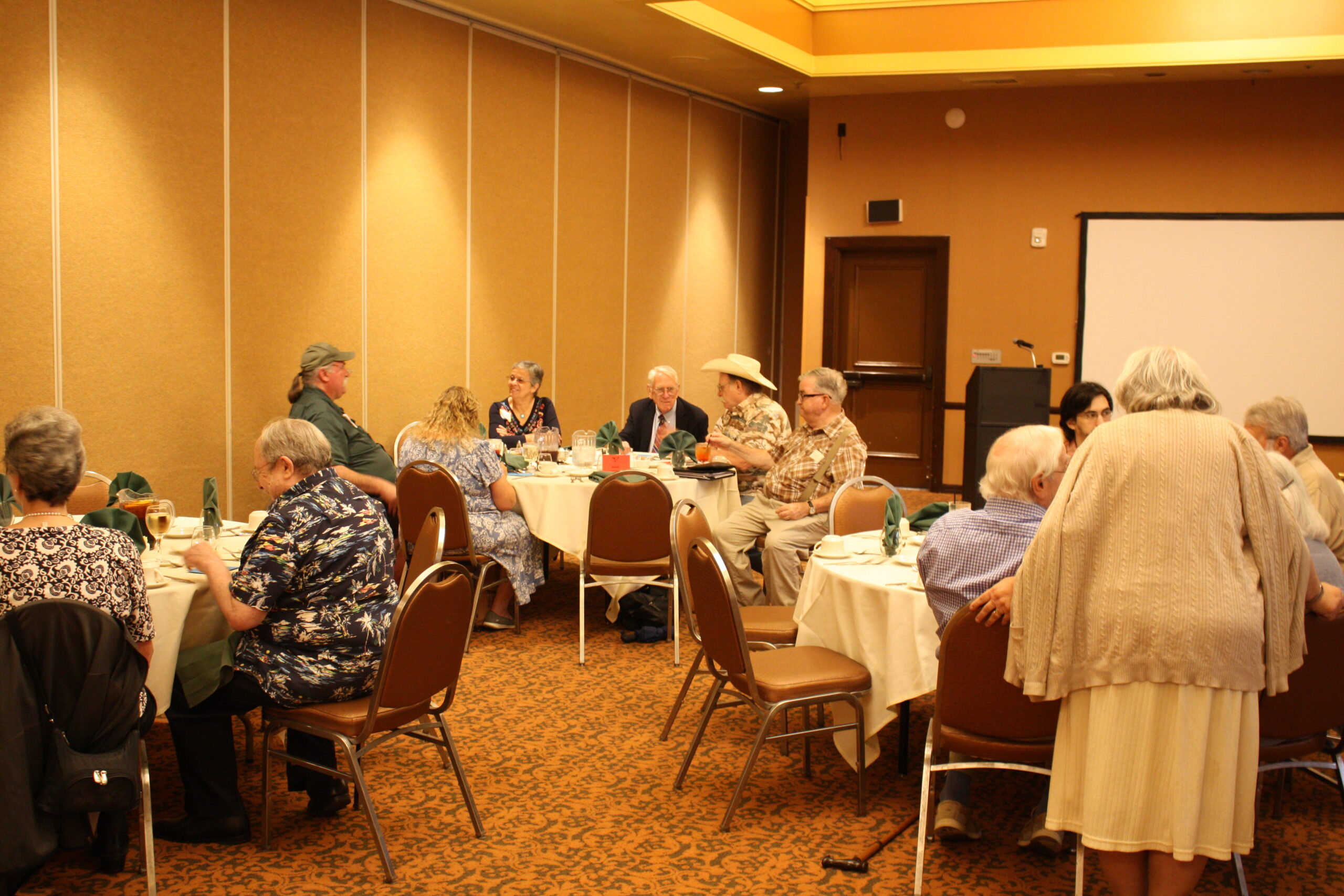
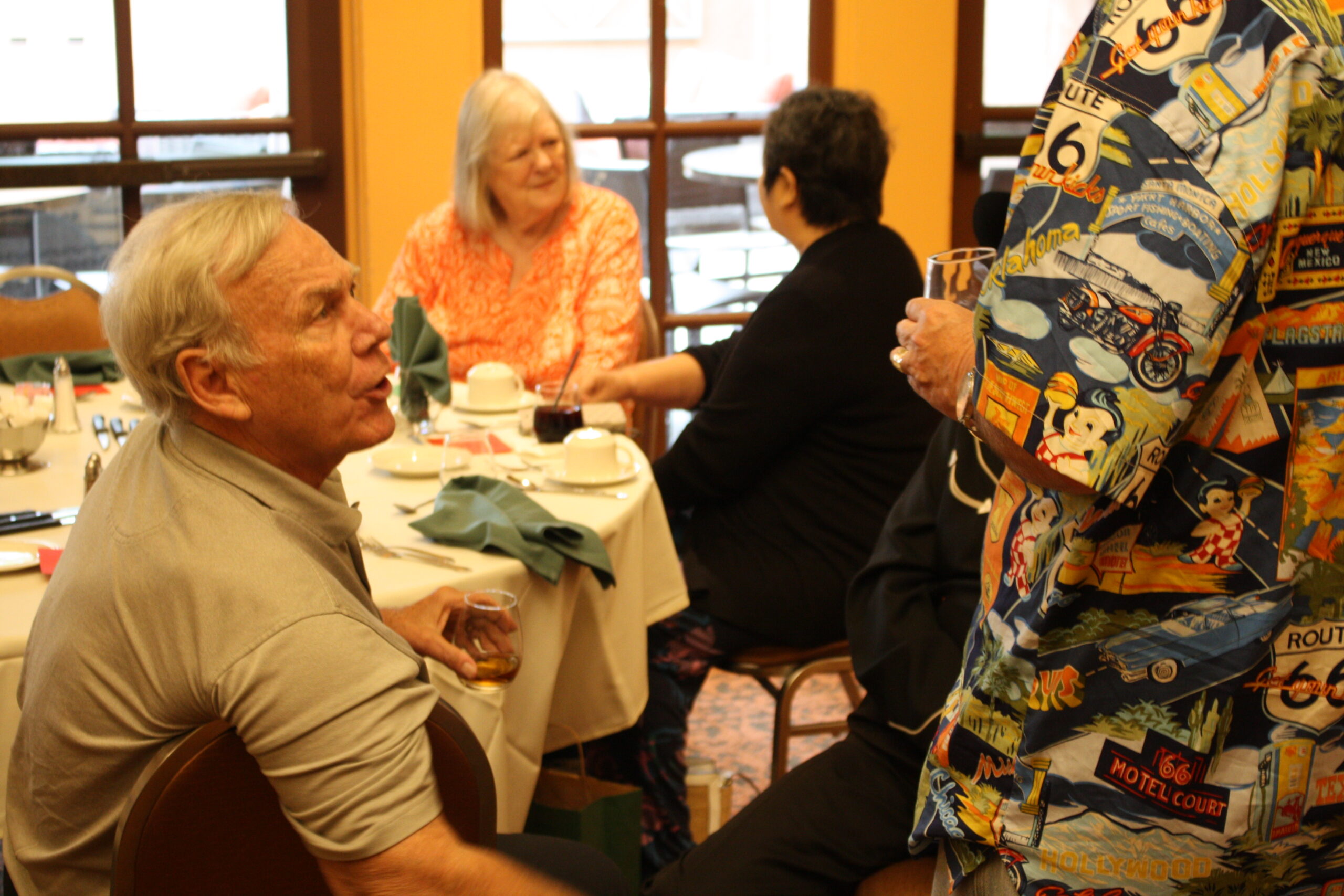
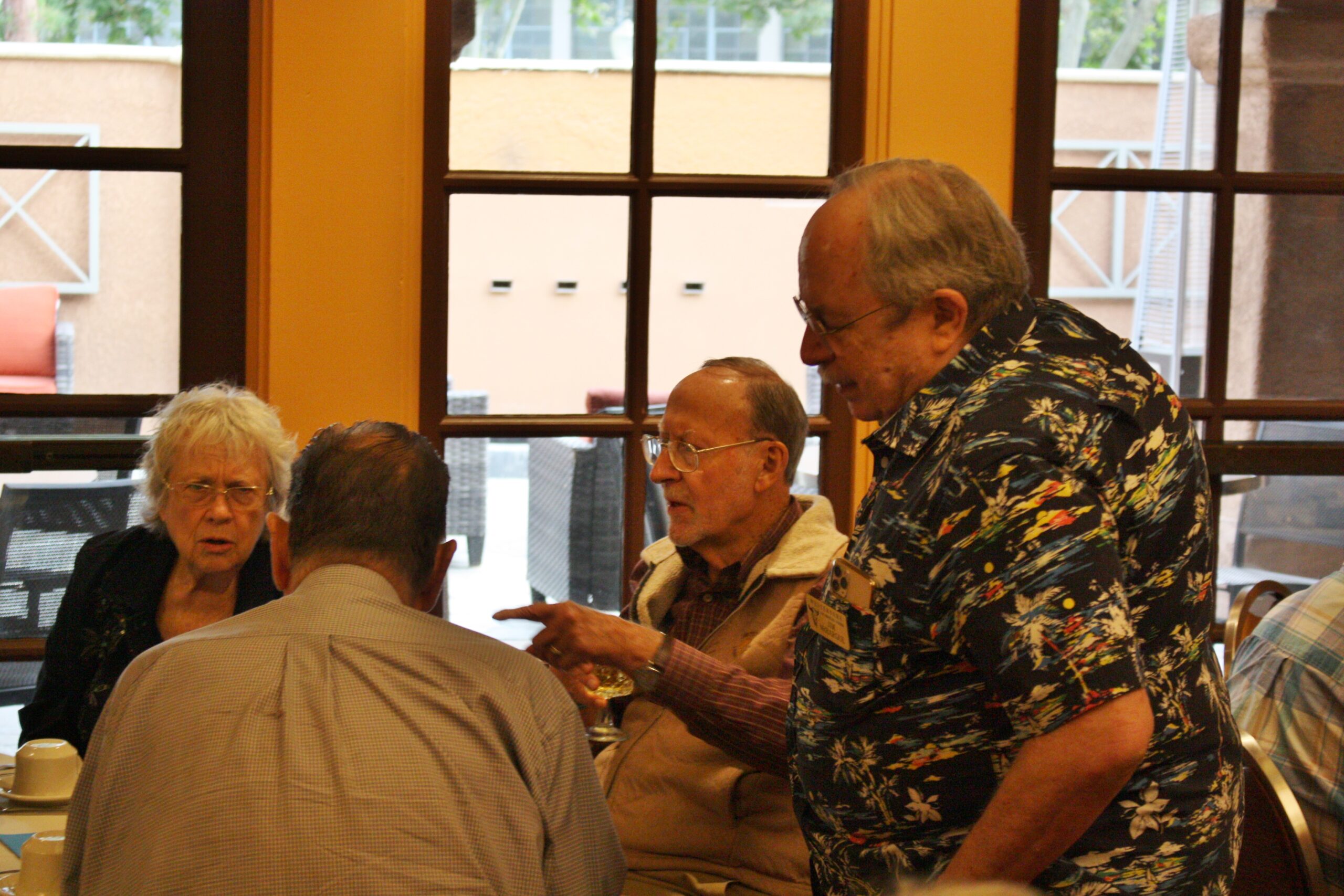
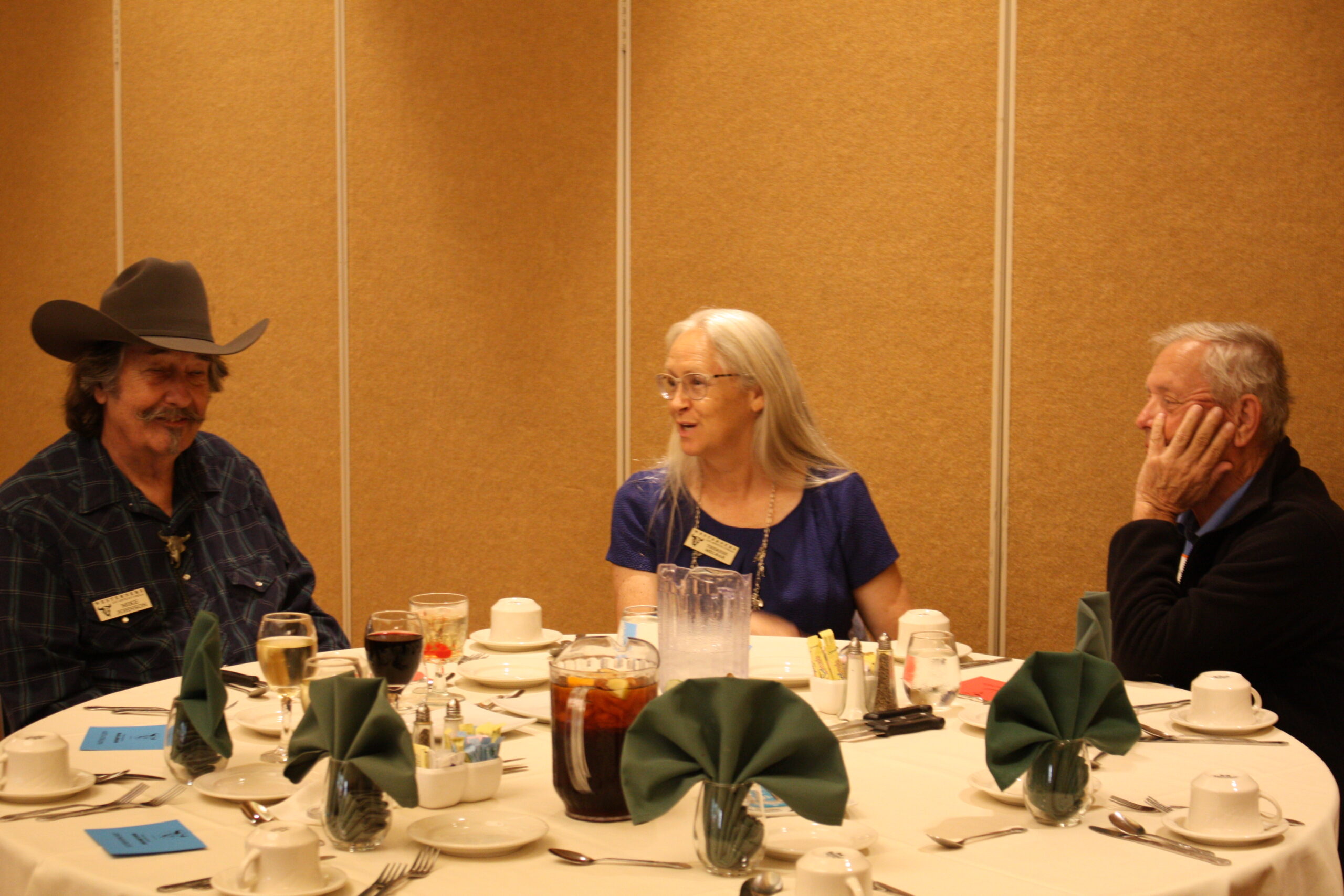
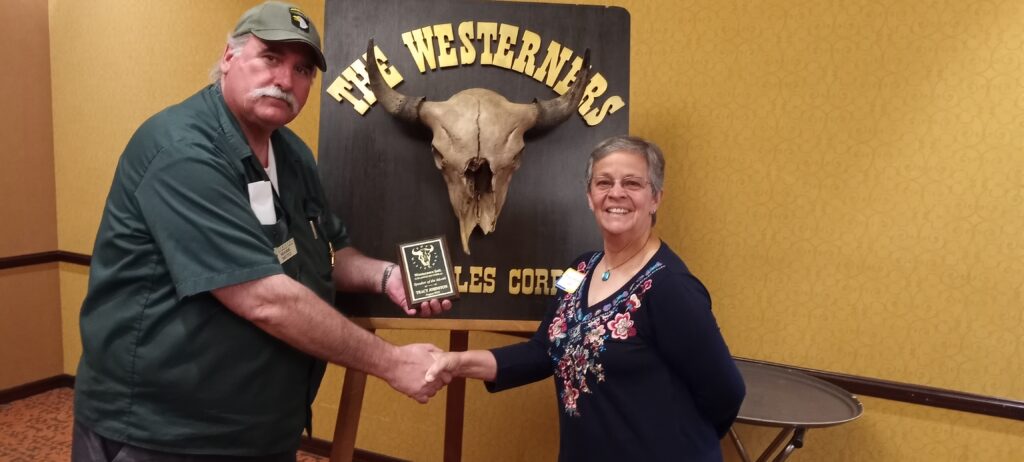
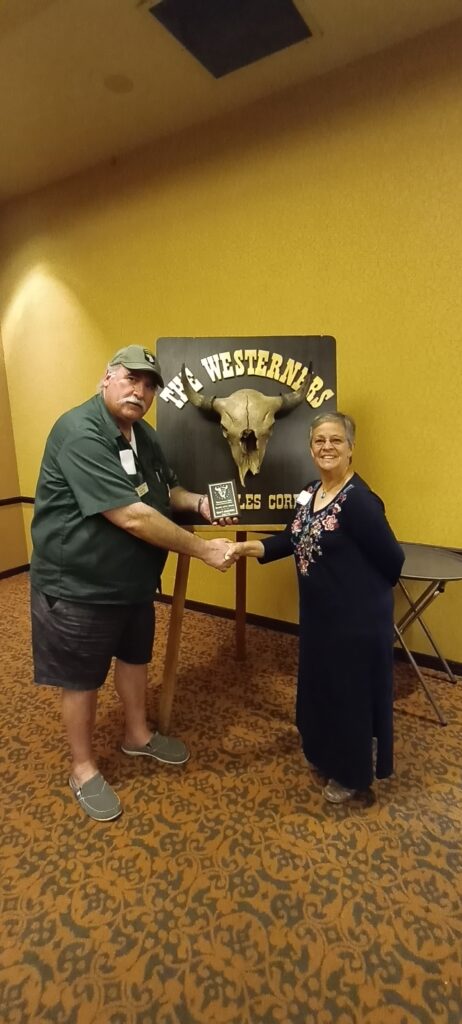
April’s Roundup saw the corral miss out, yet again, on the long-awaited “Postcards from Mecca” presentation by Steve Lech (don’t worry, it’s coming soon). Johnny-onthe-spot, however, was Brian-on-the-spot, as Dr. Dillon regaled us with his tale of an American hero, Navy Admiral Fightin’ Bob Evans. As Brian told it, it was Evans, not Jesse James nor Billy the Kid, who was the most famed pistolero 120 years ago, and we sure found out why. Fightin’ Bob’s story began in Virginia, where he was born Robley Dunglison Evans, in 1846. After being expelled from school for fighting at age thirteen, Bob’s uncle suggested a career in the Navy. Unfortunately, both Naval Academy seats allotted to Virginia were already filled. Bob agreed to move to Utah, as it was the only territory with allotments available. It was to be a fateful decision. Prior to the Transcontinental Railroad, wagon trains were the name of the game, and so it was with the party that Evans accompanied out west. Wagon trains, however, were vulnerable to Indian raids. Just such an attack befell Evans’ train upon leaving Ft. Laramie, after a wagon got mired in the mud. Thirteen-year-old Evans killed a man in his escape, made it back to the fort, and set out again with just a single wagon. His party was attacked again and Bob was shot in the ankle by an arrow, his foot pinned to the mule he was riding. Eventually, he made it to Salt Lake City where he established residence. Young Evans entered the Naval Academy in 1860. He was trained aboard the USS Constitution, “Old Ironsides.” The Civil War interrupted his tutelage, however, and half his class left to join the Confederacy. Evans stayed true to the Union and ended up fighting his own brother in the rebel navy. As a junior officer taking part in the assault on the “Rebel Gibraltar,” Ft. Fisher, North Carolina, Evans led an assault party of sixty-two sailors and marines. Horribly outgunned and isolated on the beach, his assault force was cut down, with 58 men killed or wounded. Evans was one of only eight men to breach the rebel fort, although he was shot four times for his efforts. He killed the sniper who had wounded him with a miraculous pistol shot from his Whitney .36 Navy revolver. Bob was left for dead on the beach, but was finally rescued and taken to a hospital. He threatened to shoot anyone trying to amputate his legs, so he kept them, along with two bullets that couldn’t be removed. His wounds forced him to use two canes for the rest of his life. Evans moved quickly through the ranks thereafter, taking postings throughout the world, and eventually commanded a gunboat, the USS Yorktown. It was on the Yorktown that he earned his appellation. His refusal to back down during a tense standoff with Chilean warships left him known as “Fightin’ Bob” ever after. After taking a leading role in the largest naval battle of the Spanish-American War, Bob reached the pinnacle of his career when he was given command of the Great White Fleet. Under Admiral Evans’ command, the the Atlantic and Pacific Fleets were combined for the first time in May 1908, in San Francisco Bay. This achievement marked a turning point for San Francisco in its postearthquake rebuilding, and also a bridging of the gulf between America’s East and West. If you’d care to read more about this American hero on both land and sea, you should pick up his autobiographies, A Sailor’s Log and An Admiral’s Log. I’m sure I’m not alone in my anticipation for what Brian Dillon has in store the next time someone calls in sick and he’s called to fill in again. — Alan Griffin
Photos from the Roundup
Roundup: March 9, 2022
March 2022 Roundup Flyer
Roundup Synopsis
Taken From Branding Iron 306 Spring 2022.
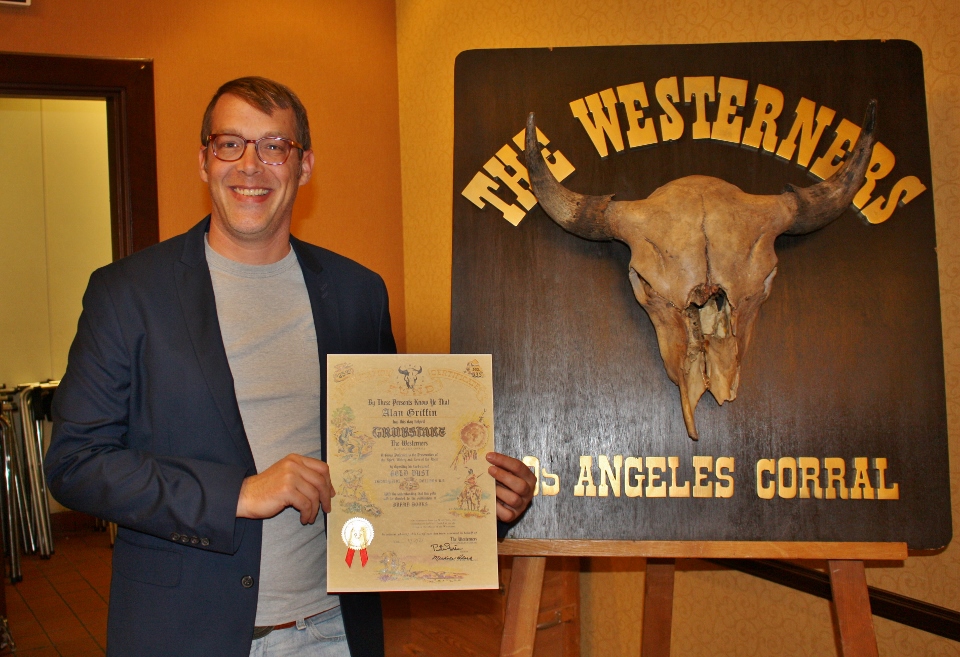
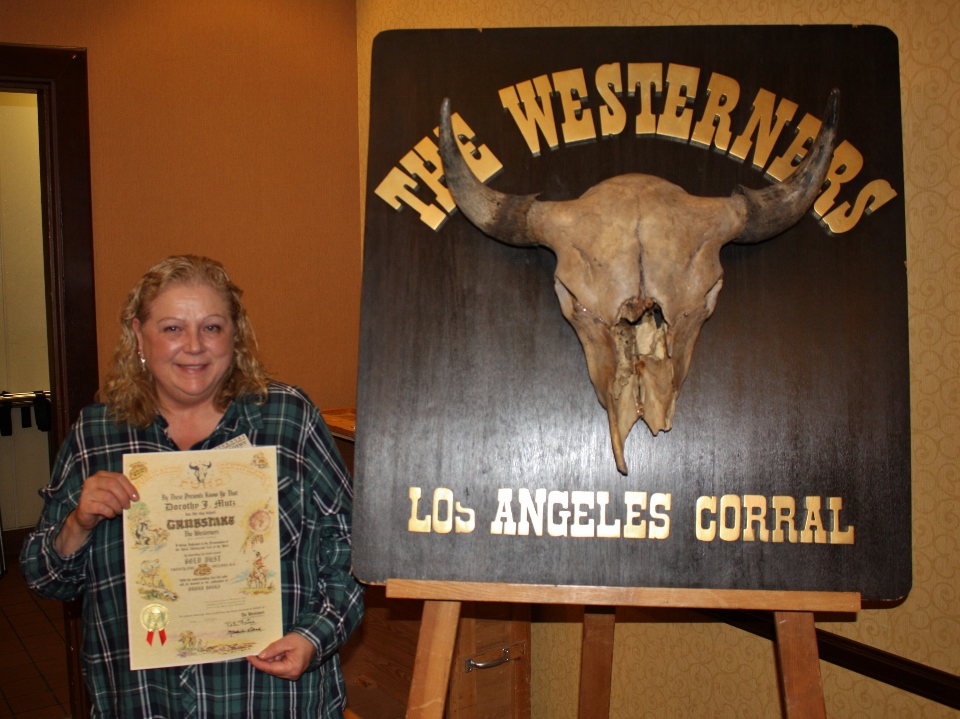
In March, the Corral was treated to a talk by Nick Curry. Assuming the style of a fireside chat, Mr. Curry expounded on his research about a historic Angeleno of much importance, if little current recognition, Dan Murphy. Murphy was an early investor in the local economy and, along with men like Edward L. Doheny, helped shape the area into what it is today. In fact, Dan Murphy picked up with oil drilling in the area where Doheny left off, and became fabulously wealthy as a result. The foundation that resulted from the dissemination of his wealth has done much for education and the preservation of local history in Los Angeles.
Dan Murphy was born in 1858 in Pennsylvania, and came to Los Angeles by way of a family homestead in Kansas, which he shared with his parents and seven siblings. Murphy eventually moved out West and immediately formed an affinity for the railroad, working on a spur line that ran down to San Diego. Before long, he met Frank Monaghan, and the two had plans to bridge the Colorado River. Doing just that, they drew the attention of Charlie Crawford who tasked them with building a general store near the new bridge. In so doing, they founded the town of Needles in 1883.
The two men were known for their honesty, a rare commodity in the railroad business, and successfully ran the store until 1911. During their time in Needles, they founded a bank. This led them to invest in a number of mining and oil drilling operations throughout the region. Key to Dan Murphy’s future success was his purchase, sight-unseen, of land which would become the Brea Canyon Oil Company. The well, which continues to produce today, eventually left Murphy in possession of a fantastic mansion and a fortune of $200 million by the time of his death in 1939.
Having no children, Murphy entrusted his fortune to his niece Bernardine. Enter the Catholic church and the Los Angeles diocese. The Murphy family had been closely connected to the church for decades, so much so that Dan had once donated $1 million to the Pope in one lump sum. During her time in Rome, Bernardine, now the executor of the Murphy fortune, was wooed by an Italian prince. Los Angeles churchmen grew concerned that if Bernardine were to marry this man, then she, along with her fortune, would move to Rome and leave the Los Angeles diocese in the lurch. So, the church hatched a plan. A dissatisfied priest was found, released from his vows, and wed to Bernardine. Thus the Murphy fortune remained in Los Angeles. Now known as the Dan Murphy Foundation, it provides more money to Catholic causes today than even the Doheny Foundation.
The Dan Murphy Foundation was crucial to the formation of the archives put together by Westerners Living Legend Msgr. Francis Weber. That archive was, in turn, essential in gathering the information used for the most recent book about Dan Murphy entitled Ice and Oil, by Joseph Francis Ryan, reviewed in Branding Iron 303.
— Alan Griffin
Photos from the Roundup



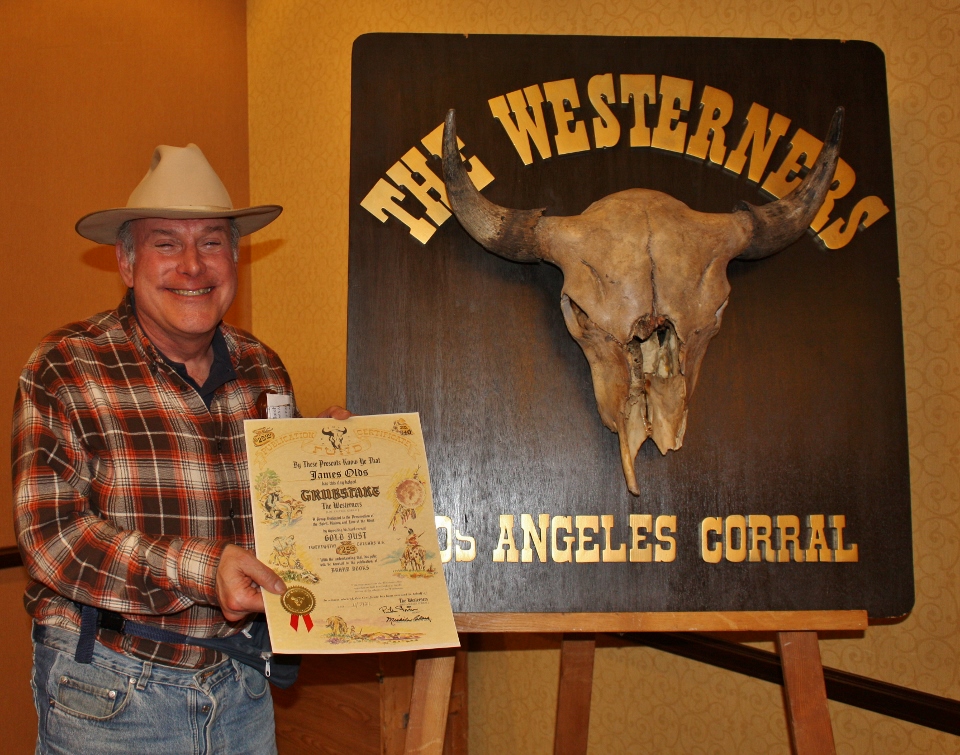
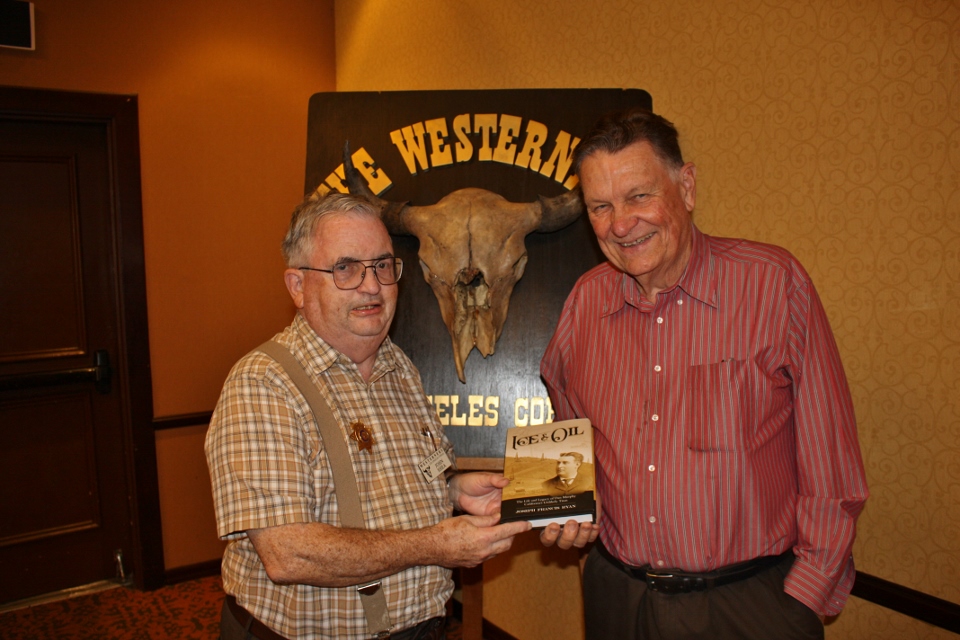

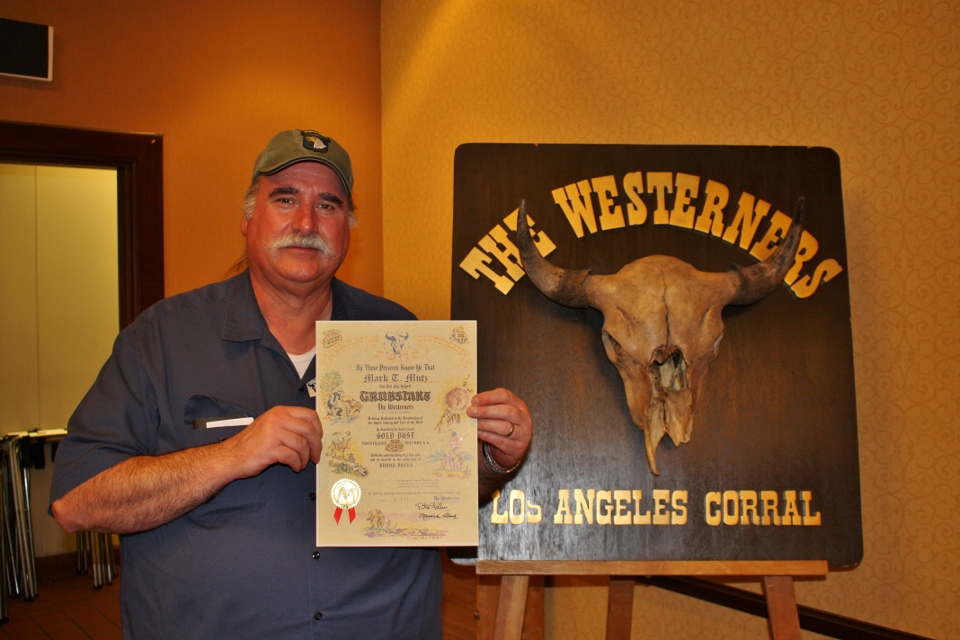


Living Legend No. 66 – Bob Clark
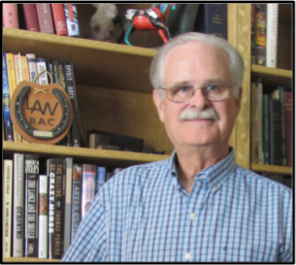
Westerners International Living Legend No. 66 Bob Clark
Robert A. Clark, distinguished third-generation bookman, publisher, and historian, has had the longest connection with the Los Angeles Corral of Westerners International of any living member, from his own infancy. Paul Galleher, co-owner of the Arthur H. Clark Company, was one of the original 1946 founders of the Los Angeles Corral of the Westerners. Galleher served as the Corral’s second Sheriff in 1948, the same year that Robert A. Clark was born in Pasadena. Bob’s father Art Clark soon joined the Los Angeles Corral, and became very active within it. While Harry Truman was in the White House a very young Bob Clark not only cruised the lanes between the stacks of his family’s bookstore on all fours but also later “attended” some of the earliest L.A. Corral Trail Boss meetings as a silent, grade-school-aged observer. His attendance was facilitated during the late 1940s and early 1950s because the L.A. Westerners meetings were held at the A.H. Clark offices/bookstore. In 1953, Bob’s father Art Clark became the Los Angeles Corral’s lucky 7th Sheriff. Bob Clark reminisces about how the L.A. Corral provided an informal education during the Eisenhower years: “Augie Schatra and Don Meadows would complain and holler, but Ray Billington calmed the waters…I watched in awe, and learned about how board meetings worked from these guys.”
Bob’s formal education was at Humboldt State University, where he earned a degree in history, then joined the family publishing business full-time. The Arthur H. Clark Company, founded by Bob’s grandfather in 1902, has an outstanding record of publication in Western American history that is second to none. Robert A. Clark followed in his father’s and grandfather’s footsteps as Editor in Chief (1984) of this very productive and well-respected publishing company and then as CEO (1989) as it moved and expanded from Glendale, California, to Spokane, Washington, and finally to Norman, Oklahoma.
Robert A. Clark began attending the Los Angeles Corral of the Westerners meetings once again, now as an adult, alongside his father. He became a member in his own right in the 1970s. Bob served as the head of the Los Angeles Corral in 1988, following in his father’s footsteps as its first-ever second-generation Sheriff. Bob’s interests and geographical peregrinations led him to join three other Westerners Corrals: Huntington (California), Spokane (Washington), and Cross Timbers (Oklahoma). In doing so he may be unique amongst all Westerners around the world, since his memberships in far-flung corrals are separated almost exactly by 1200+ miles North-South and the same distance East-West. Bob’s long-term commitment to Westerners International was recognized by his election to the WI Board, where he served as President (the Sheriff of all Sheriffs), for the years 2000-2002.
Bob Clark was no less active in the Western History Association. He joined this organization in 1974,attended its conference meetings annually and served in various capacities. He also served on the board of trustees for the Washington State Historical Society from 1990 to 1999, and was vice-president of the board from between 2000 and 2006. Robert A. Clark has also been active in the Oregon-California Trails Association, the Lewis and Clark Trail Heritage Association, and the Mormon History Association.
Simultaneously with his service to Westerners International and other historical organizations, while still at the tiller of the most respected scholarly press specializing in Western American history bearing his family name, Bob Clark’s output reached its zenith: he was personally responsible for publishing 400+ works on the American West through the A.H. Clark company and the University of Oklahoma Press. He also somehow found the time to serve as production editor and designer for no fewer than five different scholarly journals on Western American history: the Southern California Quarterly,California History (the California Historical Society Quarterly), Overland Journal (the California-Oregon Trails Association Quarterly), the California Mission Studies Quarterly Boletín, and We Proceeded On (the Lewis and Clark Trail Heritage Association Quarterly).
Rounding out Bob’s 16-hour workdays, week after week, year after year, he continued the family’s antiquarian book-selling business as part of the A.H. Clark Company’s fully-rounded commitment to Western American history. Not only the publisher of works by other leading scholars, including Westerners from many different corrals, Bob has also contributed in his own “write” as well, as the author, co-author, and editor of three books, and several dozen book introductions and articles on Western American history.
After more than eight decades in Glendale, California, Bob moved the Arthur H. Clark Company to Spokane, Washington, in 1989. Then, in 2006, Bob moved both himself and his wife Sheila along with the A.H. Clark Company to Norman, Oklahoma. There it functioned as an imprint of the University of Oklahoma Press under his direction. In 2012 Bob and Sheila moved back west to “Baja British Columbia” where he was honored to serve as the Editor-in-Chief of Washington State University Press. The veteran of more years in scholarly publishing than any other three or four hard-working bibliophiles, Bob finally retired in 2019. He is now most easily reached by cell phone on the Pullman, Washington, golf course, except during inclement weather.
Few historian-publishers have had a closer and more formative relationship with the Frontier West than Robert A. Clark. For more than half a century just about every member of all 70+ Westerners Corrals around the world have enthused about books published by him. These find places of honor on bookshelves in both public and private libraries alongside earlier volumes published by Bob’s father and grandfather. Western historians for more than a century have thanked their lucky stars that three generations of Clarks, and the wonderful Arthur H. Clark Company, have so diligently and outstandingly filled their literary needs for so long.
The Los Angeles Corral is pleased and proud to announce that the Home Ranch of Westerners International has accepted Robert A. Clark as Living Legend No. 66, an honor as well-deserved as it is overdue
Nominated by Brian Dervin Dillon, Ph.D., 8 17 2019
Zoom Roundup: March 10, 2021
To join the Zoom meeting on March 10, please click here.
The passcode for the Zoom was emailed to Corral members in February.
If you do not regularly receive Corral emails, please contact Brian Dillon at briandervindillon@gmail.com for a virtual invitation.
Clan-Buchanan-Zoom-Notice-for-March-10-2021-Final-Version-Text-Only-File-
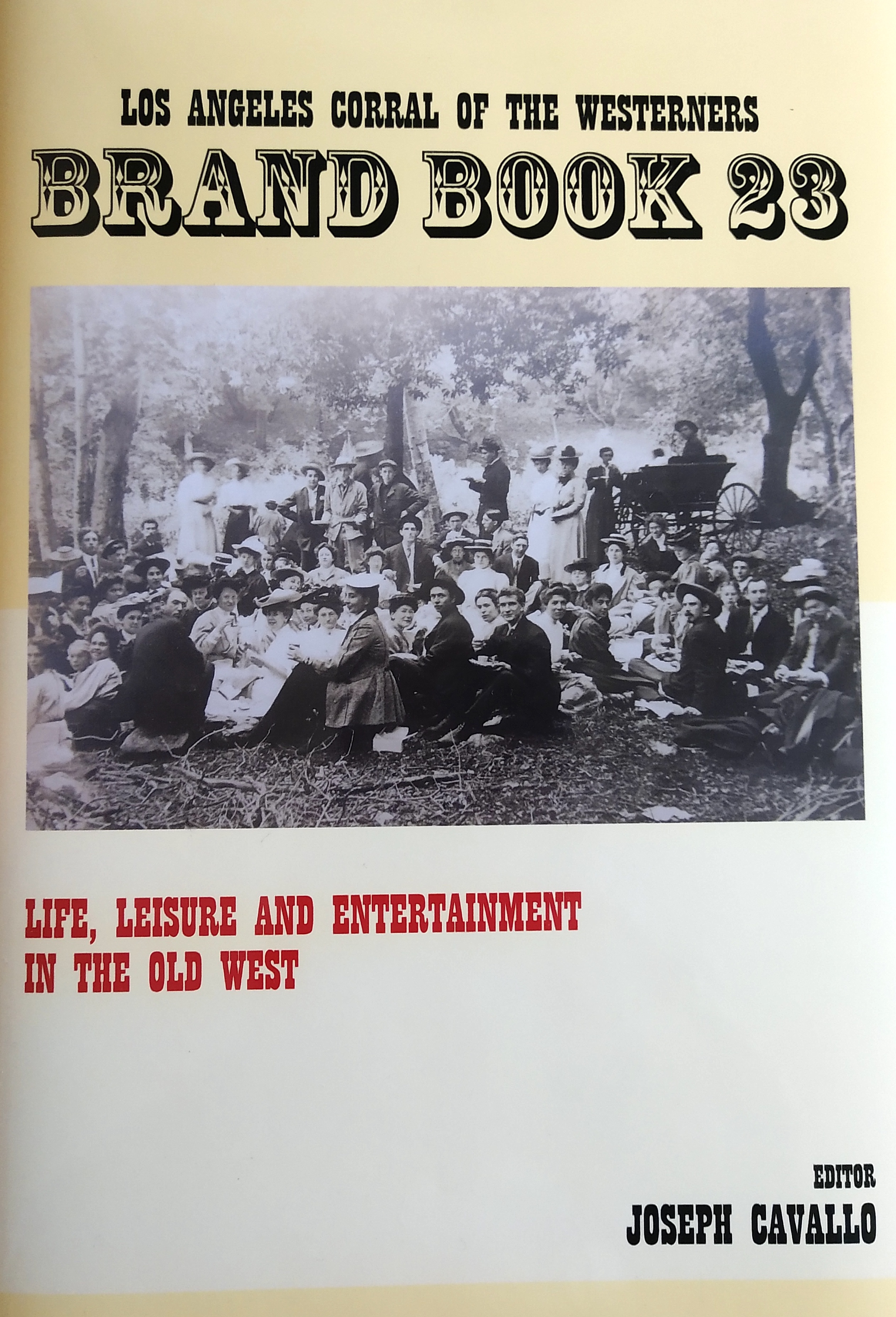
The Westerners Brand Book #23 (2019)
Life, Leisure and Entertainment in the Old West
Joseph Cavallo, Editor
Synopsis
Los Angeles Corral Brand Book 23, Life, Leisure, and Entertainment in the Old West was the first Los Angeles Corral Brand Book to appear after a very long, 15-year, hiatus. It re-established the Los Angeles Corral as a literary leader amongst Westerners International organizations around the world. Its ten chapters are on topics as diverse as Wild West shows, Hollywood’s take on the “old west,” a multicultural review of western music spanning four centuries, prostitution in far-western timberlands, even motorcycle racing more than a century ago.
Contributors include Carla Laureen Bollinger, Joseph Cavallo, Paul F. Clark, Brian Dervin Dillon, Mark Hall-Patton, Abraham Hoffman, Deke Keasbey, Gary Turner and Tami Turner-Revel, and Kiara M. Vigil. Joseph Cavallo, editor; hardbound, illustrated, 309 pages, 2019.
Contents
- Preface — Joseph Cavallo
- Life & Leisure in Early Los Angeles 1860-1910 — Deke Keasbey
- California Musical Traditions 1542-1923 — Brian Dervin Dillon
- The Wild West Got Wilder When The Circus, Wild West Shows, Rodeos, and Vaudeville Came to Town — Carla Laureen Bollinger
- William S. Hart Actor and Author — Abraham Hoffman
- Medicine Men and Snake Oil Salesmen who Entertained and Cure-Alls that did Not Cure — Gary Turner and Tami Turner-Revel
- Early Museums in the West — Mark Hall-Patton
- Roaring into the 20th Century, Early Outdoor Motorcycle Recreation in California — Paul F. Clark
- Hollywood’s Indian: A Cultural History of Native American Actors — Kiara M. Vigil
- The Iverson Movie Ranch: An Historic Hollywood Studio Zone Location — Carla Laureen Bollinger
- Red Cloud, California: All The Best Bad Things Obtainable — Brian Dervin Dillon
- Biographical Sketches — The Contributors
350 copies were printed.
Roundup: March 11, 2020
Almansor Court – 700 S. Almansor, Alhambra, CA.
Social Hour: 5:00 PM
Dinner: 6:00 PM
A .pdf of the Roundup Announcement can be downloaded here.
Our Speaker: Bruce Merritt
His Subject: The Founding of the Society of Colonial Wars in Los Angeles in 1895
The Founders of the Society of Colonial Wars in Los Angeles were a group of notable individuals in early Los Angeles. Most were prominent individuals. These included two Mayors, a US Senator, a major banker and more!
According to his site, Bruce Gordon Merritt is a retired trial lawyer with a passion for history. Born in Iowa City, Iowa, he grew up in Southern California and attended Occidental College, where he majored in history. Intent on a career as a historian, he was admitted to a doctoral program in American History at Harvard. His studies, however, were interrupted by the draft and by the time he returned to civilian life, he had decided upon a career in the law. He attended Harvard Law School, graduating magna cum laude in 1972. Following a clerkship with a law firm in London, he began that practice of law in Los Angeles. In the 1980s he served as an Assistant U.S. Attorney and handled several high profile criminal cases, including the successful prosecution of the president and general counsel of CalAm Corporation, once the nation’s largest tax shelter promoter, and the case of Nikolai and Svetlana Ogorodnikov, who were convicted of recruiting FBI agent Richard Miller for Soviet intelligence. Following his time as a federal prosecutor, he joined the law firm of Debevoise & Plimpton as a litigation partner, first in Los Angeles and later in New York. In 1992, he was elected a Fellow of the American College of Trial Lawyers.
Since his retirement from the law, Bruce has pursued his passion for historical research. He has published articles in both the Journal of American History, and the Southern California Quarterly. Bruce has also authored a book, St. Mark’s Journey, on the history of a pioneer church in Glendale, CA.
Attend this Roundup to learn about several prominent and colorful citizens who were founding members of the Society of Colonial Wars in the State of California!
Register for the March Roundup before the Thursday deadline to reserve your place at this historic event! The deadline to register is March 5th, for our March 11th Roundup!
Final Dues Reminder
This is a final reminder to our members to renew their 2020 Corral dues. As per our Range Rules, we will begin to send out late notices for dues after February 15th with an added late charge of $10 for dues received after March 1st.
Future Los Angeles Corral Events
April 8, 2020
Mike Post
The Chimineas Ranch of the Carrizo Plain National Monument
May 13, 2020
Steve Baker
Notable Women of Monrovia and their Enduring Impact on Society
June 20, 2020
Fandango!
Preparations are underway for a memorable event!
Dinner Fees, Reservation Deadline & Meal Choices
Please make your reservations by Thursday, March 5th, so that we can include your meal preference when placing the food order for our event. This month, your entrée selection is beef, fish and vegetarian. The beef selection is bacon wrapped USDA prime Top Sirloin grilled & wrapped in thick applewood bacon. The fish option is Baked Atlantic Salmon seasoned & topped with a whole grain mustard sauce & toasted lemon wedge. This month, the vegetarian option is Pasta Primavera with tomato basil sauce with a medley of carrots, peppers, zucchini, mushrooms & green beans. Our dessert will be Panna Cotta!
Please observe the registration deadline and place your order no later than Thursday, February 6th
The Roundup Dinner Fee is $40 for those who register before the deadline. Those who register late or walk-in will be charged $45, and may be limited to their choice of meal. If registering online at www.lawesterners.org, the Roundup Store can be reached through the Members Only tab. Be sure to select your meal option, then pay using a PayPal account or by credit card.
New Mailing Address for Roundup Reservations & Dues
Our Registrar of Marks and Brands position is currently vacant. Until this position is filled, the Trail Bosses kindly request that all Roundup reservations and membership dues be sent to our Keeper of the Chips, Mr. John Shea, at 13613 Barlin Avenue, Downey, CA 90242-5107. Questions or late reservations? Please direct all reservation or membership dues questions to John Shea by phone at (562) 408-6959.
Los Angeles Corral Ongoing Book Auction
Did you know that donated books are available for purchase throughout the year? Books can be purchased outside the Fandango and Rendezvous by contacting Past Sheriff Brian Dervin Dillon directly. After payment is received, books can be picked up at one of our Roundups, or other arrangements can be made. Request a copy of the new, 2020 book list with an Email to: briandervindillon@gmail.com. If you place your order via Email, books can be delivered to you at the monthly Roundups!
You can find the updated list of auction items here.
Registrar of Marks and Brands
If you read this notice in its entirety, you may be an excellent candidate for our open Registrar position. Contact a Trail Boss for more information!
Roundup: February 12, 2020
Almansor Court – 700 S. Almansor, Alhambra, CA.
Social Hour: 5:00 PM
Dinner: 6:00 PM
A .pdf of the Roundup Announcement can be downloaded here.
Our Speaker: Charles King
His Subject: Wild West Gunslingers: Short biographies of various gunmen, lawmen, feuds, and their outcomes.
Charles Randy King will entertain us with stories of “Wild West” gunmen, lawmen, and feuds. A series of old-time photographs will accompany his talk on notable characters such as gunfighter Pink Higgins; businessman, cowboy and gambler Luke Short; lawman and professional killer Jim “Killin’ Jim” Miller; and fearless frontiersman, detective and Marshal “Wild” Bill Fossett. After this presentation, the lines may blur between those you consider a lawful man or a gunman.
Charles Randy King is a Corresponding Member of our Corral. He has worked in the broadcast industry for most of his adult life, while raising a family and actively being involved in community affairs. Randy has always been an avid student of American History and gravitates to the “Wild West”, which is the genre of several of his published books. He has also worked and collaborated with the History Academy in Gettysburg, PA, providing crucial research, development, and budgeting for various projects for shows of historical content for presentation to a variety of cable networks. These include the History Channel, National Geographic, and the Military Channel. In addition to his published books, Charles Randy King has developed and written two screen plays, of which one screen play and one book have been ‘optioned’ and are currently in development for the movie industry.
Brand Book 23 Release and Book Signing
It’s time to celebrate Westerner style. Come be a part of our celebration this evening with Editor Joe Cavallo for the release of the new, highly anticipated, beautiful, high-quality, limited edition Brand Book 23! A special author and contributor signing event will take place during our social hour, so plan on arriving early to attend this grand event which has been sixteen years in the making. Copies will be available for those who previously preordered. For those who have not yet submitted their book order, copies of Brand Book 23 may be purchased at this event. This is an opportunity not to be missed.
Register for the February Roundup before the Thursday deadline to reserve your place at this historic event! The deadline to register is February 6th, for our February 12th Roundup!
Future Los Angeles Corral Events
March 11, 2020
Bruce Merritt
The Founding of the Society of Colonial Wars in Los Angeles in 1895.
April 8, 2020
Mike Post
The Chimineas Ranch of the Carrizo Plain National Monument
May 13, 2020
Steve Baker
Notable Women of Monrovia and their Enduring Impact on Society
Dinner Fees, Reservation Deadline & Meal Choices
Please make your reservations by Thursday, February 6th, so that we can include your meal preference when placing the food order for our event. This month, your meal selection is beef, chicken and vegetarian. The beef meal will be Top Sirloin grilled and slow roasted. The chicken option is Baked Garlic Chicken, lightly breaded, topped with garlic and parmesan cheese. The Vegetarian entrée is Vegan Tartare, an artfully displayed seared seasonal fruit or vegetable diced & atop a bed of avocados & topped with a balsamic vinaigrette and a homemade crostini. Our dessert will be Haagen Daz vanilla ice cream!
Please observe the registration deadline for this special event and place your order no later than Thursday, February 6th
The Roundup Dinner Fee is $40 for those who register before the deadline. Those who register late or walk-in will be charged $45, and may be limited to their choice of meal. The Roundup Store can be reached through the Members Only tab. Be sure to select your meal option, then pay using a PayPal account or by credit card.
New Mailing Address for Roundup Reservations & Dues
Our Registrar of Marks and Brands position is currently vacant. Until this position is filled, the Trail Bosses kindly request that all Roundup reservations and membership dues be sent to our Keeper of the Chips, Mr. John Shea, at 13613 Barlin Avenue, Downey, CA 90242-5107. Questions or late reservations? Please direct all reservation or membership dues questions to John Shea by phone at (562) 408-6959.
Dues Renewal Reminder
As a reminder to all members, if you have not already renewed your 2020 dues, please send in your payment of $50.00 or renew online as soon as possible. Members who have not already renewed will receive a reminder from a Trail Boss until we have a new Registrar. Your dues help support our Fellowship program and pay for the Branding Iron, Special Keepsakes and Westerners International dues.
The Dues Store is located under the Members Only tab. Pay using a PayPal account or credit or debit card (through PayPal). If paying by check, please forward your payment to: Mr. John Shea, at 13613 Barlin Avenue, Downey, CA 90242-5107. Thank you.
Los Angeles Corral Ongoing Book Auction
Many books have been donated since our last public auction at the October 2019 Rendezvous! Request a copy of the new, 2020 book list with an Email to: briandervindillon@gmail.com. If you place your order via Email, books can be delivered to you at the monthly Roundups! You can find the updated list of auction items here.
Roundup: January 8, 2020
Sheriff Ann Shea declares the January Roundup as E Clampus Vitus Night! Clampers are encouraged to wear ECV regalia.
Almansor Court – 700 S. Almansor, Alhambra, CA.
Social Hour: 5:00 PM
Dinner: 6:00 PM
A .pdf of the Roundup Announcement can be downloaded here.
Our Speaker: Mark Mutz, Corral Member, Newspaper Publisher and member of the Ancient and Honorable Order of E Clampus Vitus (Peter Lebec Chapter)
His Subject: Stories: The Myths, the Facts, and the Realities
Mark Mutz has always had an interest in history and events. As we go through life, we can begin to realize that the descriptions of many events in history are tainted in such a fashion as to make the subject of the events appear quite different than the actual circumstances.
Mark’s love of history and events started at an early age. He was born and raised in New England, where history was all around him. There were stories of Indian Wars, some of which occurred 140 years before the United States declared independence. One battle lead to a day of Thanksgiving being declared in 1637, following the Mystic Massacre during the Pequot War.
When walking through the woods, he occasionally came across stone walls in the middle of stands of Oak trees that were third or fourth growth. Other times, he found lone Chestnut trees and later realized that the oaks had replaced these mighty trees. He also remembers walking through a graveyard and finding a headstone marked for “A Soldier of the Revolution”.
Stories are all around us and the retelling can share the facts, portray the reality, or turn them into myths. While stationed in Fort Richardson, Alaska as an Infantryman, Mark also found an old cemetery for Russians, complete with little houses on each grave. When he was stationed at Fort Campbell, Kentucky, there were more graves, but this time for Veterans of the Civil War.
One of the biggest problems in telling an accurate story is getting accurate information to base it on. For Mark, the art of storytelling involves presenting a topic in a space ranging from ¼ to two pages long that allows the reader to develop a complete picture in their mind when reading the Fence Post, a newspaper that Mark and spouse Dorothy own and publish monthly.
Come spend an evening with the Westerners, as we listen to storytelling presented by our newest Corresponding Member, Mark Mutz!
Future Los Angeles Corral Events
February 12, 2020
Randy King
Wild West Gunslingers: Short biographies of various gunmen, lawmen, feuds, and their outcomes.
March 11, 2020
Bruce Merritt
The Founding of the Society of Colonial Wars in Los Angeles in 1895.
Dinner Fees, Reservation Deadline & Meal Choices
Please make your reservations by Thursday, January 2nd, so that we can include your meal preferences when placing the food order for our event. This month, your meal selection is beef, chicken and vegetarian. The beef meal will be Top Sirloin grilled and slow roasted. The chicken option is Baked Garlic Chicken, lightly breaded, topped with garlic and parmesan cheese. The Vegetarian entrée is Vegetable Pad Thai, made from classic Pad Thai noodles with stir fry fresh vegetables and topped with scallions and peanuts. The dessert for January is Panna Cotta.
The Roundup Dinner Fee is unchanged for 2020 at $40 for those who register before the deadline. If registering online at www.lawesterners.org, the Roundup Store can be reached through the Members Only tab, and entering the password. Be sure to select your meal option, then pay using a PayPal account or by credit card.
If paying by check, please mail your meal selection and payment to: Mr. Aaron Tate, Registrar of Marks and Brands, 9768 via Roma, Burbank, CA 91504.
Questions or late reservations can be directed to Aaron Tate by calling or texting to (818) 804-9926, or email at airnbobo@gmail.com.
Early reservations are strongly recommended and preferred, as there will be only limited, or potentially no meals available for walk-ins. The cost for late registrations and walk-ins is $45.
Dues Renewal Reminder
As a reminder to all members, it’s time to renew your dues! If you have not already renewed your 2020 dues, please send in your payment or renew online as soon as possible. As per our Range Rules, Article VI, dues shall be paid yearly by February 15th. Members who have not renewed by this date will receive a notice from our Registrar of Marks and Brands.
The Dues Store is located under the Members Only tab at www.lawesterners.org. Use the same password to enter this members only section of our website and pay using a PayPal account or credit or debit card (through PayPal). If paying by check, please forward your payment to: Mr. Aaron Tate, 9768 via Roma, Burbank, CA 91504. With Brand Book 23 due out in February, and Brand Book 24 already in process, this is a wonderful time to be a Westerner! Your dues also help support our Fellowship program and pay for the Branding Iron, Special Keepsakes and Westerners International dues.
Visit our Corral at Live on the Green!
We will be tabling at the Live on Green! Festival at the Pasadena Convention Center on December 29-31. Volunteer to help us promote membership in the LA Corral or, at least, when you visit this outstanding free festival, stop by the Eubanks Equestrian Pavilion and visit our booth! Contact Jim Macklin to volunteer at (626) 305-2391 jhmacklincpa@gmail.com.
Roundup: November 13, 2019
Rendezvous Photos
You can view an album of photos from last month’s rendezvous here.
Almansor Court – 700 S. Almansor, Alhambra, CA.
Social Hour: 5:00 PM
Dinner: 6:00 PM
Our Speaker: Stephen Gee
His Subject: Los Angeles City Hall: An American Icon
Stephen Gee is a writer and television producer based in Los Angeles. He is the author of several award-winning books on John Parkinson and noted structures in Los Angeles. His most recent work is the history of the Los Angeles City Hall. Mr. Gee, in addition to his books, wrote, directed and produced the awardwinning PBS documentary on John Parkinson. He is a graduate of City University of London and began his career as a newspaper reporter in Norfolk, England. He has lived in Los Angeles since 1995.
When it opened its doors in 1928, the new Los Angeles City Hall was the tallest building in the city and undeniably beloved by its citizens, and they had not even seen the interior. More than a half-million people lined the streets to celebrate the dedication of the new structure that symbolized Los Angeles’s transition from a growing western city to a world-class metropolis. The current building, the last in a series of city halls, is a symbol of the ambition of the people, and it is one of the most enduring and recognized landmarks in California. The Los Angeles City Historical Society has donated posters showing all the City Halls for our meeting.
Remember NOVEMBER IS HAT NIGHT at the Los Angeles Corral. Wear your best head gear and join the fun. You may be the big winner this year.
Posted by Ann Shea, Deputy Sheriff
Future Los Angeles Corral Events
December 11, 2019
Brian Dillon on Wyatt and Josie Earp
January 8, 2020
To Be Announced
Dinner Fees, Reservations & Meal Choices
The Roundup Dinner Fee is $40 including ample, convenient and free parking. The dinner choices for this Roundup are beef, fish and vegetarian. The beef will be Kalbi top sirloin, grilled and topped with a sweet and spicy sauce. The chef has selected Atlantic salmon with toasted almonds and a cream sauce as the seafood entree. The vegetarian option this month is eggplant parmesan. Dessert will be Häagen-Dazs vanilla ice cream.
Please choose your entrée and make out your check for $40 to “Westerners, Los Angeles Corral,” or submit your payment online as EARLY AS YOU CAN but no later than one week before the Roundup date. Just log onto our website and go to the Members Only tab. Click on the Roundup Store option and follow the instructions. Walk-ins can be served, but entrée choices will be limited to what is on hand. The “late price” is now $45.00.
If you are paying by check, mail it to Ms. Therese Melbar, Registrar of Marks and Brands at 549 South Aldenville Avenue, Covina, CA 91723-2909. Late reservations or questions may be addressed to Therese via Email: tmelbar@cpp.edu or by telephone: (661) 343-9373.
Travel Assistance to Our Fellow Members
Please keep in mind that some of our members can no longer drive or are uncomfortable driving on the freeways at night. If such members live in your area, please get in touch to see if they would come with you to the Roundups. Call Michele Clark, our Sunshine Wrangler, at (626) 822-1522 if you need a ride.
Books and Art Pieces for Sale
Once again, you can buy books, art pieces and other ephemera donated to the Corral. You can order items on the lists below. Contact Brian Dillon via email at briandervindillon@gmail.com.
Updated List
To view the items included in this year’s auction, click here.
Contact Ann Shea, Deputy Sheriff, at 13613 Barlin Avenue, Downey, CA 90242-5107 at annwshea@ca.rr.com or at (562) 408-6959 with any questions or news.
Rendezvous: Saturday, October 19, 2019
Location: 1763 Royal Oaks Drive North, Bradbury, CA
Time: 2:00 to 5:30 PM
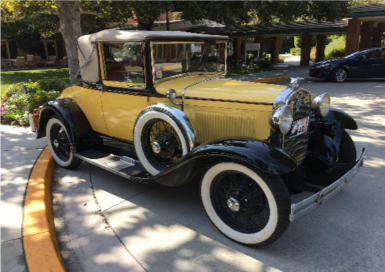
Theme: A Stroll Down Memory Lane with the Old Folks at Home
Enjoy nine significant features at the Rendezvous this year!
- Visits with Good Friends
- Shopping for Old Books and Art
- Taking pictures with “Old Friends” – Vintage Cars
- Tours of Royal Oaks and Amy & Jim Macklin’s new home
- Enjoying an old-time buffet dinner by an award-winning Chef
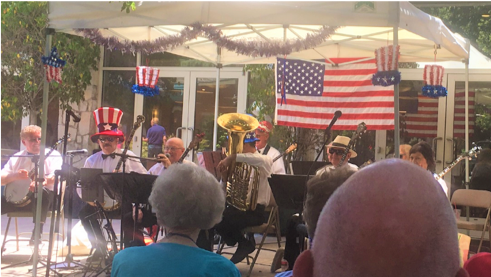
- Singing old favorite tunes with TheBanjo Buddies
- Celebrate designation of Bill Warren as our 2019 Honored Guest and the Corral’s newest Honorary Member
- Valet parking provided just steps away
- You’ll be home by sundown! Or at least comin’ round the mountain!
Remember that the purpose of the Rendezvous is to raise money! Help the Los Angeles Corral build the resources for its historical educational outreach and for its new technological initiatives. If you cannot attend, at least make a donation.
The Rendezvous Fee is $50. Please make out your check for $50 to “Westerners, Los Angeles Corral,” or submit your payment online as EARLY AS YOU CAN but no later than one week before the Rendezvous date. Just log onto our website and go to the Members Only tab. Click on the Rendezvous Store option and follow the instructions.
If you are paying by check, mail it to Ms. Therese Melbar, Registrar of Marks and Brands at 549 South Aldenville Avenue, Covina, CA 91723-2909. Late reservations or questions may be addressed to Therese via Email: tmelbar@cpp.eduor by telephone: (661) 343-9373.
Posted by Ann Shea, Deputy Sheriff
Future Los Angeles Corral Events
November 13, 2019
Roundup and Annual Hat Night
Stephen Gee on the Los Angeles City Hall
December 11, 2019
Roundup with Traditional Christmas Dessert
Cherries Jubilee and Installation of Trail Bosses for 2020
Travel Assistance to Our Fellow Members
Please keep in mind that some of our members can no longer drive or are uncomfortable driving on the freeways at night. If such members live in your area, please get in touch to see if they would come with you to the Roundups. Call Michele Clark, our Sunshine Wrangler, at (626) 822-1522 if you need a ride.
Books and Art Pieces for Sale (Updated List)
Once again, you can buy books, art pieces and other ephemera donated to the Corral. You can order items on the lists here. Contact Brian Dillon via email at briandervindillon@gmail.com. To view the items included in this year’s Book and Art Sale, click here.
Contact Ann Shea, Deputy Sheriff, at 13613 Barlin Avenue, Downey, CA 90242-5107 at annwshea@ca.rr.com or at (562) 408-6959 with any questions or news.
Roundup: September 11, 2019
Almansor Court – 700 S. Almansor, Alhambra, CA.
Social Hour: 5:00 PM
Dinner: 6:00 PM
Our Speaker: Elizabeth Pomeroy
Her Subject: Glen Dawson, a Man of Many Interests
Elizabeth Pomeroy is a native Californian and has been active in the education field for many years as a teacher and administrator. She holds a Ph.D. in English from UCLA. Elizabeth founded her own publishing company, Many Moons Press, in 2000 and publishes books on Southern California. She is a member of the Los Angeles Corral of Westerners and the Huntington Corral in addition to numerous historical societies in the area.
Elizabeth will present an illustrated program on the life and accomplishments of Glen Dawson, who was a founder of the Los Angeles Corral in 1946, sheriff in 1959, and a dedicated member for many years. He was a man of books as well as an avid climber. The program will also trace the 105-year history of Dawson’s Book Shop, founded by his father.
Join us for what should be a notable evening with a program presented by one of our own members about an outstanding member of the Corral who is no longer with us, but is not forgotten.
Posted by Ann Shea, Deputy Sheriff
Future Los Angeles Corral Events
October 19, 2019
Rendezvous at Royal Oaks
Home of Jim and Amy Macklin
November 13, 2019
Roundup and Annual Hat Night
Stephen Gee on the Los Angeles City Hall
Dinner Fees, Reservations & Meal Choices
The Roundup Dinner Fee is $40 including ample, convenient and free parking.
The dinner choices for this Roundup are beef, chicken and vegetarian. The beef will be roasted sliced top sirloin with a mushroom sauce. The chicken dish will be a delicious Pancetta Chicken breast topped with rosemary, garlic and pancetta. The vegetarian dinner will be an amazing penne pasta in a tomato basil sauce with flavorful carrots, peppers, zucchini, mushrooms and green beans. The dessert this month is the popular Chocolate Royale.
Please choose your entrée and make out your check for $40 to “Westerners, Los Angeles Corral,” or submit your payment online as EARLY AS YOU CAN but no later than one week before the Roundup date. Just log onto our website and go to the Members Only tab. Click on the Roundup Store option and follow the instructions. Walk-ins can be served, but entrée choices will be limited to what is on hand. The “late price” is now $45.00.
If you are paying by check, mail it to Ms. Therese Melbar, Registrar of Marks and Brands at 549 South Aldenville Avenue, Covina, CA 91723-2909. Late reservations or questions may be addressed to Therese via Email: tmelbar@cpp.edu or by telephone: (661) 343-9373.
Travel Assistance to Our Fellow Members
Please keep in mind that some of our members can no longer drive or are uncomfortable driving on the freeways at night. If such members live in your area, please get in touch to see if they would come with you to the Roundups. Call Michele Clark, our Sunshine Wrangler, at (626) 822-1522 if you need a ride.
Books and Art Pieces for Sale
Once again, you can buy books, art pieces and other ephemera donated to the Corral. You can order items on the lists below. Contact Brian Dillon via email at briandervindillon@gmail.com.
Updated List
To view the items included in this year’s auction, click here.
Contact Ann Shea, Deputy Sheriff, at 13613 Barlin Avenue, Downey, CA 90242-5107 at annwshea@ca.rr.com or at (562) 408-6959 with any questions or news.
Los Angeles Corral of Westerners
Welcome to the online home of the Los Angeles Corral of Westerners. We invite you to browse our site, learn more about our organization, and even consider joining us.