Roundup: May 14, 2014
Almansor Court – 700 S. Almansor, Alhambra, CA.
Social Hour: 5:00 PM
Dinner: 6:00 PM
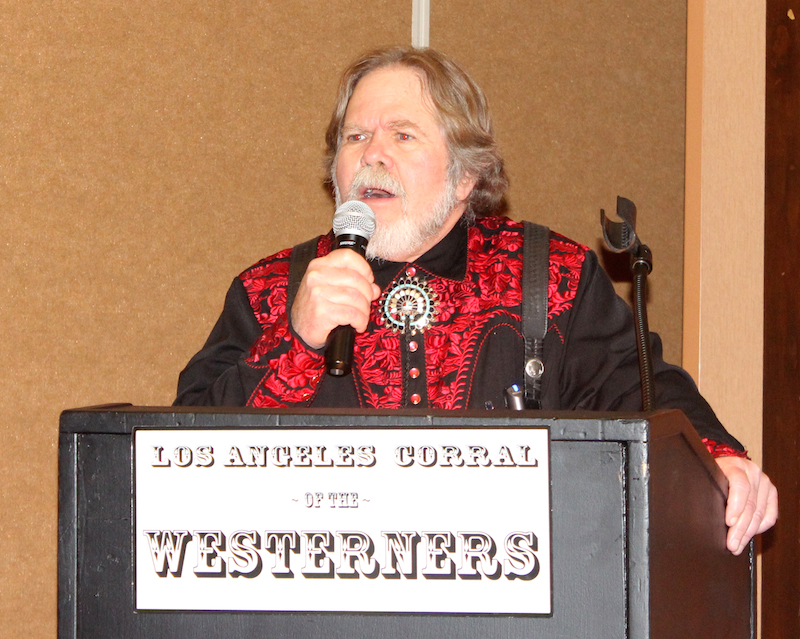
Speaker: Elk Whistle Bill Neal
Subject: History of Native American Flutes
Click here to view photos from the event.
By the latter half of the 20th century, the Native flute, indigenous only to North America, was in danger of becoming nothing more than a museum exhibit. However, through the efforts of a few individuals like Elk Whistle Bill Neal, this unique and beautifully-voiced instrument has come back alive to enchant all those who hear its music.
This program will describe the flute’s history, its traditional construction, as well as its contemporary form. Elk Whistle Bill Neal will demonstrate cedar flutes of the Lakota of the northern plains and the Kiowa and Comanche of the southern plains as well as river reed and cane flutes of the Choctaw and the Cherokee.
He will explain how beautiful songs of the flute address Native American cultural values that have become increasingly important to all of the two-leggeds on Turtle Island.
Elk Whistle Bill Neal is a master Native American flute player and storyteller of Cherokee ancestry who began playing this instrument almost 24 years ago while a singer in a traditional powwow drum group.
He has worked in environmental engineering for 22 years, including 10 years with the U. S. Forest Service; taught forestry, wildland fire management, and natural resource management in college; and co-founded and served as general manager of a biomass energy fuel supply company.
He has performed in numerous venues: museums and libraries, cathedrals and temples, powwows and festivals, before the smallest audiences to almost 10,000. He has served as the Native American spiritual leader in a California state prison, and powwow coordinator for the 2nd Annual Powwow at Pomona College in Claremont which took place on April 5th as well as the 3rd Annual Intertribal Eagle and Condor Powwow set for May 17th and 18th in DeAnza Park in Ontario.
Click here to view photos from the event.
Paul McClure
Deputy Sheiff
Roundup: May 14, 2014
Almansor Court – 700 S. Almansor, Alhambra, CA.
Social Hour: 5:00 PM
Dinner: 6:00 PM
Speaker: Elk Whistle Bill Neal
Subject: History of Native American Flutes
Click here to view photos from the event.
By the latter half of the 20th century, the Native flute, indigenous only to North America, was in danger of becoming nothing more than a museum exhibit. However, through the efforts of a few individuals like Elk Whistle Bill Neal, this unique and beautifully-voiced instrument has come back alive to enchant all those who hear its music.
This program will describe the flute’s history, its traditional construction, as well as its contemporary form. Elk Whistle Bill Neal will demonstrate cedar flutes of the Lakota of the northern plains and the Kiowa and Comanche of the southern plains as well as river reed and cane flutes of the Choctaw and the Cherokee.
He will explain how beautiful songs of the flute address Native American cultural values that have become increasingly important to all of the two-leggeds on Turtle Island.
Elk Whistle Bill Neal is a master Native American flute player and storyteller of Cherokee ancestry who began playing this instrument almost 24 years ago while a singer in a traditional powwow drum group.
He has worked in environmental engineering for 22 years, including 10 years with the U. S. Forest Service; taught forestry, wildland fire management, and natural resource management in college; and co-founded and served as general manager of a biomass energy fuel supply company.
He has performed in numerous venues: museums and libraries, cathedrals and temples, powwows and festivals, before the smallest audiences to almost 10,000. He has served as the Native American spiritual leader in a California state prison, and powwow coordinator for the 2nd Annual Powwow at Pomona College in Claremont which took place on April 5th as well as the 3rd Annual Intertribal Eagle and Condor Powwow set for May 17th and 18th in DeAnza Park in Ontario.
Click here to view photos from the event.
Paul McClure
Deputy Sheiff
Corral News
Dinner Reservations
Dinners cost $35 each and the reservation deadline is May 8, 2014. Late reservations can be accepted, but you won’t be able to choose your entrée and you will pay $40. Please mail your reservation and your check—payable to “Westerners, Los Angeles Corral”—to Pete Fries, Registrar of Marks & Brands, 28160 Newbird Drive, Santa Clarita, CA 91350-1836. You may also call Pete at 661-296-7713 with questions or late reservations.
PAYPAL is now available
Instead of sending in your check, now you can make your dinner reservations online. Just log on to our website www.lawesterners.org and go to the members tab (enter the password) and click on the pay option. Instructions are there. Call Joe Cavallo 626 372 5126 with any questions.
Saturday, June 14th Fandango
This year’s Fandango will (probably) be held at the historic Rains House in Rancho Cucamonga, the point of origin for a spectacular 1862 murder, which docents will tell us more about during tours both before and after our High Noon lunch. Remember the Fandango is our June meeting, so there will be no second-Wednesday-evening Roundup that month. We suggest that you take Route 66, aka Foothill Blvd., for at least a few miles either to or from the Fandango in order to magically transport yourself to an earlier era. The Wine Tailor, just down the street, will provide a cozy retreat for those who want just a skosh more vino before heading home. We’ll have more information about cost and reservations soon. Mark your calendars. 80 maximum.
Wednesday, July 9th Roundup
Our esteemed former Sheriff Eric Nelson is arranging July’s program by our Autry Fellow Kiara Maria Vigil, an Assistant Professor of American Studies at Amherst College in Massachusetts. She is completing research for her first book, North American Indian Intellectuals and the American Imagination, 1880-1930, Cambridge University Press. With no topic announced, we wondered what Eric thought about the program. Tater Totter, the mind-reading cowboy, said that Eric was thinking, “This program’s gonna be so danged good that I’d pull my plow over a stump to git there.” If that’s what Eric thinks, then we’d all better pack the barn.
Wednesday, August 13th Roundup
At the August Roundup, Geraldine Knatz, past managing director of the Port of Long Beach for several years and recently retired as the Executive Director of the Port of Los Angeles, will speak about the “Lost Communities of Terminal Island.” She earned a master’s in environmental engineering and doctorate in biological sciences at USC. She oversaw a $2.3 billion capital improvement program at the 7,500 acre port, which sits on 43 miles of waterfront, handled more than $273 billion in cargo last year, and is responsible for three million jobs.
Friday, August 15th Tour
Two days after Geraldine Knatz’s Roundup program on Terminal Island, we have planned a boat tour of Los Angeles Harbor. This will be a free educational tour rather than the standard tourist outing, thus it is on a weekday instead of a weekend. Check-in will be at 12:45 p.m.; the boat will sail at 1 p.m.; and if you arrive late, we’ll wave to you as we sail away. After returning to shore, we should have plenty of time to vamoose before rush hour hits. We’ll have more information about the excursion soon. Mark your calendars. 35 maximum.
Corral Chips
Tell us what you have been doing lately. We have many talented members, both professional and enthusiasts that are doing great work regarding Western History. We should be proud! Tell us what you have been up to lately. We want to share it! Someone else may have something they can contribute, or a suggestion for you. Or just share your accomplishments, so we may congratulate you! As part of a vibrant Corral, we can support and encourage each other, build an “espirit de corps,” and enhance our membership experience in the Los Angeles Corral of Westerners.
As a member of Westerners, your Corral Chip information will be published in our quarterly academic publication, the Branding Iron. And it will be put here on our web site in the public area where search engines will pick it up and make it available on the worldwide web. By the way, if you are not a member yet, please click Join our Corral.
See what our members are currently working on!
If you would like to write out and mail in your Corral Chips form, click here for the Corral Chips form (.pdf). Mailing information is on the form.
Branding Irons
These Branding Irons are available to members only. Older issues are available under the Branding Irons tab.
307. Summer 2022
306. Spring 2022
305. Winter 2022
304. Fall 2021
303. Summer 2021
302. Spring 2021
301. Winter 2021
300. Fall 2020
299. Summer 2020
298. Spring 2020
297. Winter 20202
296. Fall 2019
295. Summer 2019
294. Spring 2019
293. Winter 2019
292. Fall 2018
291. Summer 2018
290. Spring 2018
289. Winter 2018
288. Fall 2017
287. Summer 2017
286. Spring 2017
285. Winter 2017
284. Fall 2016
283. Summer 2016
282. Spring 2016
281. Winter 2016
280. Fall 2015
279. Summer 2015
278. Spring 2015
277. Winter 2015
276. Fall 2014
275. Summer 2014
274. Spring 2014
“China City – The Busy Little Village North of the Plaza” by Glenna Dunning.
“Ninety-Four Years of The Pacific Mail Steamship Company – An Overview” by James Shuttleworth.
“When ‘Judge Lynch’ Came to San Jacinto” by Steve Lech.
273. Winter 2014
“Crossing California’s Little Sahara Imperial County’s Plank Road” (This is a look at motoring across the sand dunes of Imperial County for many years during the beginnings of the automotive age.) By John W. Robinson.
“Affairs of the Heart in Early Los Angeles” (An interesting visit to the post office in1848 is presented and a special letter from 1848) by Eric A. Nelson.
272. Fall 2013
“The Many Lives of the Three Godfathers” (A Christmas story entitled “The Three Godfathers,”) which began life as a short novel by Peter B. Kyne and later was made and remade into movies) by Abraham Hoffman.
“John Muir — A Thoughtful Moment, 1911” (A rare insight into a personal moment shared by John Muir and a longtime friend through some unpublished surviving, hastily hand-written correspondence) by Joseph Cavallo.
“Local History: What is Wrong and What is Right” (A discussion of the varying views of local historians versus academic) by Dr. Ronald Limbaugh.
271. Summer 2013
“The Tunnel” (A trip through the famous San Jacinto Tunnel of the Metropolitan Water District; and the Colorado River Aqueduct) by Phil Brigandi.
“The Aqueduct Doctor” (The tale of Dr. Raymond Taylor, “The Aqueduct Doctor,” who provided medical assistance to the workers on William Mulhollandís aqueduct in the early 1900s) by Paul H. Rippens.
Roundup Photos: February 12, 2014
-
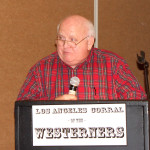
- Jim Macklin
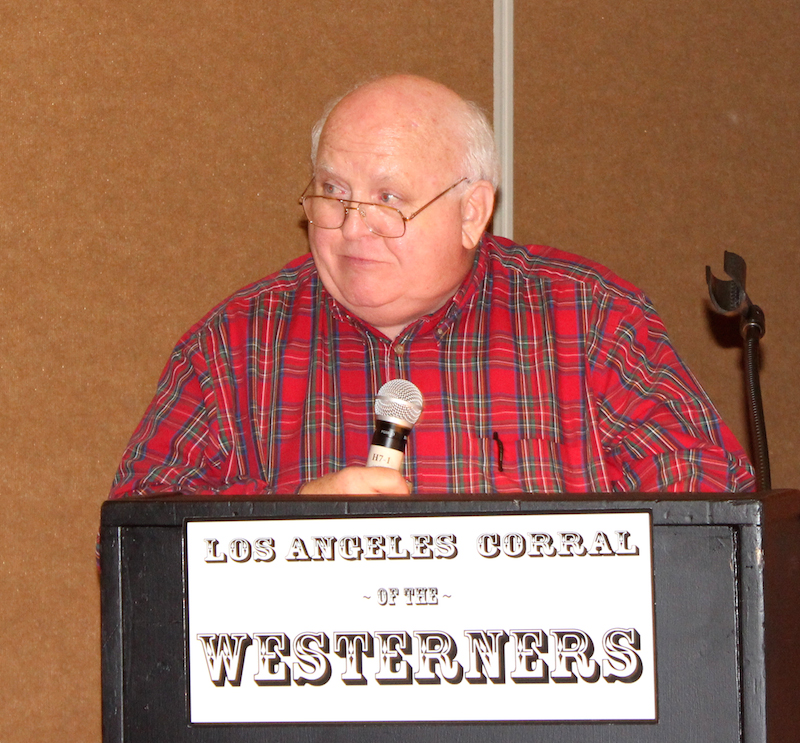
-
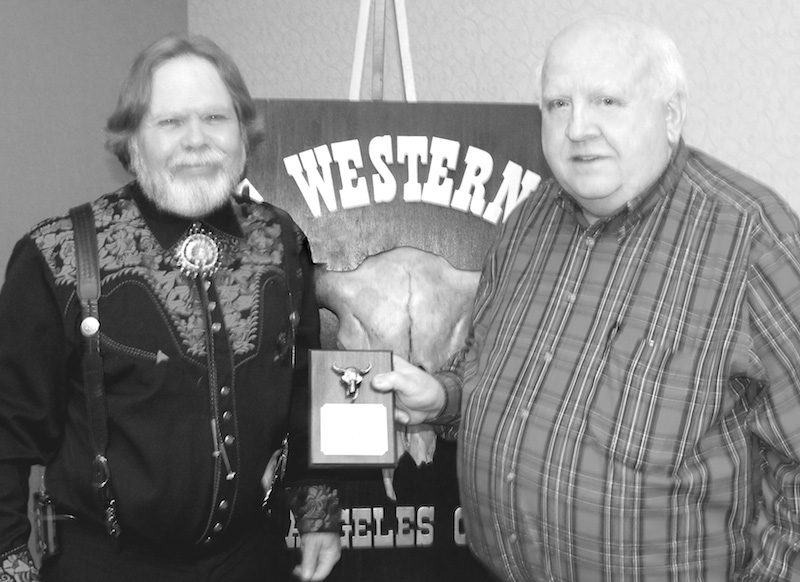
- February Speaker Will Bagley and Jim Macklin
-
- Will Bagley February 2014 speaker
Los Angeles Corral of Westerners
Welcome to the online home of the Los Angeles Corral of Westerners. We invite you to browse our site, learn more about our organization, and even consider joining us.