Roundup: July 13 2022
july22_roundup
Roundup Synopsis
July’s Roundup had Denny Thompson take us out on a history of Dodger Stadium. We enjoyed complimentary peanuts and Cracker Jack, but it was hard to root, root, root for the home team as Denny recounted the murky circumstances surrounding the Dodgers’ acquisition of the stadium site—the once vibrant community of Chavez Ravine. City councilman Julián Chávez purchased the rugged ravine in 1844. From its beginnings, Chavez Ravine was a refuge for many peoples. In the 1850s, it hosted a “Pest House” for Chinese and Mexican smallpox victims. Jewish-Americans settled the ravine in the 1860s, but were forced to relocate their cemetery to make room for oil derricks. By 1900, the area was largely Latino, closely knit, and civically engaged. Denny’s own father and grandparents lived in the Ravine at this time, between 1907 and 1922, before winning a dairy farm in Santa Clarita in a poker game. Chavez Ravine residents won a victory against the oil companies in 1926, when the city council banned industry there. However, the community could not resist the next challenges to its integrity. After WW2, city authorities designated Chavez Ravine a “blighted” neighborhood in need of redevelopment. In 1949, the new Los Angeles Housing Authority secured federal funding to build a public housing project on the site. Utilizing eminent domain, the city purchased the land for $10,300 per property. Homeowners felt pressured to accept this price, which dropped if they held out. As consolation, all former residents were promised preferential placement in the proposed housing project upon completion. Yet by the early 1950s, a specter haunted Los Angeles—the specter of communism. At least, that is how it was seen through the redtinted lens of McCarthyite paranoia. Several prominent “Citizens Against Socialistic Housing,” including then-actor Ronald Reagan, successfully pushed for a referendum that killed the Chavez Ravine housing project in 1952. However, Los Angeles had signed a housing contract with the U.S. government, and in 1954 the Feds only agreed to resell the property to the city for $1.3 million on condition the land be used for “a public purpose.” For 22-year-old city councilwoman Roz Wyman, that purpose was obvious. Los Angeles was a “Big League town” without a Big League baseball team, and needed one badly. Fortuitously for her, the Brooklyn Dodgers were an A-grade team with a D-grade home stadium. Wyman encouraged the Dodgers to move to L.A. in 1957, and team owner Walter O’Malley purchased Chavez Ravine from the city for $494,000 in order to build a new stadium. A 1958 ballot initiative to block the purchase narrowly failed, partly due to wording that confused voters. Sheriffs forcibly evicted the last remaining ten families from Chavez Ravine on May 9th, 1959, a day called “Black Friday” by some. Photos of the Archiga family being dragged out of their home made national headlines, but public sympathy diminished with the revelation that the family owned other properties elsewhere in L.A. Construction of Dodger Stadium was completed in 1962, to the tune of $20 million. The human cost was the exile of a thousand families from Chavez Ravine, the result of broken promises. No alternative public housing project was ever offered. These families were scattered all across Los Angeles, with many members having to split up as dictated by the availability of jobs and housing. The Dodgers, meanwhile, took two decades to find acceptance among Latino Angeleños, but the recruiting of Mexican southpaw pitcher Fernando Valenzuela finally broke the ice in 1980. The community of Chavez Ravine is now a fading memory, but their story is a timeless one concerning questions of eminent domain, public housing, and “public purpose” private property. Many thanks to Denny Thompson for this fascinating discussion. — John Dillon
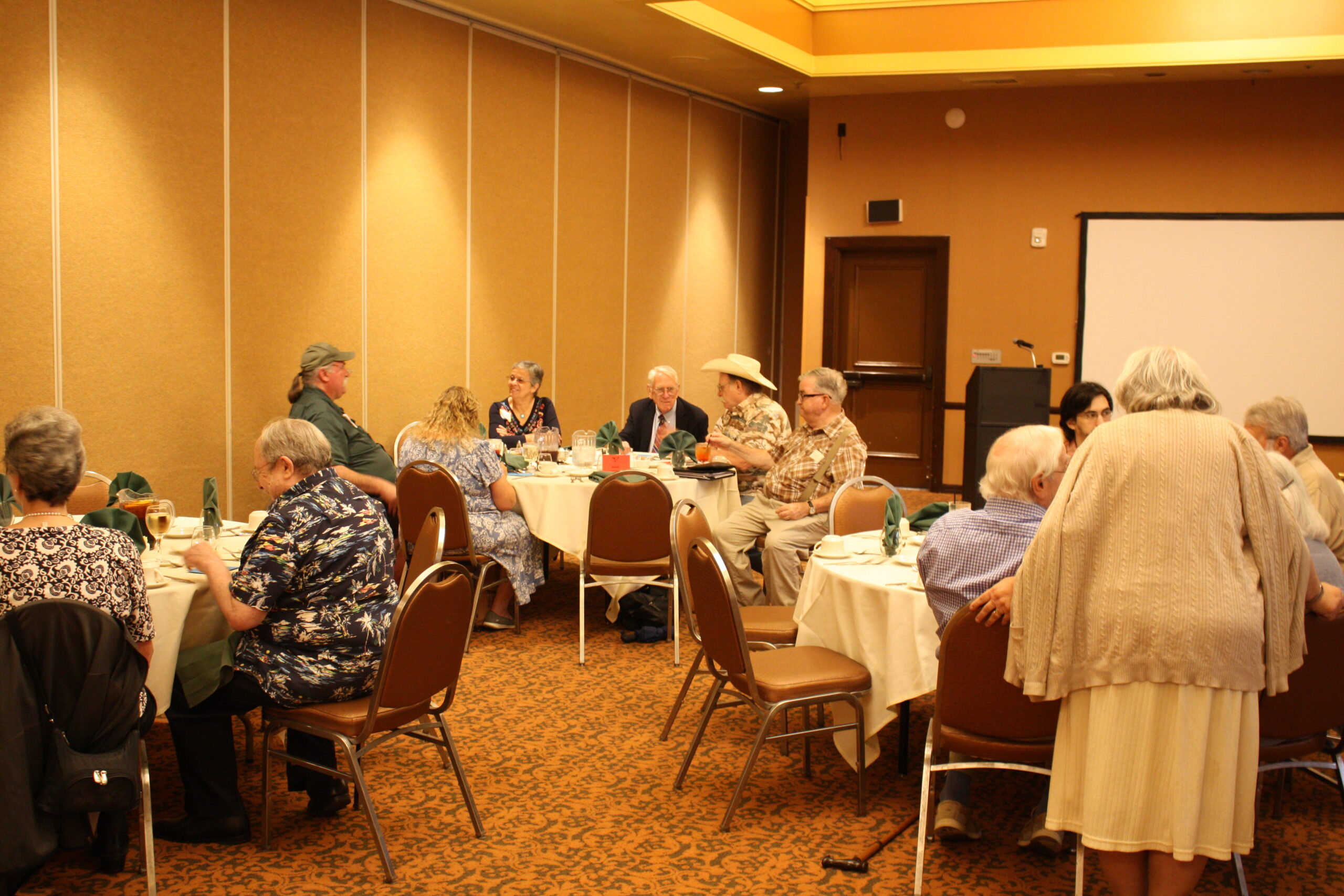
Photos from the Roundup
TBD
Fandango Store
Fandango Form & Purchase
Instructions
To Inform our Registrar & Treasurer
1. Fill out the form below, review information, and click Submit below. (If you are planning on bringing more than four guests, please submit the form again with the additional guest’s names.) When you click the Submit button, this will confirm your reservation. This information will be sent via email to you, to our Treasurer and to our Registrar.
To pay & complete your purchase:
2. Click Buy Now below. You will be taken to PayPal. The following steps apply to the PayPal checkout process.
3. Enter total quantity of meals being purchased/guests attending under Your order summary then click Update.
4. If you have a PayPal account: under Choose a way to pay, you can enter your PayPal account information.
If you do not have a PayPal account: under Choose a way to pay, select Pay with debit or credit card, or Bill Me Later link and enter your billing information.
5. After entering your billing or account information on PayPal, click Pay. This will complete your purchase.
Roundup: May 11 2022
Final-Westerners-May-11-2022-Roundup-Flyer
Roundup Synopsis
Paul Clark took the reins in May, to present us with the exhilarating tale he called “The Rise of the Gasoline Cowboys: Outdoor Motorcycle Recreation in PreWWII California.” A rough and tough subject like this was sure to please those in attendance, just as it must have pleased Ernest Hemingway, to whom the quote which Paul selected is attributed, “There are only three sports: bullfighting, motor racing, and mountaineering; all the rest are merely games.” Let’s get on with the sport, then. Paul described the first motorcycle—and he used the term loosely—as a two-wheeled, steam-powered monstrosity, the painting of which showed two stokers following closely behind to keep it fired; hardly reasonable, but the idea was there. As gasoline engines matured, the concept was revived, this time as a three-wheeled contraption resembling early wheelchairs. The shape we have come to expect was introduced around the turn of the century, and Harley-Davidson and Indian quickly became the premier U.S. brands. In the early years, the motorcycle’s popularity followed its practicality. As it became more reliable and affordable, it became more widespread, with numbers in Los Angeles expanding from a few hundred in 1905, to 3000 in 1910, to 7500 by 1917. The reason for the popularity of L.A. as a haven for enthusiasts was the quality of roads and the quality of the weather; you can get a much better return on investment if you are able to ride year-round, as you can in Southern California. Motorcycle clubs sprang up throughout California starting with the Indian Motocycle Club in Los Angeles in 1904. So new was the fad, that they hadn’t even settled on weather they rode “motor-cycles” or “moto-cycles.” These early clubs were keen to be seen as respectable types, which meant that their members showed up to events in their Sunday best and invited photographers and newsmen to document their fine behavior. The publicity seemed to help with popular acceptance of the new machines. What helped even more were organized rallies exhibiting these bikes’ capabilities. Races on dirt and banked wooden ovals, hill climbs, and desert crossings wowed crowds, and newsreels captured the imagination of the region. Hill climbs were the most popular events, with the Capistrano Hill climb drawing an estimated thirty to fifty-thousand attendees by the early 1920s. While these daredevils were risking life and limb storming up hills, the L.A. Motorcycle Club organized “picnic runs” for its members to cruise sedately on the weekends. Endurance racing became more popular as the cycles improved to the point where they could actually endure. With the onset of Prohibition, an L.A. to Tijuana race was organized and billed as a race to a place “where the bar-rigs are still saturated with stronger stuff than grape juice.” 1920 saw the start of the iconic Big Bear “Hare and Hound” Annual Classic, a midnight run on New Year’s Day that ran until 1960. With the onset of WWII, the motorcycle community packed up and went to war. When they returned, the machines they rode were changing, and so was the country. Motorcycle riding was no longer as respectable as it had been prior to the war, and the culture surrounding it changed drastically from its original form. Like with so much else, the Second World War had forever altered part of the American lifestyle. — Alan Griffin
Photos from the Roundup
TBD
Roundup: April 13 2022
Westerners-Aug-2023-Roundup-1
Roundup Synopsis
April’s Roundup saw the corral miss out, yet again, on the long-awaited “Postcards from Mecca” presentation by Steve Lech (don’t worry, it’s coming soon). Johnny-onthe-spot, however, was Brian-on-the-spot, as Dr. Dillon regaled us with his tale of an American hero, Navy Admiral Fightin’ Bob Evans. As Brian told it, it was Evans, not Jesse James nor Billy the Kid, who was the most famed pistolero 120 years ago, and we sure found out why. Fightin’ Bob’s story began in Virginia, where he was born Robley Dunglison Evans, in 1846. After being expelled from school for fighting at age thirteen, Bob’s uncle suggested a career in the Navy. Unfortunately, both Naval Academy seats allotted to Virginia were already filled. Bob agreed to move to Utah, as it was the only territory with allotments available. It was to be a fateful decision. Prior to the Transcontinental Railroad, wagon trains were the name of the game, and so it was with the party that Evans accompanied out west. Wagon trains, however, were vulnerable to Indian raids. Just such an attack befell Evans’ train upon leaving Ft. Laramie, after a wagon got mired in the mud. Thirteen-year-old Evans killed a man in his escape, made it back to the fort, and set out again with just a single wagon. His party was attacked again and Bob was shot in the ankle by an arrow, his foot pinned to the mule he was riding. Eventually, he made it to Salt Lake City where he established residence. Young Evans entered the Naval Academy in 1860. He was trained aboard the USS Constitution, “Old Ironsides.” The Civil War interrupted his tutelage, however, and half his class left to join the Confederacy. Evans stayed true to the Union and ended up fighting his own brother in the rebel navy. As a junior officer taking part in the assault on the “Rebel Gibraltar,” Ft. Fisher, North Carolina, Evans led an assault party of sixty-two sailors and marines. Horribly outgunned and isolated on the beach, his assault force was cut down, with 58 men killed or wounded. Evans was one of only eight men to breach the rebel fort, although he was shot four times for his efforts. He killed the sniper who had wounded him with a miraculous pistol shot from his Whitney .36 Navy revolver. Bob was left for dead on the beach, but was finally rescued and taken to a hospital. He threatened to shoot anyone trying to amputate his legs, so he kept them, along with two bullets that couldn’t be removed. His wounds forced him to use two canes for the rest of his life. Evans moved quickly through the ranks thereafter, taking postings throughout the world, and eventually commanded a gunboat, the USS Yorktown. It was on the Yorktown that he earned his appellation. His refusal to back down during a tense standoff with Chilean warships left him known as “Fightin’ Bob” ever after. After taking a leading role in the largest naval battle of the Spanish-American War, Bob reached the pinnacle of his career when he was given command of the Great White Fleet. Under Admiral Evans’ command, the the Atlantic and Pacific Fleets were combined for the first time in May 1908, in San Francisco Bay. This achievement marked a turning point for San Francisco in its postearthquake rebuilding, and also a bridging of the gulf between America’s East and West. If you’d care to read more about this American hero on both land and sea, you should pick up his autobiographies, A Sailor’s Log and An Admiral’s Log. I’m sure I’m not alone in my anticipation for what Brian Dillon has in store the next time someone calls in sick and he’s called to fill in again. — Alan Griffin
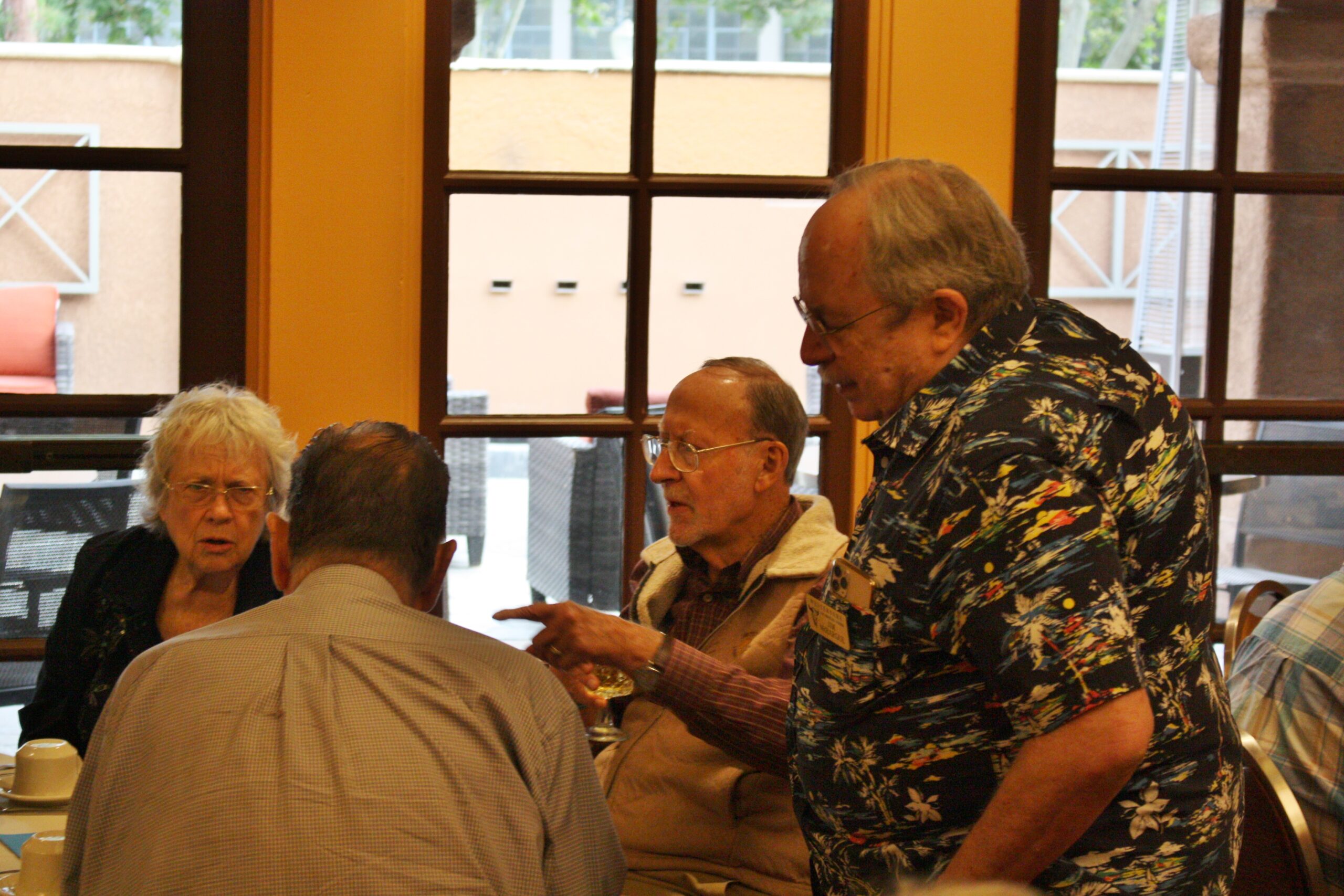
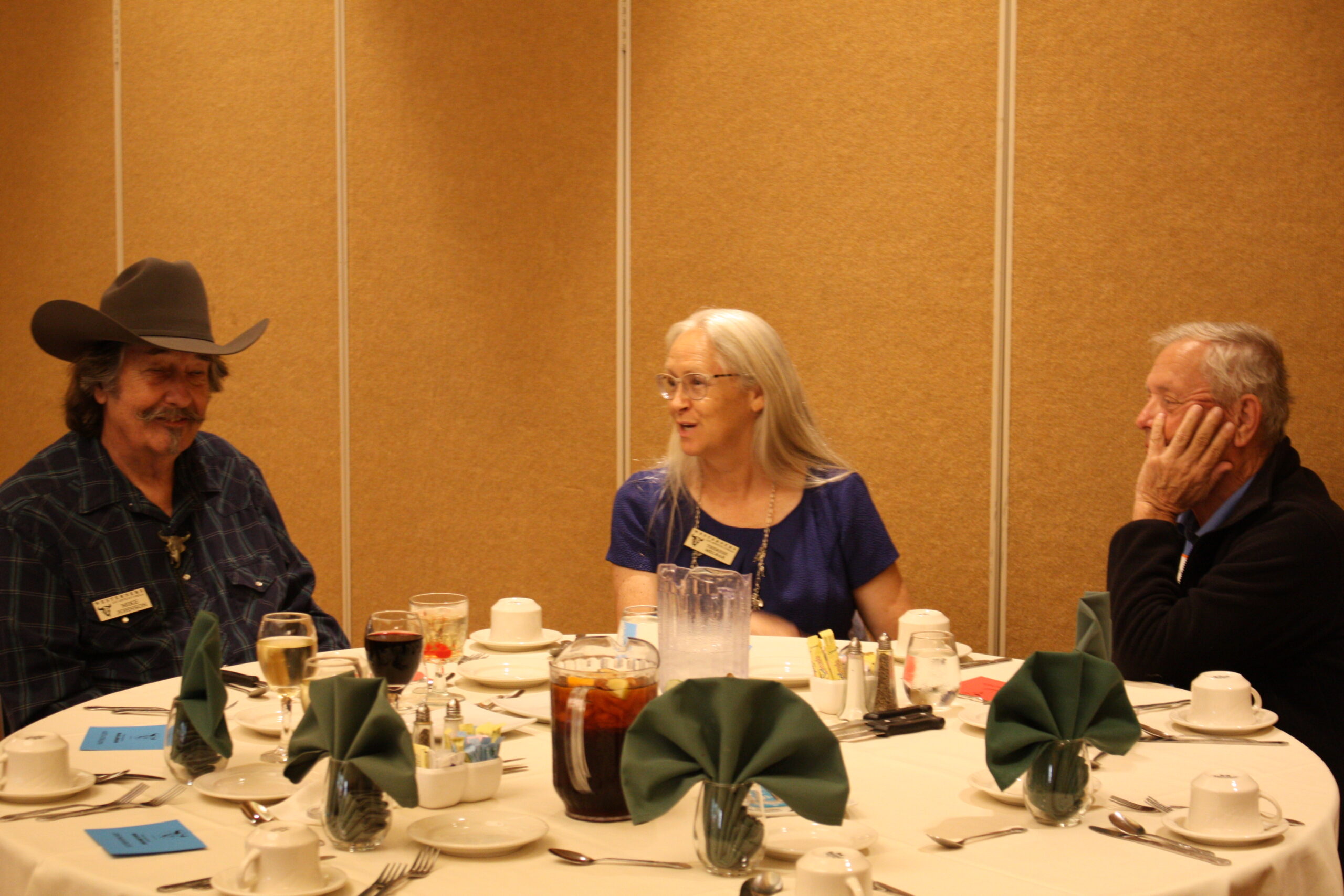
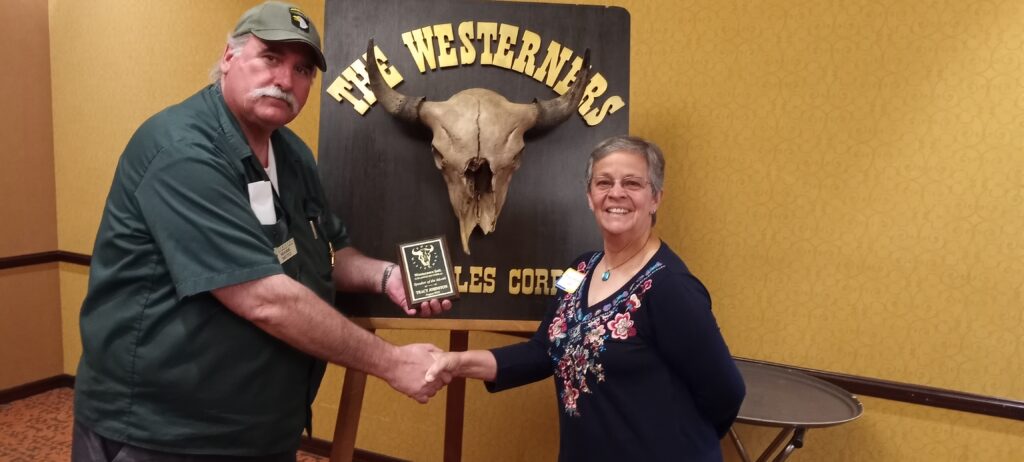
Photos from the Roundup
Roundup: March 9, 2022
March 2022 Roundup Flyer
Roundup Synopsis
Taken From Branding Iron 306 Spring 2022.
In March, the Corral was treated to a talk by Nick Curry. Assuming the style of a fireside chat, Mr. Curry expounded on his research about a historic Angeleno of much importance, if little current recognition, Dan Murphy. Murphy was an early investor in the local economy and, along with men like Edward L. Doheny, helped shape the area into what it is today. In fact, Dan Murphy picked up with oil drilling in the area where Doheny left off, and became fabulously wealthy as a result. The foundation that resulted from the dissemination of his wealth has done much for education and the preservation of local history in Los Angeles.
Dan Murphy was born in 1858 in Pennsylvania, and came to Los Angeles by way of a family homestead in Kansas, which he shared with his parents and seven siblings. Murphy eventually moved out West and immediately formed an affinity for the railroad, working on a spur line that ran down to San Diego. Before long, he met Frank Monaghan, and the two had plans to bridge the Colorado River. Doing just that, they drew the attention of Charlie Crawford who tasked them with building a general store near the new bridge. In so doing, they founded the town of Needles in 1883.
The two men were known for their honesty, a rare commodity in the railroad business, and successfully ran the store until 1911. During their time in Needles, they founded a bank. This led them to invest in a number of mining and oil drilling operations throughout the region. Key to Dan Murphy’s future success was his purchase, sight-unseen, of land which would become the Brea Canyon Oil Company. The well, which continues to produce today, eventually left Murphy in possession of a fantastic mansion and a fortune of $200 million by the time of his death in 1939.
Having no children, Murphy entrusted his fortune to his niece Bernardine. Enter the Catholic church and the Los Angeles diocese. The Murphy family had been closely connected to the church for decades, so much so that Dan had once donated $1 million to the Pope in one lump sum. During her time in Rome, Bernardine, now the executor of the Murphy fortune, was wooed by an Italian prince. Los Angeles churchmen grew concerned that if Bernardine were to marry this man, then she, along with her fortune, would move to Rome and leave the Los Angeles diocese in the lurch. So, the church hatched a plan. A dissatisfied priest was found, released from his vows, and wed to Bernardine. Thus the Murphy fortune remained in Los Angeles. Now known as the Dan Murphy Foundation, it provides more money to Catholic causes today than even the Doheny Foundation.
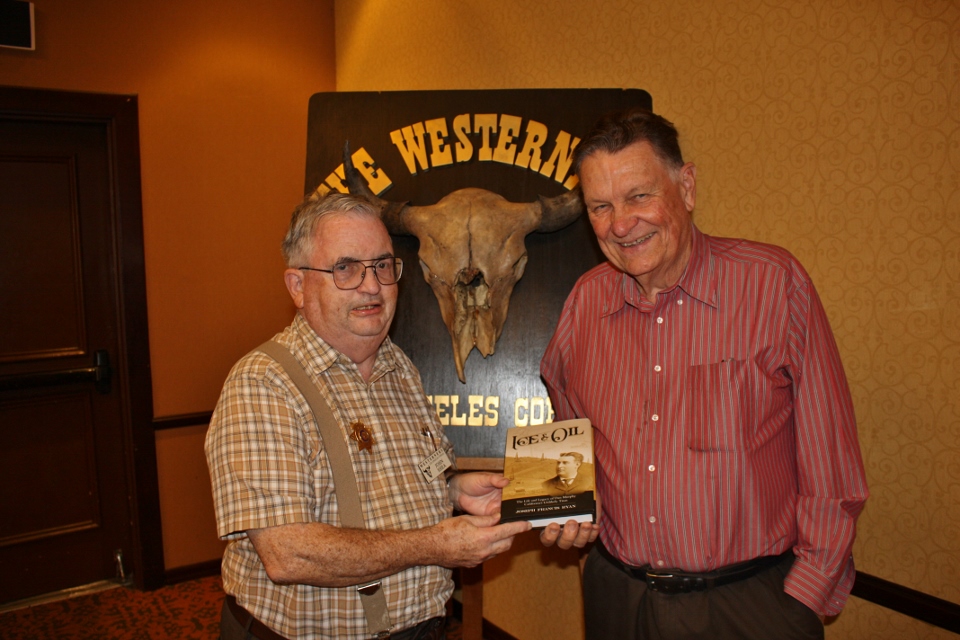
The Dan Murphy Foundation was crucial to the formation of the archives put together by Westerners Living Legend Msgr. Francis Weber. That archive was, in turn, essential in gathering the information used for the most recent book about Dan Murphy entitled Ice and Oil, by Joseph Francis Ryan, reviewed in Branding Iron 303.
— Alan Griffin
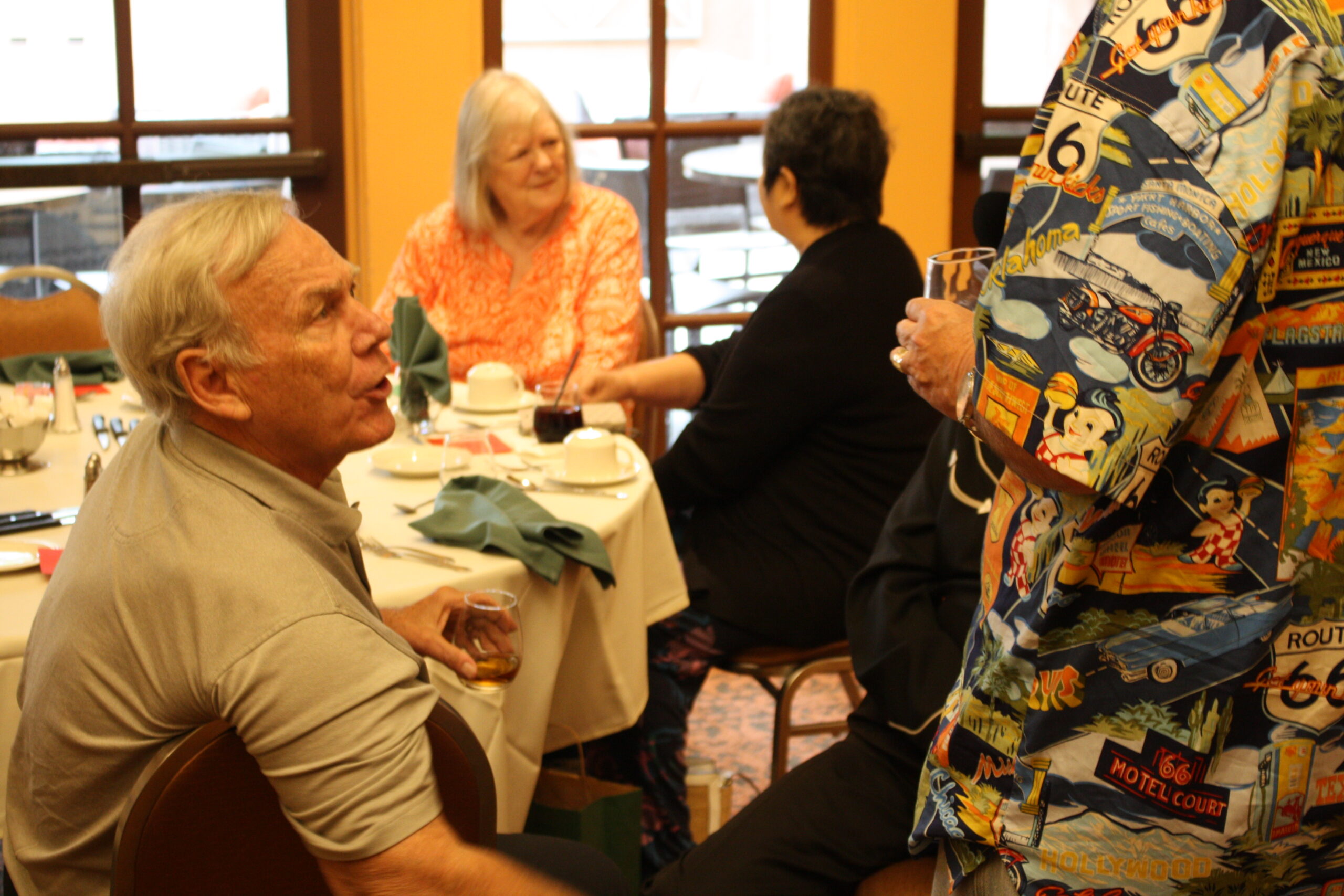
Photos from the Roundup






Los Angeles Corral of Westerners
Welcome to the online home of the Los Angeles Corral of Westerners. We invite you to browse our site, learn more about our organization, and even consider joining us.