Roundup: December 14, 2022

WLAC Los Angeles Corral 12.14.22 RoundUp Flyer


Roundup Synopsis

Taken From Branding Iron 309 Winter 2023. 

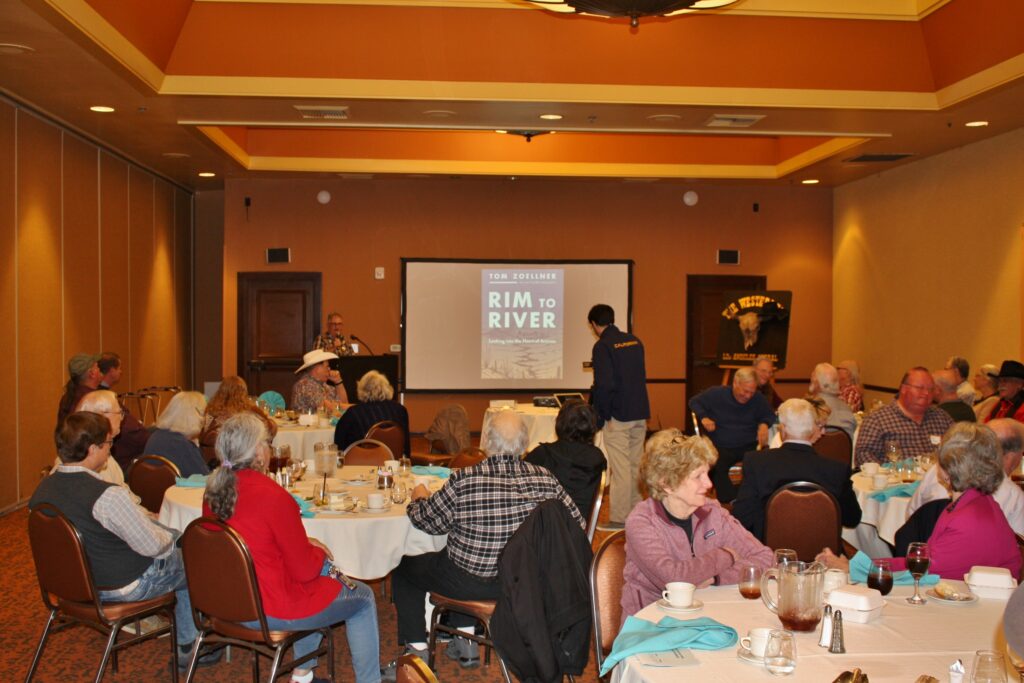
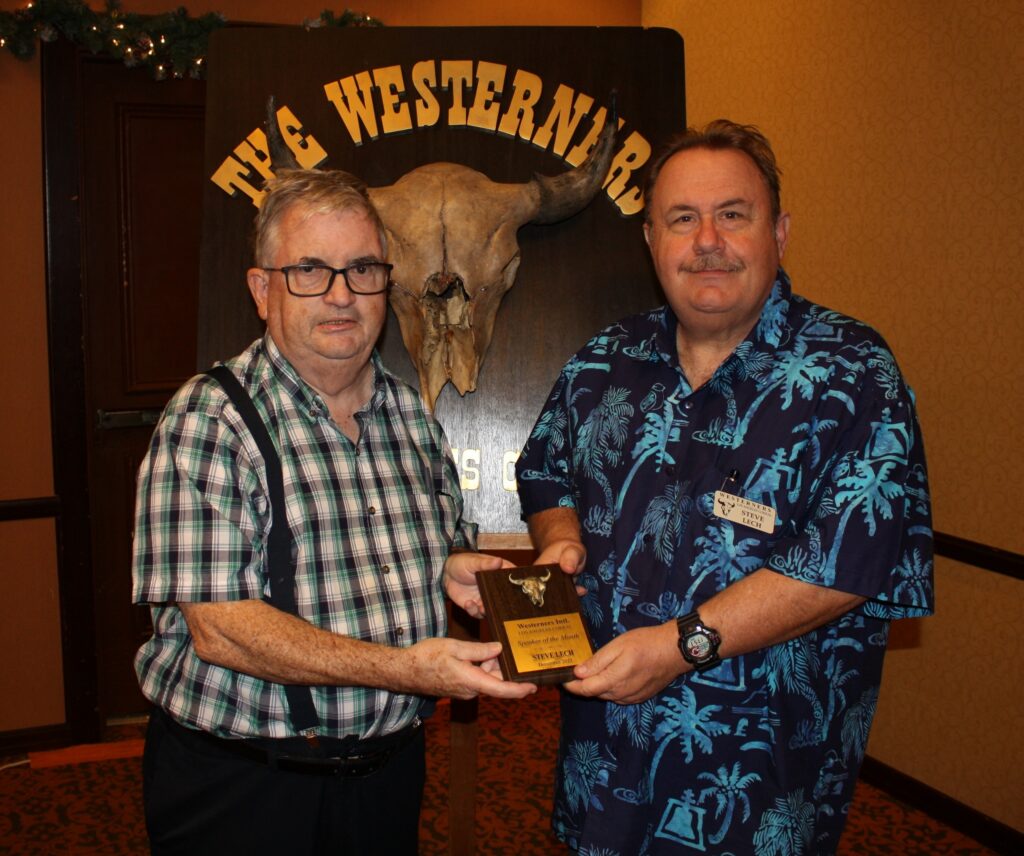
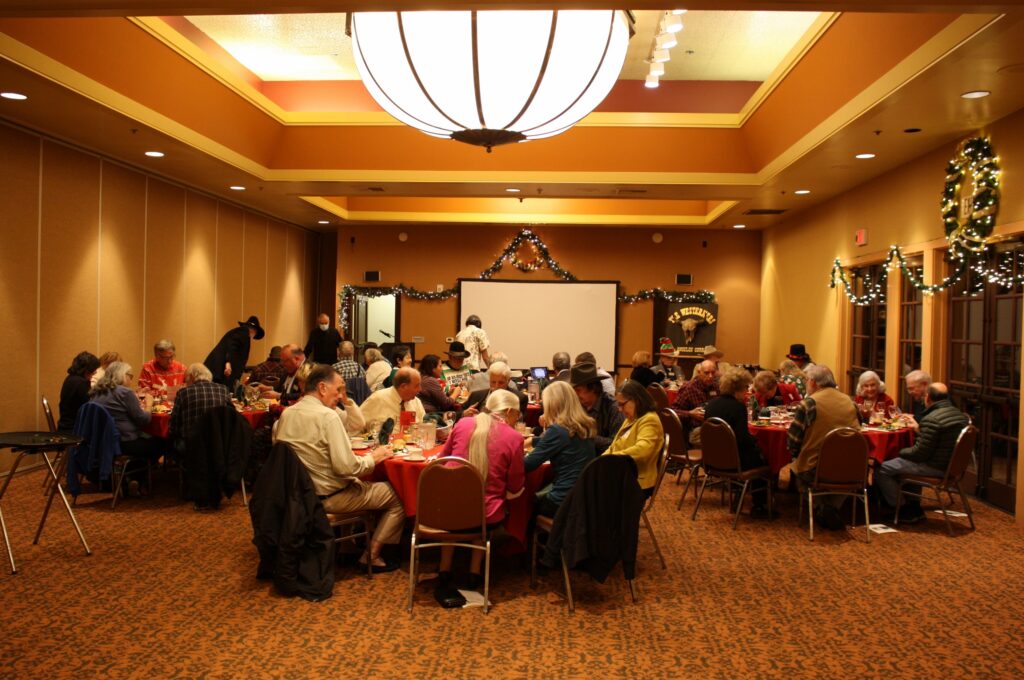
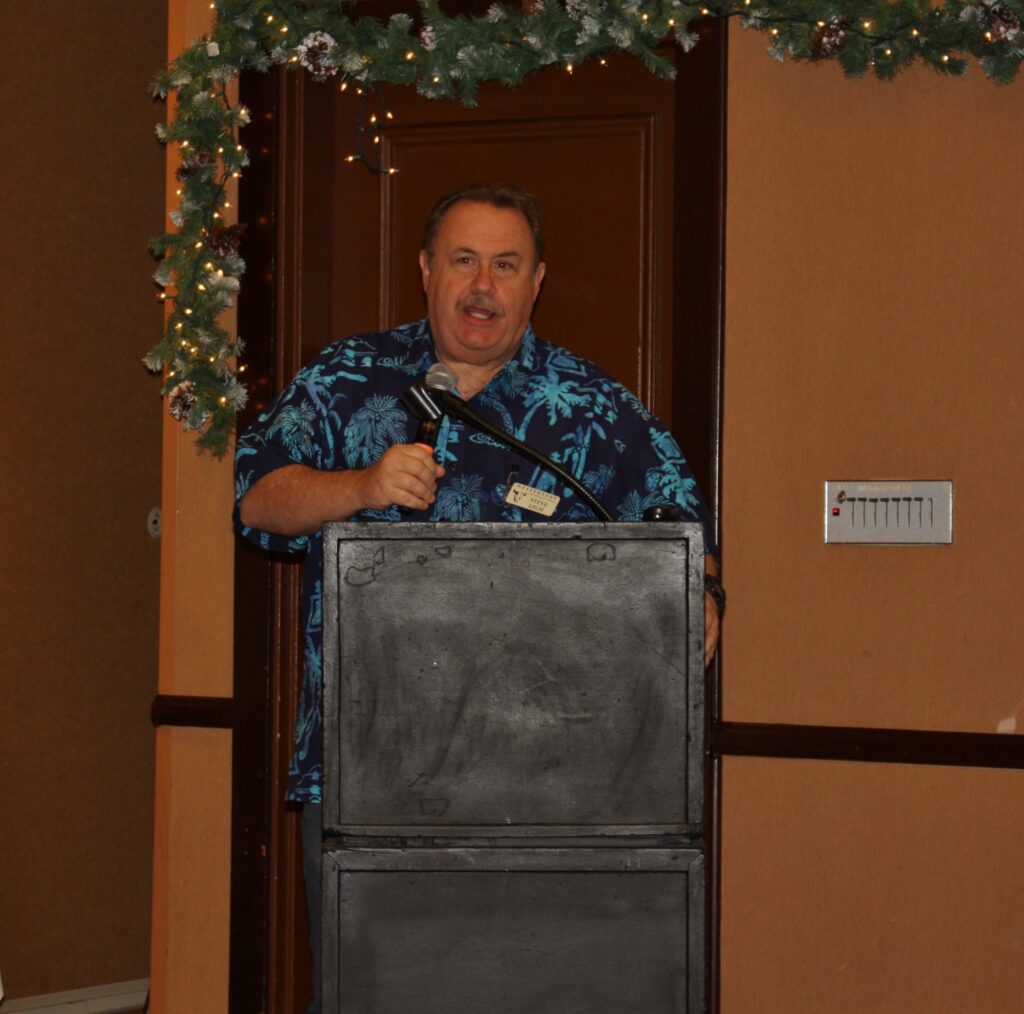
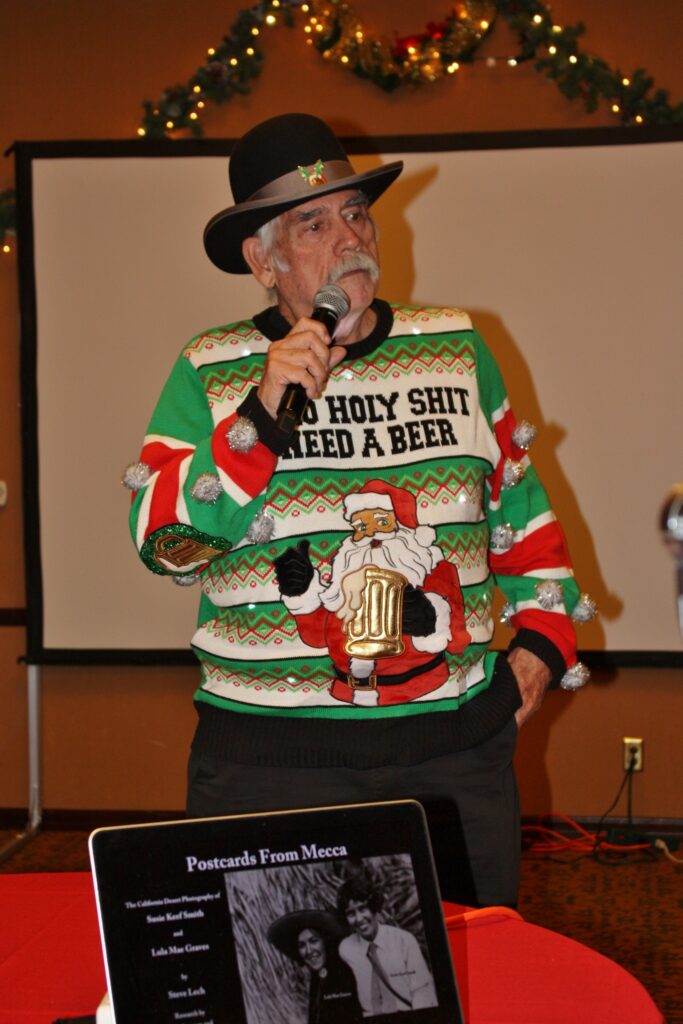
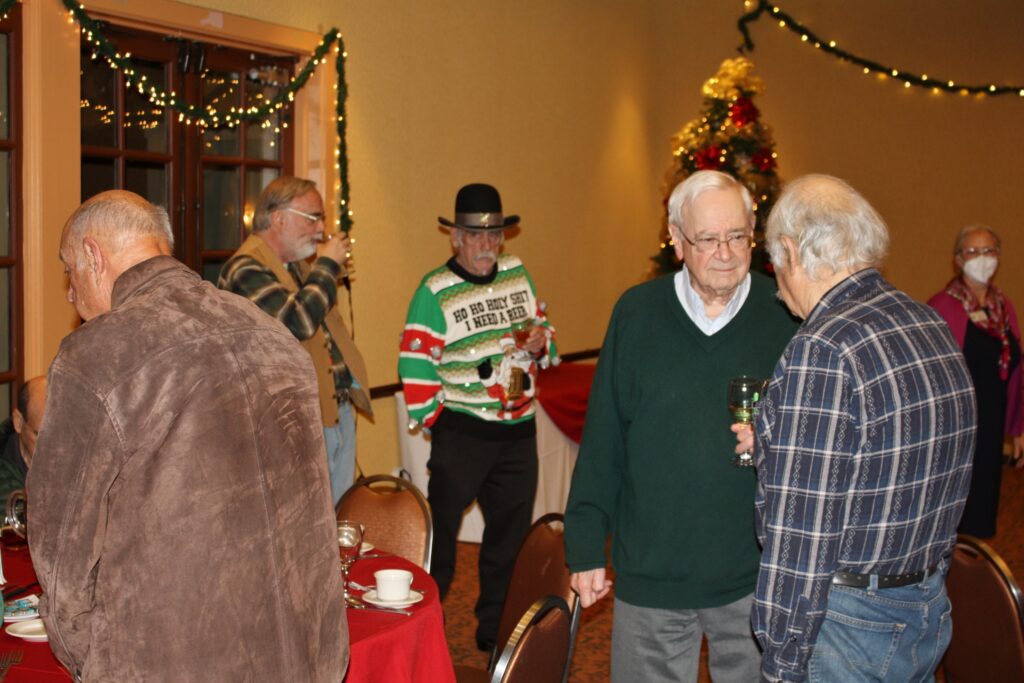
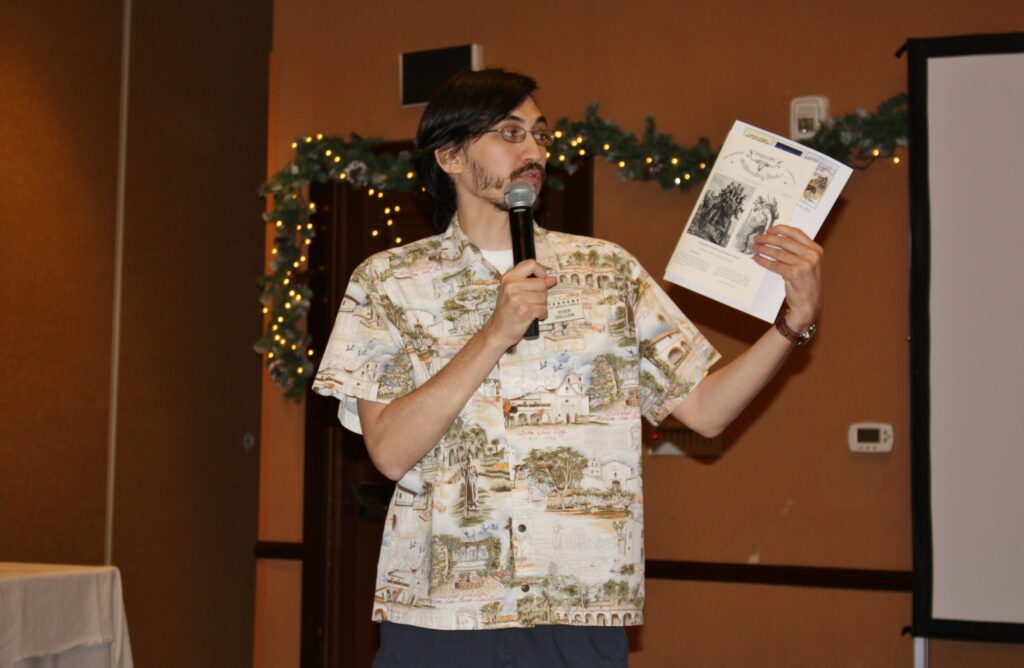
December’s Roundup saw the L.A. Corral welcome guest speaker Steve Lech as he took us back almost a hundred years before tens of thousands of people flocked to the Coachella Valley for the biggest music festival in the world. Mr. Lech introduced us to a woman named Susie Keef Smith (1900- 1988), who created photographic postcards of this majestic California desert landscape.
Susie’s love for photography began as a child when she contracted polio at the age of twelve. Her uncle gifted her a large format camera to use while she was confined to a wheelchair. Through perseverance and to doctors’ amazement, she began to walk again. In 1926 with encouragement from her father, Susie became the postmaster of Mecca, California. During the 1920s many Americans had an image of the California deserts as desolate wastelands with no vegetation. This is why they were commonly known as the “Devil’s Garden.” Most people were unaware of the attractions of the Joshua trees, or the dazzling Salton Sea. Susie began to take photographs of the desert landscape which propelled her to the forefront of the golden age of postcards.
During this era Susie encouraged people to travel out west to see the California Desert for themselves. Susie captured photos for postcards by traveling through the desert on a Ford Model T Truck, that was given to Susie by her father on one condition: that she disassemble the vehicle and put it back together again. This she accomplished, and it started on the first crank, proving her skills as a motorist.
Photographic postcards were great for advertising the land and for people to write to each other. This form of postcards created a medium that encouraged people to venture out to the California desert. The routes Susie chose to photograph were attractive to travelers because this was during the time the Colorado River Aqueduct was being built. The aqueduct channeled water through the desert thus enabling desert communities to become popular vacation destinations. The best-known example was Palm Springs. Smith took pictures of the aqueduct construction workers and their equipment. Susie’s photos allowed people to visually grasp the mystic beauties of the desert landscape. A large number of the locations Susie photographed are now part of the Coachella
Valley Preserve.
— Darran Davis


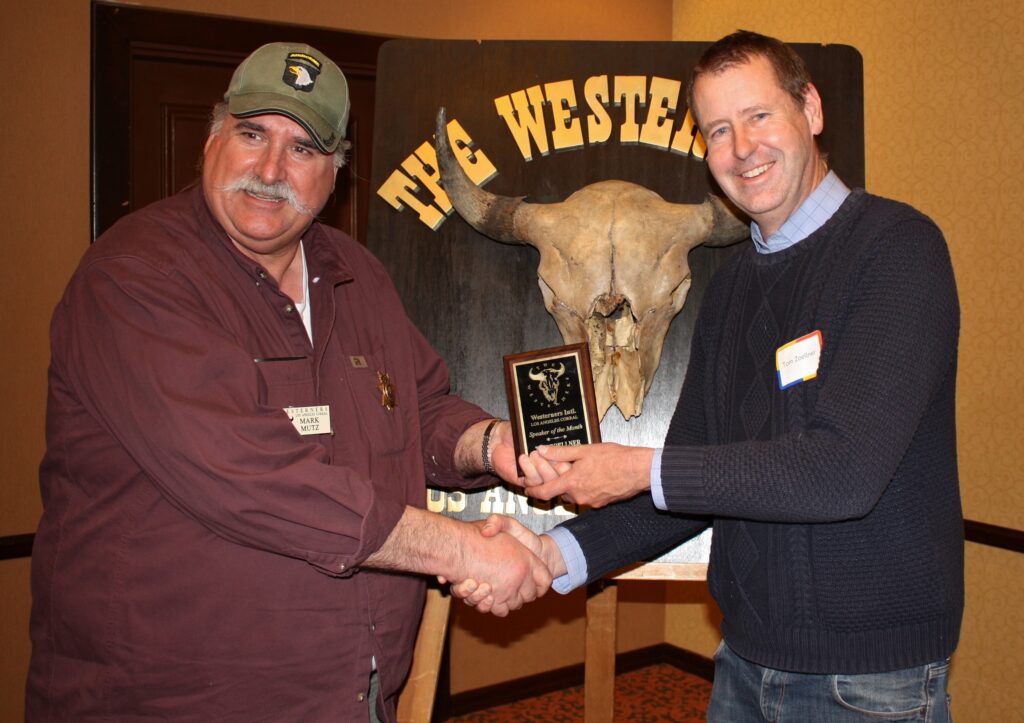
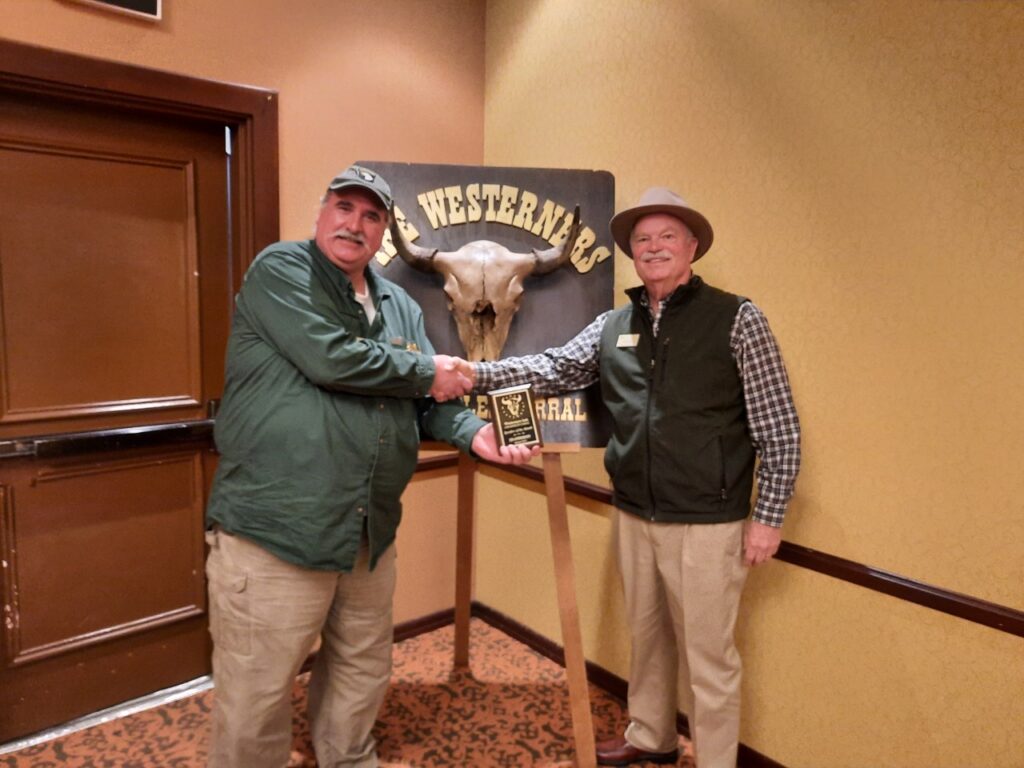
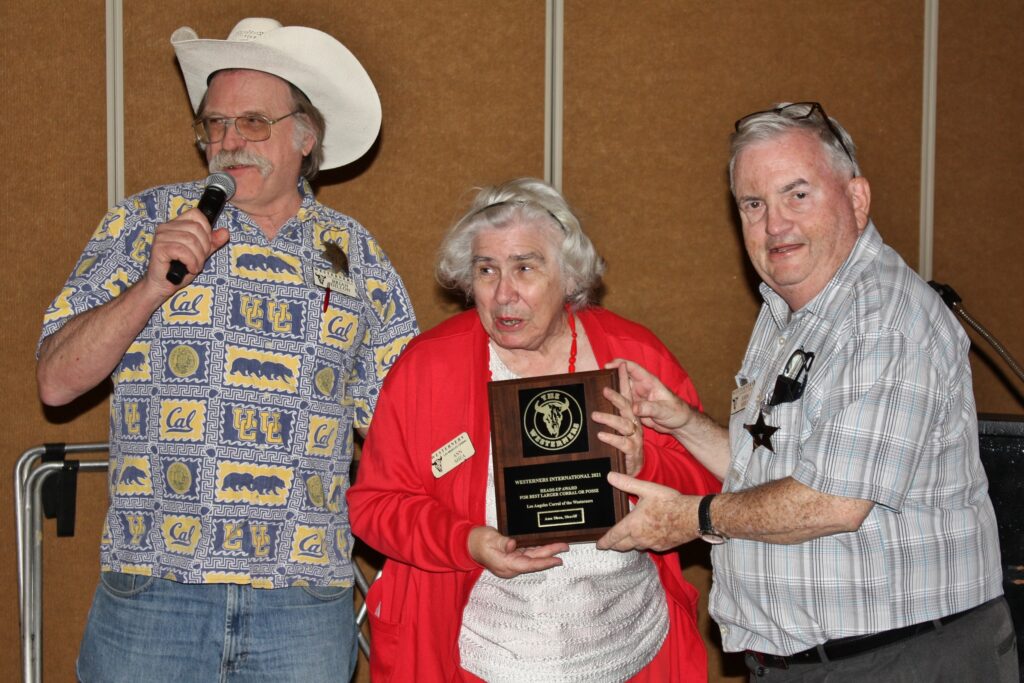
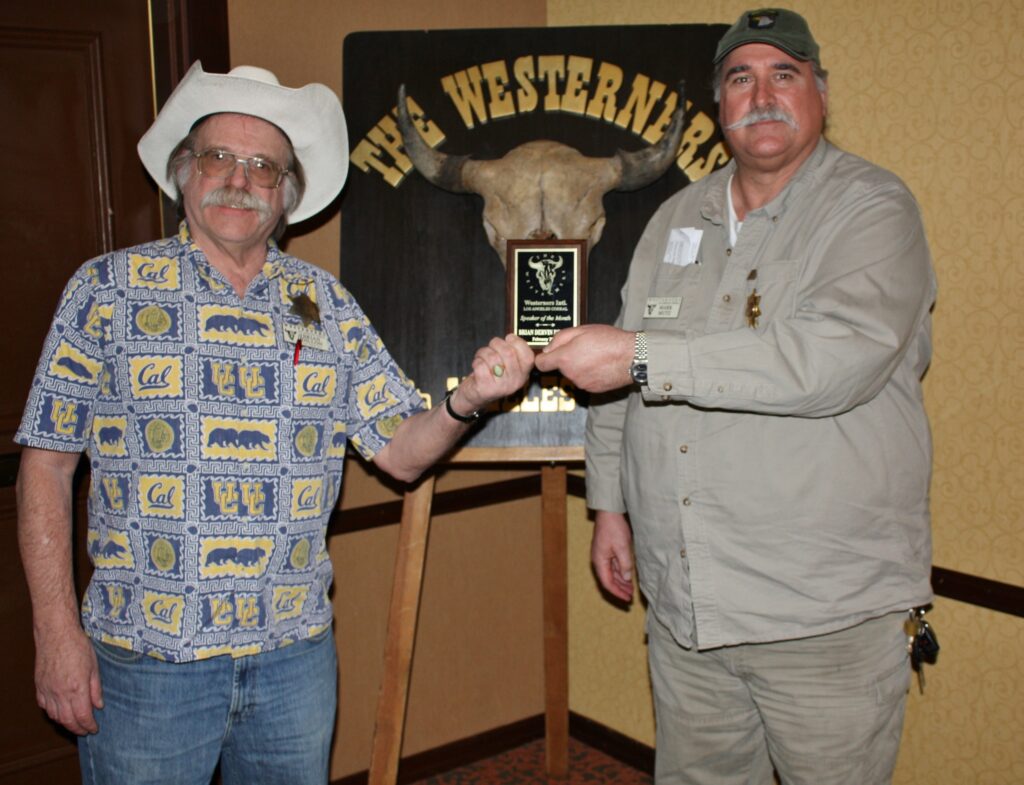
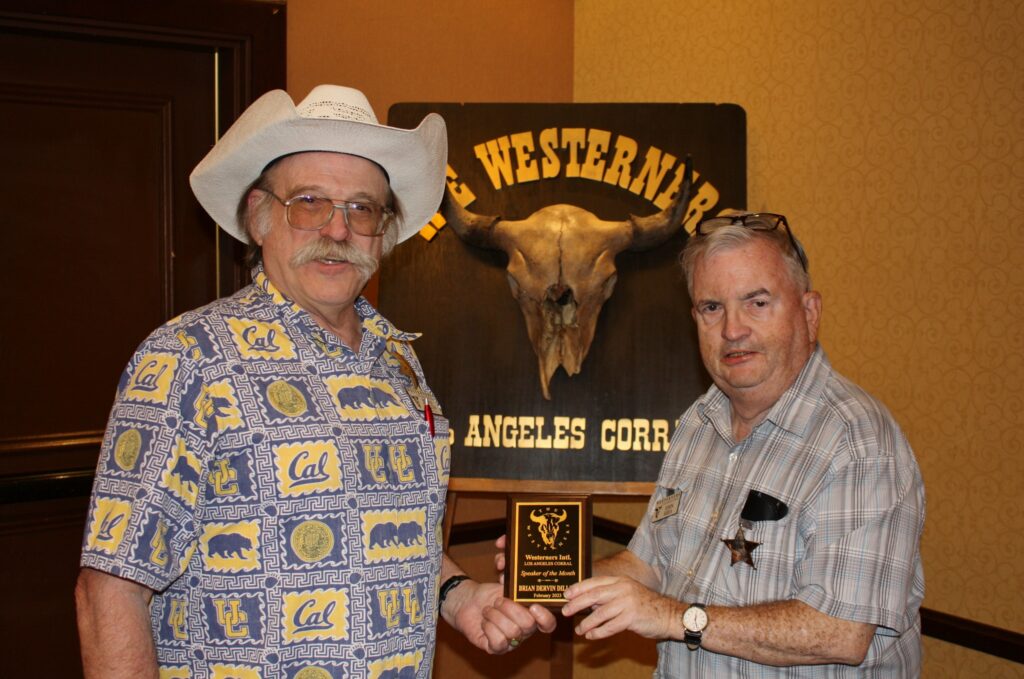
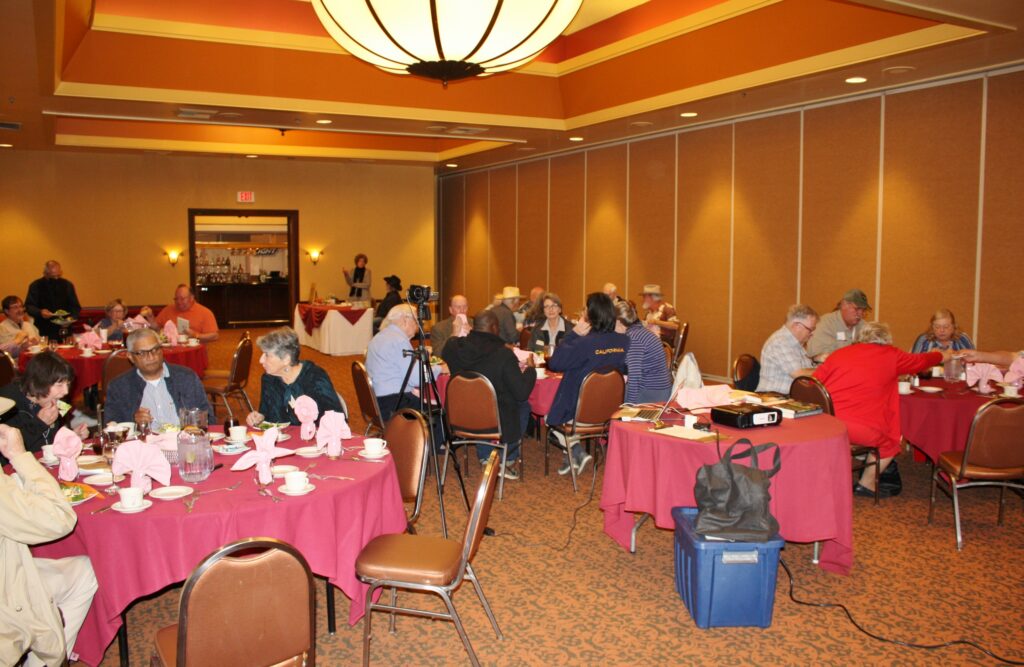
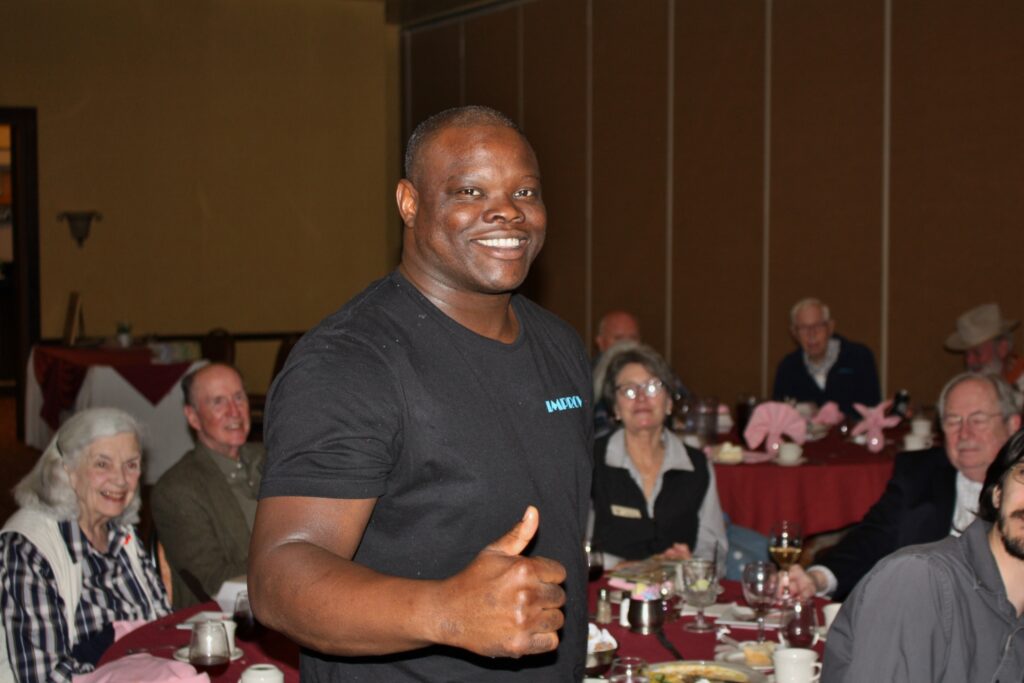
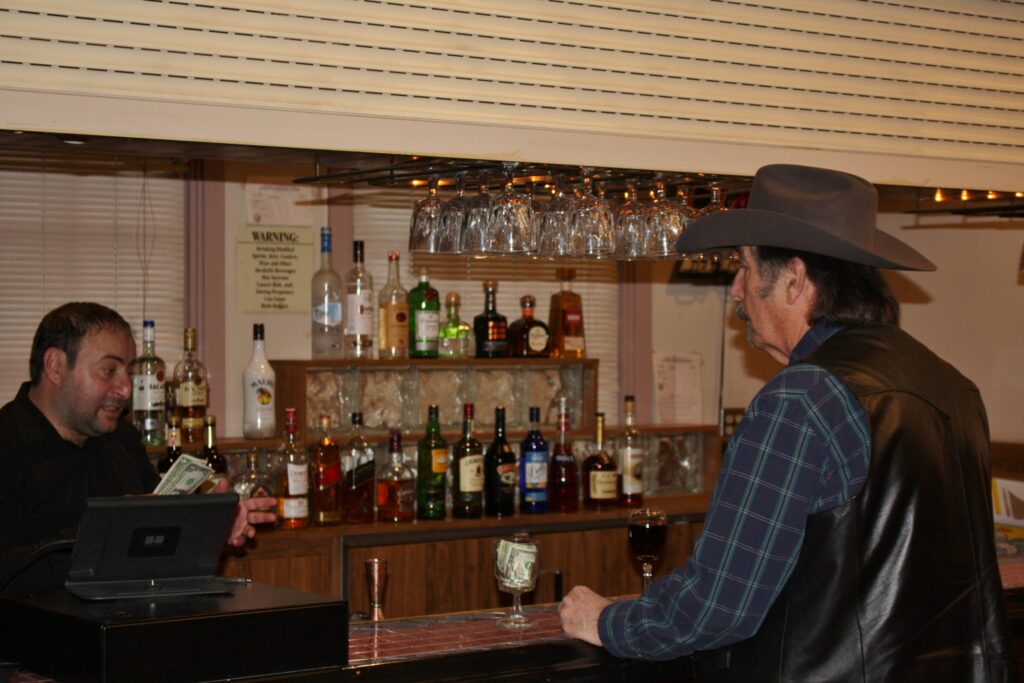
Photos from the Roundup
Living Legend No. 53 John W. Robinson

John Wesley Robinson

Westerners International Living Legend No. 53 John Wesley Robinson

John Wesley Robinson (1929-2018) was born in Long Beach, California. He attended the University of Southern California, and graduated in 1951. John did his military service in the U.S. Army during the Korean War, then after demobilization began to contemplate what to do with his life, and how he could make a living combining his his favorite subject, history, with his favorite pastime, hiking and mountain climbing. Much later, he went to grad school at California State University, Long Beach, where in 1966 he earned an M.A. Degree in History. John taught history for 35 years at the grade school and junior high school level, the final 32 years within the Newport-Mesa Unified School District of Orange County.

John W. Robinson was the Hiking Historian, a modern-day John Muir. He was equally at home trudging towards some mountaintop as he was in the research library. He climbed and took detailed notes on dozens of the tallest peaks in the North American West, and in Canada, Alaska, and Mexico. His love of the outdoors was nurtured as a child through family camping trips to Yosemite and YMCA summer camps in the San Gabriel Mountains during the 1930s. By the mid-1950s Robinson was leading Sierra Club hikes to and through California’s Sierra Nevada, as well as lower-elevation ranges closer to Los Angeles. He was a mainstay of the Southern California Sierra Club, and was repeatedly commended by that organization for his outstanding dedication to the protection and preservation of the Golden State’s natural wonders, especially through his unique talent of enhancing public awareness of them. In 1959 Robinson was given the Sierra Club’s Hundred Peaks Award in recognition of having climbed that many mountains in three different New World countries. Thirty-two years later, he was honored again by the Sierra Club’s Outings Service Award, for having introduced so many neophyte hikers and backpackers to the great outdoors.

John was the universally-acknowledged master of historical writing about the mountains, deserts, and all the lightly-populated wild places that still exist in Southern California. His publications were the antidote to the too-narrow, exclusively urban, writing of most academic historians who seldom venture beyond the Los Angeles city limits. Robinson understood the importance of topography and cartography to accurate historical writing better than any cellar-dwelling urban historian or Ivory Tower shut-in who remained innocent of in-person exposure to any of the places they wrote about. John also reveled in, as the old saying goes, “all of the -ologies.” In addition to his primary devotion to history, he was as knowledgable about the geology, climatology, botany, zoology, etymology, ethnology and archaeology of his beloved Southern California as were most experts in every one of these varied fields. Robinson considered familiarity with the “-ologies” as necessary for understanding history as most chairborne academics did political science, or economics.

John W. Robinson published a remarkable number of full-length books and articles on the history of out-of-the way places few Southern California city-dwellers were familiar with. He kicked off his writing career with Camping and Climbing in Baja California (1967), which was followed by Trails of the Angeles (1971). This handy hiking and back-packing guide has been in print for more than 50 years, and has sold more than 80,000 copies. It is one of the books, quite literally, on the shelf of every Boy Scout and Sierra Club member in Los Angeles County. Robinson indulged his own personal fascination with mining and prospecting history with Mines of the East Fork (1972), the first of what would be several books on the old mines of Southern California. This was followed, that same year, by yet another “trail” book, San Bernardino Mountain Trails (1972), and then by The Mount Wilson Story (1973), Mines of the San Gabriels (1973), and Mines of the San Bernardinos (1977). The books that John Robinson was most famous for, and for which he truly deserves a permanent spot atop literary Mount Olympus, are his beautifully-illustrated, large-format “mountain trilogy,” The San Gabriels (1977), The San Bernardinos (1989), and The San Jacintos (1993).

Even while writing one hiker’s guide or magnificent summary of the cultural and natural history of yet another Southern California mountain range after another, John contributed article after article to the Branding Iron, the Los Angeles Corral of Westerners International quarterly publication. He wrote about the old Ridge Route over the mountains from Los Angeles to the San Joaquin Valley, about the old Plank Road through the desert of Imperial County, and about what happened in and around Los Angeles during the Civil War, to name but a few of his many and varied Branding Iron articles. Robinson was also a mainstay of the California Territorial Quarterly, and its most prolific Southern California contributor. During the 25 years of this wonderful quarterly’s existence, John published an unsurpassed 44 articles on Southern California historical topics within its pages.

Not just the most prominent Sierra Clubber of Southern California, John Robinson was also a member of the Oregon-California Trails Association, and a founder of the California chapter of the Old Spanish Trail association. John won the Donald H. Pflueger Award from the Historical Society of Southern California, twice, in 1992 and in 1998, and the Scholastic Authorship Award of the Conference of California Historical Societies in 2003. He was made a Fellow of the Historical Society of Southern California in 2005 for “Exceptional lifetime achievements that have brought distinction to history.”

John W. Robinson was one of the most dedicated members of Westerners International you could ever hope to meet. He belonged to and was active within three different corrals, Los Angeles, Huntington, and San Dimas, and served as Sheriff of the Los Angeles Corral in 2001. Robinson won the Westerners International Coke Wood Award for his historical writing three times, in 1990, 1992, and 1995. In recognition of his prolific output as an historian, and his many and varied contributions to all three of the corrals he honored with his presence, John W. Robinson was made Westerners International Living Legend No. 53 in 2010.

It is hard to describe John W. Robinson without recourse to superlatives. Olympian is the adjective that comes most readily to mind, not only for his influential and inspirational publications, but also in its original, elevational, context. No Southern California historian exemplified the old saying “Without Geography, you are nowhere” better than he did. Place names held a special fascination for him, but whereas most of his urban-dwelling peers only studied the origins of the names of towns and cities, John delighted in revealing the sources of the names of creeks, mountain passes, overgrown alpine meadows, and abandoned wagon roads. He linked each place to the long-dead people, Indians and settlers alike, who named them, passed through or used them, or lived near them. And he was able to do this because he went to every last place he ever wrote about, no matter how isolated, nor difficult of pedestrian access.

John Robinson was a kind, gentle, and generous soul. Modest, humble, and immensely likable, he was always willing to share his knowledge with friends, students, fellow historians, even total strangers he met along the trail or in conference rooms. He was always willing to review and red-ink drafts given him by younger writers, and to encourage them in their efforts: the writer of this brief summary was one such admirer, and is still grateful for the time and thought he put into pre-publication reviews of his own research write-ups. Only the most productive writers know that every minute spent working on a draft written by someone else is a minute stolen from the work you should be doing on your own drafts, but John was never too busy to ignore the swarm of younger writers clamoring for his editorial suggestions and, of course, his approval. He could correct the most embarrassing error so avuncularly that you were left brimming with pride that he cared enough about your own work to help you get it right.

Late in life, John donated his extensive collection of books, maps, manuscripts, and drafts to the Los Angeles Corral’s archive in the Special Collections division of the University of Southern California Library. As he grew older, and the robust young body that had conquered so many tall mountains began to lose its battle against old age, he had to stop hiking, and then driving, but he never lost his wonderful sense of humor nor his upbeat outlook on life. John W. Robinson may now be gone, but his writing lives on. There is no doubt whatsoever that his wonderful literary legacy will continue to inspire and enchant hikers no less than historians in all of the places he wrote about. And there is also no doubt that future generations not yet born will, in years to come, still turn to John’s books, articles, and trail guides. These will continue to be the best pathway for escaping the claustrophobia that so plagues the overcrowded City of the Angels and its environs. Nor is there any doubt that once these future Angeleños have been guided by John W. Robinson’s writing to the wonderful wild lands that can provide solace for their minds, spirits, and bodies, they will thank him, as past generations have always done, for so generously sharing his wisdom.


By Brian Dervin Dillon, Ph.D., 2018, revised 2022.

Living Legend No. 63 – Jerome R. (Jerry) Selmer

Jerome R. (Jerry) Selmer

Westerners International Living Legend No. 63 Jerome R. (Jerry) Selmer


Jerry Selmer (1933-2018) joined the Los Angeles Corral of Westerners International in the Fall of 1975, at the invitation of former Sheriff Sid Platford. Long before that, however, he was a friend and admirer of Homer Britzman. Britzman founded the Los Angeles Corral in 1946, and lived in Charlie Russell’s old house, surrounded by wonderful works of art by that brilliant Western artist. Jerry was Britzman’s neighbor, and it was while visiting the Britzman/Russell house that the “western bug” first bit the much younger Selmer.

Jerry Selmer was a 3rd generation Californian who always made his home in the Los Angeles area. How his family got to the Golden State is a riveting tale still awaiting publication, involving final farewells from the 1862 Shiloh battlefield written in human blood, and a shipwreck, marooning, and miraculous rescue from the freezing wastes of Tierra del Fuego. Hope springs eternal that even though Jerry has left us, his son John, a second-generation Los Angeles Corral member and former Sheriff, may yet be motivated to write down his remarkable family history and publish it.

Jerry attended Pasadena City College, then UCLA, where he graduated with a B.A. in Public Administration in 1955. Also in the ROTC, he traded his cap and gown for a 2nd Lieutenant’s uniform in the U.S. Army. After promotion to 1st Lieutenant, Selmer finished his military obligation in the California National Guard as a Captain. As an officer he became proficient as an instructor of enlisted personnel, a skill that was seamlessly transferred into civilian life. Jerry worked for the City of Los Angeles, rising up through the ranks over a 31-year career culminating in the post of Assistant City Administrator, the Mayor’s “go to” guy for 42,000+ city employees and 25 separate Unions. Here again, Selmer’s mediation skills spared one Los Angeles Mayor after another a great many headaches, and aided the smooth functioning of America’s second-largest city.

Selmer served in many different Los Angeles Corral positions, including Wrangler and Registrar, mentored by former Sheriffs Everett Hager and Elwood “Dutch” Holland, before becoming Deputy Sheriff in 1984, and Sheriff in 1985. During his tenure as Sheriff, Jerry planned the Corral’s 40th anniversary, and served as the chair of the committee that ensured that this important landmark was celebrated to the pleasure and satisfaction of all. So successful was he in this effort that Jerry was called back twenty years later to plan and execute the Corral’s 60th Anniversary, and, most recently, in 2016, its 70th. Jerry Selmer also personally recruited at least a half-dozen new members into the Los Angeles Corral, including his son John, who became Sheriff in 2016, and Jim Macklin, the hardest-working Keeper of the Chips our Corral has ever had, who also later moved on into the Sheriff’s slot.

Jerry published articles in the Branding Iron, including an insightful review of our Corral’s own history. He also contributed dozens of insightful book reviews to that same quarterly journal, which for nearly forty years have sent readers off in search of worthwhile, recently published, books on Western Americana. Selmer was also responsible for another kind of writing, the revision of the Corral’s Range Rules. This task could only have been done with the aid of another one of Jerry’s greatest gifts: his tried and true ability to find consensus amongst the bewildering variety of opinions generated within any large voluntary association such as the Westerners.

Selmer was a talented and captivating public speaker. He was the invited lecturer to the Los Angeles Corral at its monthly round-ups on topics as diverse as The History of the Southwest Museum and Charles Lummis, The Civil War in the West, Chief Joseph of the Nez Perce, and the Penitentes of New Mexico. His research interests were broad, incorporating western mining, ghost towns, American Indian culture history, and Western American art.

Jerry and his beloved wife Doris were married for 62 happy years. Very much a team, together they were active not only in the Westerners, but also the Zamorano Club, the Friends of Arcadia Public Library, the Arcadia Historical Society, the Miniature Book Society, and, the San Dimas Festival of Western Art, an annual event where Jerry served as Judge. The Selmers for more than six decades also engaged in their passion for travel throughout their beloved West, not just within the United States, but also in Canada and Mexico, usually far from the beaten track, seeking out remnants of the past still lingering into the present.

Upon his retirement from the City of Los Angeles, Jerry became the Executive Director of the Southwest Museum, the oldest and most prestigious museum of the Los Angeles Area. He guided it for four years through its most difficult period over the century-plus of its existence. Long before this, however, he exercised his teaching skills within the City of Los Angeles employee training program, mostly in public administration, and then expanded the number and nature of his lectures to include regular presentations at Los Angeles City College, the Southwest Museum itself, and the University of Southern California. Selmer also served on the City of Arcadia Public Library Board, the Friends of Mission San Fernando Archival Center, and as an honored advisor to the City of Los Angeles ’Contracting Procedures.

Jerry Selmer, through his wise counsel and vast experience, mentored a great many Los Angeles Corral members, officers, and Sheriffs, including the writer of this brief summary. His firm hand on the tiller guided our Corral through the rocks and shoals periodically encountered during his more than four decades of active service, and he always brought us through the occasional storms to calm waters. Jerry’s immense contribution to the Los Angeles Corral was recognized in 2018 when he was made the 63rd Living Legend of Westerners International, shortly before he left his many friends and admirers for the final time.


By Brian Dervin Dillon, Ph.D., 2017, revised 2022.

Living Legend No. 46 – Richard H. Dillon

Richard H. Dillon

Westerners International Living Legend No. 46 Richard H. Dillon


Richard H. “Dick” Dillon (1924-2016) was a world-renowned California historian, librarian, teacher, and public speaker. He published dozens of full-length books, hundreds of articles, and thousands of reviews over an 80-year period, all without the benefit of the Internet, Email, or even an electric typewriter. A complete bibliography of his published works appears alongside his biography in Aloha, Amigos! the Los Angeles Corral’s Brand Book 24, published in 2020.

Born in Sausalito, California, Richard H. Dillon was the youngest of four Army brat brothers. His childhood curiosity about long-ago times and faraway places developed through stamp collecting. By age five friends, relatives, and total strangers were saving stamps for him, and his family still has thousands of the ones he collected in the late 1920’s and early ‘30’s. Dick Dillon was first published at age 10 in a San Francisco newspaper: it was a dog story, in the Jack London mold. He later wrote a campus gossip column called “Rumah Hassit” all through high school, where his nick-name, owing to his Black Irish good looks and Spanish fluency, was “Duke Lopez.” He graduated from Tamalpais High School in Mill Valley in 1941 and began studying history, geography, and anthropology at the University of California, Berkeley while still only 17.

Dick Dillon left the university in 1943 at age 19 to serve in the American Army in the ETO. He was a WWII combat soldier in the famous 79th Division in France (where he was WIA in 1944), Belgium, the Netherlands, Germany and Czechoslovakia. His nick-name in the Army, bestowed by his quasi-literate hillbilly peers, was “the Perfesser.” Dillon returned to U.C. Berkeley in 1946 only days after demobilization. He earned an M.A. in History, and also published his first scholarly work, in 1949. He took yet another degree at Berkeley in Library Science in 1950.

By the early 1950’s, Dick Dillon had become the primary non-fiction book reviewer for the San Francisco Chronicle. He honked out hundreds of reviews for that paper until 1959, even as he was doing research for what would become a Tsunami of full-length books on Western History and Historical Biography published during the next two decades. His writing and publishing took place simultaneously with his position, for nearly 30 years, as the head librarian of the Sutro Library, first at San Francisco City Hall, then on the University of San Francisco Campus. An historical “triple threat,” Dillon taught history and Librarianship at the University of San Francisco for forty years and also, occasionally, at U.C. Berkeley, UCLA and the University of Hawaii. The Richard H. Dillon Literary Archive was established at the Powell Library, Special Collections, UCLA, in the late 1950s, and presently incorporates more than 80 shelf-feet of research material donated for more than 65 years.

For nearly seven decades Richard H. Dillon cranked out one full-length book after another: biographies, and California and Western American history. During his most productive period, in the mid-1960s, he even published two full-length books within a single year, three times over. More than a dozen of his non-fiction books have been re-issued as paperbacks, and many remain in print today, some of them more than sixty years after their initial appearance. Towards the end of his long and productive life, Dillon’s writing came full circle, most of his output now book reviews, hundreds of them, written for the Buckskin Bulletin of Westerner’s International, Signals from Telegraph Hill, the newsletter of the San Francisco Corral of Westerners International, True West Magazine, and the California Territorial Quarterly.

Dick Dillon was a Phi Beta Kappa, a member of many historical societies, and the past President of the Book Club of California. He was the recipient of many literary awards for non-fiction writing, including: 1960– The Phelan Award for Embarcadero; 1966– Award of Merit, American Association for State and Local History, for J. Ross Browne, Confidential Agent in Old California; 1966-Award of Merit, California Historical Society; 1966- Gold Medal, Commonwealth Club of California for Meriwether Lewis; 1967-Silver Medal, Commonwealth Club of California, for Fool’s Gold; 1970-Laura Bride Powers Memorial Award, City and County of San Francisco; 1973- Golden Quill Award, Los Vendedores, for Burnt Out Fires; 1973-Golden Spur Award, Western Writers of America, for Burnt Out Fires; 1975- made a Fellow of the Gleeson Library, University of San Francisco; 1977-Award of Merit, Rounce & Coffin Club of Los Angeles, for Images of Chinatown; 1983-made a Fellow of the California Historical Society; 1986-Philip A. Danielson Award, Westerners International, for The Later Days of the California Missions; 1997-Award of Merit, San Francisco Historical Society; 1997-Oscar Lewis Award, Book Club of California; 1997– Award of Merit, Napa County Historical Society; 1999-Award of Merit, Rounce & Coffin Club, Los Angeles, for Artful Deeds in the Life of the Felon, Grovenor Layton.

Dick Dillon joined the Los Angeles Corral of Westerners in the early 1950s, and was a regular contributor to its quarterly Branding Iron. He also published chapters in its Brand Books 7 (1957) and 8 (1959). When another corral was formed in San Francisco in 1965, much closer to home, Dillon joined that one too, and became active in both organizations despite their 400 mile separation. No single Westerner gave illustrated slide presentations on historical topics to a greater number of corrals than he, not just repeatedly at the San Francisco and Los Angeles Corrals, but in every other corral within the state of California, including many that have subsequently ceased to exist, and at sister corrals in Arizona, New Mexico, Texas, Illinois, New York, and even in London, England. In recognition of his unparalleled contribution to historical writing, teaching, and lecturing, Richard H. Dillon was named Westerners International Living Legend No. 46 in 2003. An even more unique honor came two years later, in 2005, when he was presented with a Lifetime Achievement Award by ten different organizations that banded together to celebrate his contribution to Western History: the Bancroft Library, Book Club of California, California State Library Foundation, Gleeson Library, Huntington Library, Roxburghe Club of San Francisco, Society of California Pioneers, Sutro Library, UCLA Library, and the San Francisco Corral of Westerners.

In the early 1980s Richard H. Dillon had the unusual pleasure of collaborating on archaeological and historical research projects with his oldest son, Brian. The “double-Dillons” began publishing as co-authors on history and prehistory almost exactly 40 years ago. More recently, beginning in 2012, the Dillon literary duo became a trio, with the addition of RHD’s grandson, John. All three literary Dillons went to U.C. Berkeley, and all three became members of the Los Angeles Corral of Westerners International. This “triple-Dillon” research and writing team won the Coke Wood Award for historical writing from Westerner’s International three years in a row, each time for articles published in the California Territorial Quarterly.

Dick Dillon dropped dead at age 92 in the middle of an historical discussion he was having with an admirer, with all of his mental faculties intact. Still writing up to his final day, an unfinished book review was in his typewriter when he went west. Upon learning of Dillon’s passing, his long-time friend and admirer, the late historian Dr. Robert Chandler (Westerners International Living Legend No. 64) eulogized him by saying: “A Giant Has Fallen.” Dick Dillon’s fellow historian Monsignor Francis J. Weber, of Mission San Fernando, California (Westerners International Living Legend No. 60) said, upon learning of the passing of his old friend of more than 50 years: “You don’t know whether to pray For Dick Dillon, or pray To Him.” Richard H. Dillon’s literary contributions are even continuing post-mortem, as his unpublished research notes are selectively updated and expanded by his son Brian. These are periodically published in the Los Angeles Corral’s quarterly Branding Iron, which journal has been edited since 2017 by Dick Dillon’s grandson, John.


By Brian Dervin Dillon, Ph.D., 2016, revised 2022.

Living Legend No. 64 – Dr. Robert J. Chandler

Dr. Robert J. Chandler

Westerners International Living Legend No. 64 Dr. Robert J. Chandler

Dr. Robert J. Chandler (1942-2019), an Army brat, was born in Utah. Much of his childhood was spent in Hawaii, many of his student years in Southern California, and he spent most of his adult life in Northern California. Bob joined the San Francisco Corral of Westerners in 1987. Thirty years later, in 2017, during a moment of weakness, he allowed himself to be persuaded by Brian D. Dillon to also join the Los Angeles Corral.

Chandler was repeatedly the Sheriff of the San Francisco Corral, having served in that capacity in 1992, 2002, and finally from 2016 through 2017. He made over a half-dozen presentations to the San Francisco Corral and in 2016 also graced the Los Angeles Corral with his benign presence as a scholarly presenter. Bob contributed articles to the Los Angeles Corral’s Branding Iron, and his books were favorable reviewed within its pages. Chandler had the unique honor of seeing his penultimate literary opus get published quite literally on the day he died as the lead article of Branding Iron No. 293. What may very well be Bob’s final publication was his chapter in Aloha, Amigos! the Los Angeles Corral Brand Book 24, published posthumously in 2020.

Dr. Chandler was an historian of international repute, specializing in California history, political history, economic, monetary and banking history, historical ephemera, printing and lithography, and the history of California racial, ethnic, and cultural minorities. Bob earned his Ph.D. in history in 1978 at U.C. Riverside: his dissertation was The Press and Civil Liberties in California During the Civil War. He then spent 32 years as Senior Research Historian for Wells Fargo Bank, based in San Francisco. Bob wrote more than 60 articles on California during the Gold Rush and Civil War periods on civil rights, commerce, finance, gold, journalism, politics, military suppression, numismatics, philately, printing, stagecoaching, steamships, and Wells Fargo generally. He served as an editorial advisor to the California Territorial Quarterly until that outstanding journal became a casualty of the catastrophic Camp Fire in 2018, and was one of that journal’s most consistent contributors for more than twenty years.

Bob was the co-editor (with Bob Schoeppner) of the very first two Brand Books published by the San Francisco Corral (BB 1: 1996; BB 2: 2001). He was also the recipient of three prestigious Westerners International Coke Wood Awards, the first (for 2001) for California Stagecoaching: The Dusty Reality (Dogtown Territorial Quarterly 47, Fall, 2001: 4-24, 34-40); the second (for 2005) for his co-authored article with Steve Potash The Pacific Mail: Pioneering U.S. Flag Steamship Company (The Argonaut, 16, Summer, 2005: 54-106), and the third (for 2010) for his three articles on the Pony Express (California Territorial Quarterly, 81, Spring 2010: 4-27; 28-41; 42-49). Chandler’s books include an Illustrated History of California (2004); Arcadia’s Wells Fargo (2006); Gold, Silk, Pioneers & Mail: The Story of the Pacific Mail Steamship Company (co-authored with Stephen J. Potash, 2007); and San Francisco Lithographer: African American Artist Grafton Tyler Brown (University of Oklahoma Press, 2014). Bob’s final book, An E Clampus Vitus Hoax Gone Awry: Sir Francis Drake’s 1579 Plate of Brasse was published by the Grand Council of the ECV in 2018.

In addition to being one of the most active of all Westerners, Dr. Chandler was a member of the bibliophilic Roxburghe Club of San Francisco, and also served on the Council of the Friends of the Bancroft Library at the University of California, Berkeley. He was the Director of the San Ramon Valley Museum and the past President (2003-2011) of the Western Cover [Philatelic] Society and also its secretary. He was the President (2005-2007) of the Book Club of California, and was the long-time (1996-2013) editor of its Quarterly News-Letter. Bob was the President (1981-82) of the San Francisco Civil War Round Table, he was an honorary Kentucky Colonel and the past President of the Fighting ‘49ers Toastmasters (1980, 1982, 1984, 1992).

Bob “Clamper” Chandler was the living embodiment of his alter-ego, Norton I, Emperor of the United States and Protector of Mexico. He was the X-Noble Grand Humbug of Yerba Buena #1, the Mother Lodge, of E Clampus Vitus, holding this exalted position in 2005-2006. During his few remaining minutes of spare time stolen from his research, writing, publishing, and public speaking Bob was also a devoted husband to his long-suffering wife Susan and a loving father to his three adult children, all of whom willingly served out life sentences as his closest relatives without any possibility of parole.

In recognition of Dr. Robert Chandler’s exemplary service to Westerners International, to the advancement of California History, and of his many contributions to Western Civilization, especially his valiant efforts in stemming the rising tide of illiteracy on the Pacific Littoral, he was made a Living Legend of both the San Francisco and Los Angeles Corrals, Westerners International, in 2018.

By Brian Dervin Dillon, Ph.D., 2018; revised 2022