Rendezvous: Saturday, October 20, 2018
Workman & Temple Family Homestead Museum – 15415 East Don Julian Road City of Industry, CA 91325
Time: 3:00-6:00 PM
Activities
Guided Tours of the Homestead
Sale of notable books, art works, etc.
Superb Mexican fare by Casa Blanca Restaurant
Barbershop song & humor by The Velvet Frogs
Past Sheriff Paul Spitzzeri is generously hosting us at the historic Homestead Museum for the 2018 Rendezvous! The theme for this year’s Rendezvous is Old-Time Law & Order. So, for all you Past Sheriffs, let’s see those badges! The festivities will begin at 3:00 pm.
Past Sheriff Brian Dillon has arranged a collection of just amazing books, art and other items for sale, including donations from our fellow members’ collections. Note that there will be no auction or silent auction, although Gringo Dillon has been known to haggle! Remember, however, that the purpose of the Rendezvous, according to the Corral’s Range Rules, is to raise money for its publications and activities.
Note that you can find links to the lists of books and art currently available for sale at the bottom of this announcement. If you are unable to attend or want to grab a special item before anyone else can, contact Brian Dillon at (818) 893-9406 or briandervindillon@gmail.com.
Paul & his folks will give you guided tours of the historic Homestead.
And at 4:30 pm, we will have a buffet dinner of superb Mexican food from Casa Blanca Restaurant, the Spitzzeri family’s favorite Mexican place. I’ve personally had to go back twice so far to test those chicken enchiladas and flan! Blanca and her Saucy Servers will provide appetizers earlier and then spoon out some really good food when dinner time arrives.
Then, at 5:00 pm, if they’ve finished their dinner by then, we’ll be entertained by the champion Barbershop Quartet, The Velvet Frogs. I’m told they have won the Crowd Favorite Award in competitions repeatedly.
Our event should be wrapped up by 6:00 pm, so those of you who do not like to drive at night should be on the road home by the time it gets dark.
Posted by Jim Macklin, Deputy Sheriff
Event Reservations
Event reservations cost $50.00 each. Please make out your check for $50 per person payable to “Westerners, Los Angeles Corral,” or submit your payment onlineas EARLY AS YOU CAN but no later than Saturday, October 13th. As usual, just log onto our website (www.lawesterners.org) and go to the Members Only tab. Click on the Rendezvous Store option and follow the instructions.
If you are paying by check, mail it to Ms. Therese Melbar, Registrar of Marks and Brands at 549 South Aldenville Avenue, Covina, CA 91723-2909. Late reservations or questions may be addressed to Therese via email: tmelbar@cpp.edu or by telephone (661) 343-9373.
Feel free to invite your family, friends and neighbors. All are welcome – especially if they bring money for the sale! This would be a good opportunity to introduce someone who might value becoming a member!
Travel Assistance to Our Fellow Members
Please keep in mind that some of our members can no longer drive or are uncomfortable about driving on the freeways day or night. If there are such members living in your area, please get in touch to see if they would come with you to the Rendezvous. Call Michele Clark, our Sunshine Wrangler at (626) 822-1522 if you need a ride.
The Trail Bosses look forward to your joining them for this important fund-raising event to support the Corral’s publications and other activities!
Future Los Angeles Corral Events
November 14th Roundup
Paul McClure on The Disappearing West: Just How Much “West” is there in Country Western Dance?
This is also the annual Hat Night, so wear that notable hat in your closet!
December 12th Roundup
Phil Brigandi on Reservations, Removal & Reform: The Indian Agents of Southern California
Contribute to the Branding Iron
John Dillon, the Corral’s Publications Editor, would like volunteers to write book reviews. Doing these reviews is one way any member can contribute to the intellectual product of the Corral, even if you live in the far corners of the country like Massachusetts, Wisconsin, Texas or Pasadena! We all read history books about which other members would like to hear. On the Corral’s webpage, once we get it set up, John will maintain a list of recent books from which you can choose. But, of course, you can choose your own book. Just give John a call at (818) 384-5951 or an email message at john.dervin.dillon@gmail.com, so he can get one of the listed books to you or you can discuss your own choice. (You get to keep the book!) Until we get his webpage notice set up, here are four titles now on his list:
Rani-Henrik Andersson, A Whirlwind Passed Through Our
Country: Lakota Voices of the Ghost Dance
George Bristol, Glacier National Park: A Culmination of Giants
Emily C. Burns, Transnational Frontiers: The American West inFrance
Janne Lahti, ed., Soldiers in the Southwest Borderlands 1848-1886
Rendezvous 2018 Sale
Art
To view the items included in this year’s art sale, click here.
Books
To view the items included in this year’s book sale, click here.
Contact Jim Macklin, Deputy Sheriff, at 1221 Greenfield Avenue, Arcadia, CA 91006-4148, at jhmcpa@earthlink.net or (626) 446-6411 with any questions or news items.
Roundup: September 12 2018
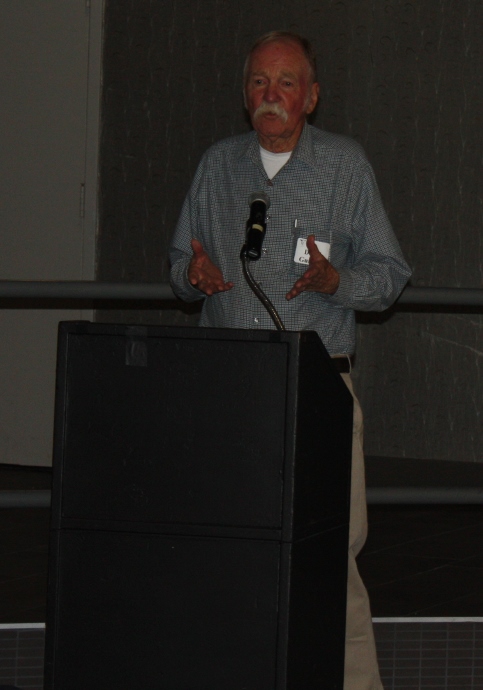
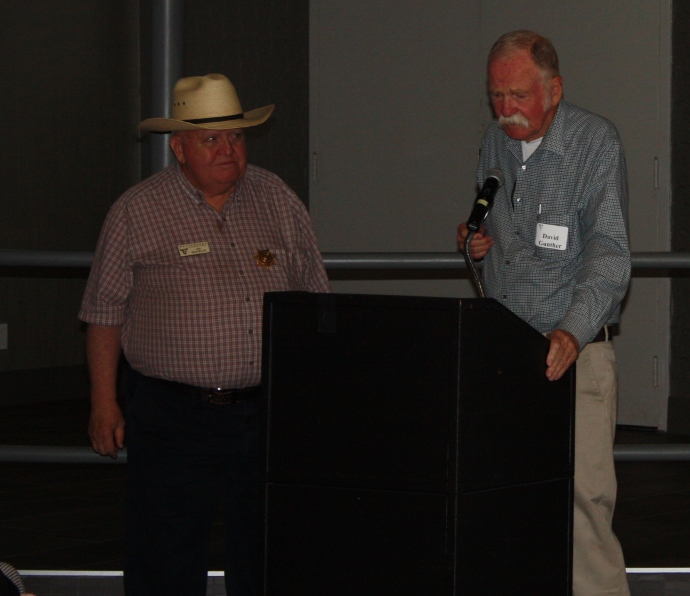
Our Speaker: David R. Gunther, with almost forty years with the Santa Fe Railway and a life-time of travels around the world
His Subject: The Santa Fe Railway
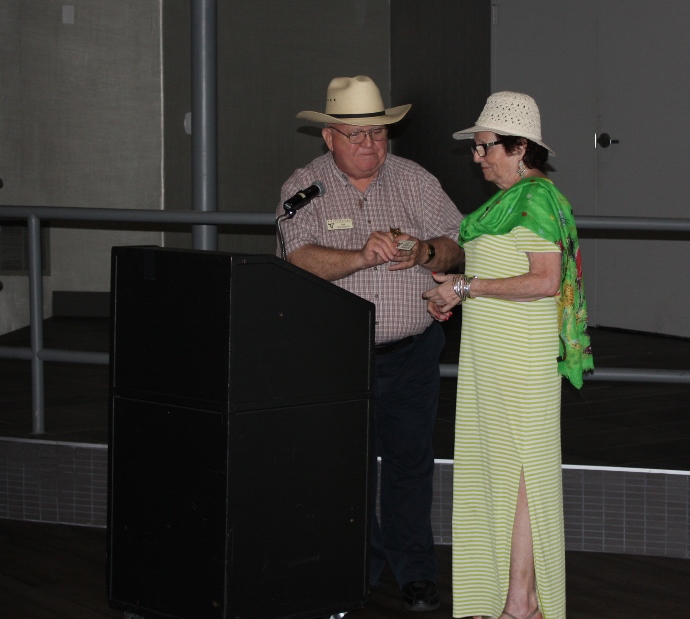
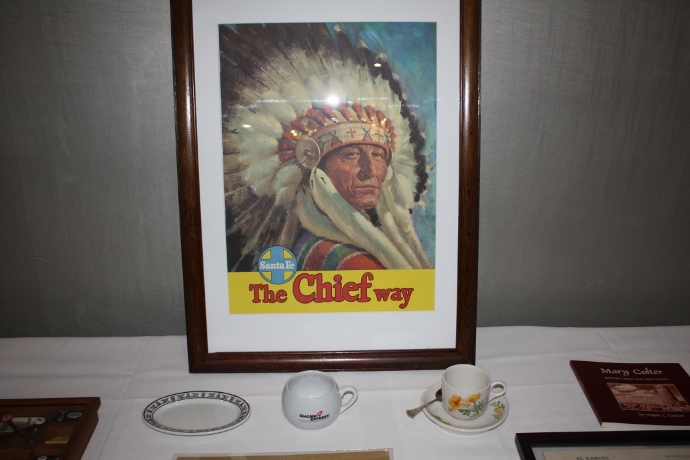
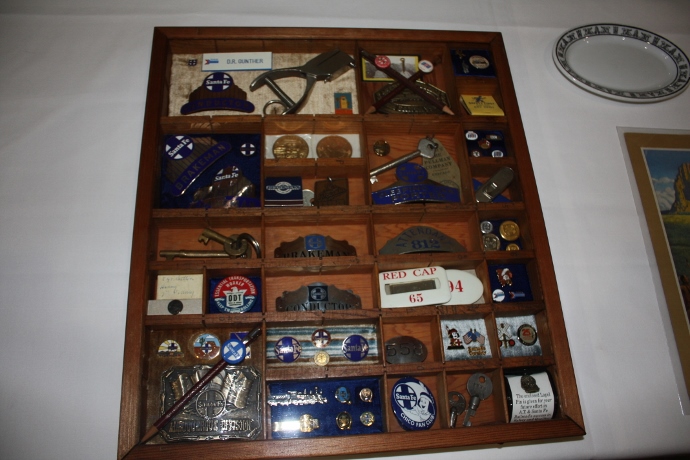
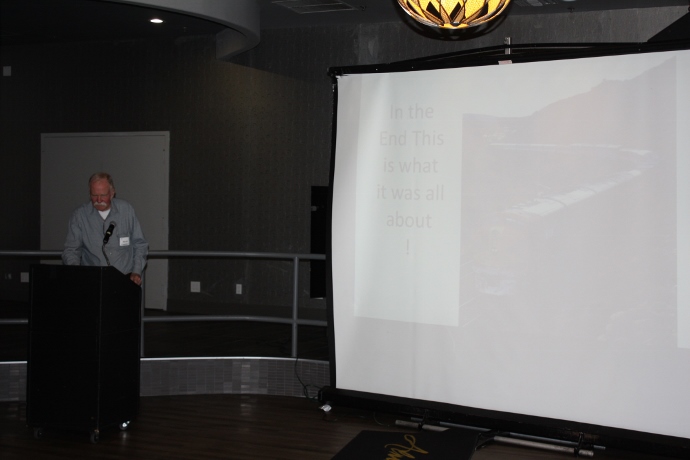
Our speaker will tell us interesting things about the history of the Santa Fe Railway and from his extensive experience with the company, using materials such as passenger train literature, books of instruction, timetables, etc. to illustrate his comments. He will touch on the impact of the rail industry on the development of the American West. I have been told on good authority that David is a bona fide raconteur, so we can expect to be entertained as well as informed by his presentation.
David Gunther has a wealth of experience in management and in operations with the Santa Fe Railway, later merged with the Burlington Northern and now known as the BNSF. In operations, he served as a brakeman, conductor and certified Locomotive Engineer. In management he served, among other positions, as a highly successful educator of railway personnel, achieving extremely high passing rates for students taking qualification exams and very low injury rates for new employees who took his training. He is particularly noted for his work in safety, training and rules.
David has also traveled extensively, once circling the globe in only 46 days and taking exotic trips like driving the Karakoram Highway in Pakistan and China and traveling by rail from St. Petersburg on the Baltic Sea in Europe to Vladivostok in Siberia on the Sea of Japan.
David has also contributed significantly to industry professional organizations and to community not-for-profit organizations. For example, he was a docent at the Autry National Center for eight years and currently serves as President of the Governing Board of the Zamorano Club.
Roundup Synopsis
All aboard for the train out west! For the Westerner’s September 2018 roundup, David Gunther, a former Santa Fe Railroad locomotive engineer, shared his knowledge about railroad memorabilia. Writing in 1908 about the Santa Fe’s route, Charles Fletcher Lummis observed, “There is no railroad in the world…which penetrates such a wonderland of the pictorial in geography and humanity.”
Indeed, Mr. Gunther began the night discussing the visual art that the Santa Fe Railroad inspired. As literal engines of capitalism, railroads sought to create new markets. Railroads thereby hired artists such as Thomas Moran and Louis Akin, whose landscape paintings enticed would-be travelers to the West on the Santa Fe Railroad. For artists, perks of working on railroad advertisements included free transportation (of course), hotel accommodations, and meals. This proved a great success for the railroads. Towns were transformed with the arrival of the iron horse. Albuquerque, a place of scarcely 1,500 people, saw its population increase to 15,000 with the railroad’s arrival. Los Angeles, today a megalopolis, was only a sleepy town of a few thousand in the mid 19th century.
The recurring theme of the Santa Fe’s advertisements was the route’s singular beauty. Works like “Grand Canyon from Hermit Rim Road” by Thomas Moran displayed the untamed glory of the desert landscape, while other works captured the majesty of nature, architecture, and native peoples.
Mr. Gunther continued the night with a discussion about railroad book memorabilia. One of the standout works was Richard White’s Railroaded, which was nominated for a Pulitzer Prize in 2011. Another exciting work was By the Way, which informed travelers about the many different places outside the window along the train’s route.
Mr. Gunther convinced the audience that traveling by train was much more than just a trip from A to B. Riding the Santa Fe resembled a modern-day spa experience. A man could pay $.85 for a shave, $1.35 for a haircut, $1 for a massage, and $.35 for laundry valet services. No discussion about the Santa Fe would be complete without including Fred Harvey, who partnered with the railroad in 1876. His efforts transformed the quality of food that was served on railroad cars. He also built “Harvey House” hotels staffed by “Harvey Girls” along important Santa Fe route stops, catering to the railroad’s patrons. Today, some of the most collectable railroad memorabilia includes Santa Fe Railroad dinner menus (at one point there was a new menu for every single day) and chinaware.
In-house publications were printed by the Santa Fe Railroad for the benefit and recreation of its employees. As employee safety was of paramount importance, “Rules and Regulations” manuals were essential to run trains accident-free. For recreation, employees could turn to the Santa Fe Employee’s Magazine or The Santa Fe Magazine. Mr. Gunther rounded off the night by sharing a picture of his copy of The Little Engine That Could; the following reads on the title page: “This Book Belongs to David Gunther from Larry Jean + Ronnie Lee, Nov. 6, 1944.” The Los Angeles Corral of Westerners thanks Mr. Gunther for his informative talk on a subject so dear to him and fascinating to us.
— Dennis Bermudez
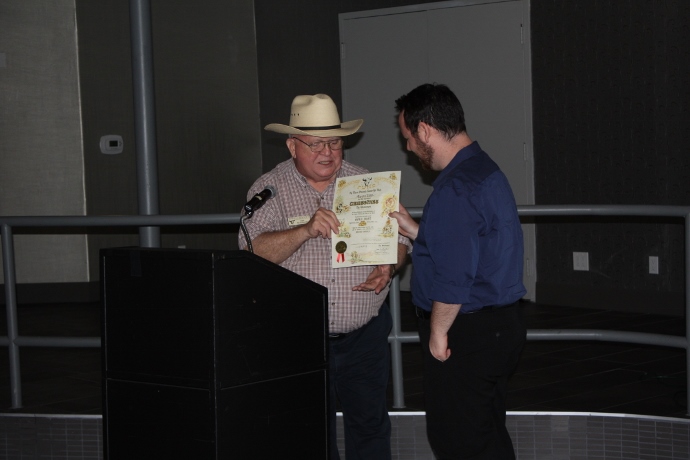
Photos from the Roundup
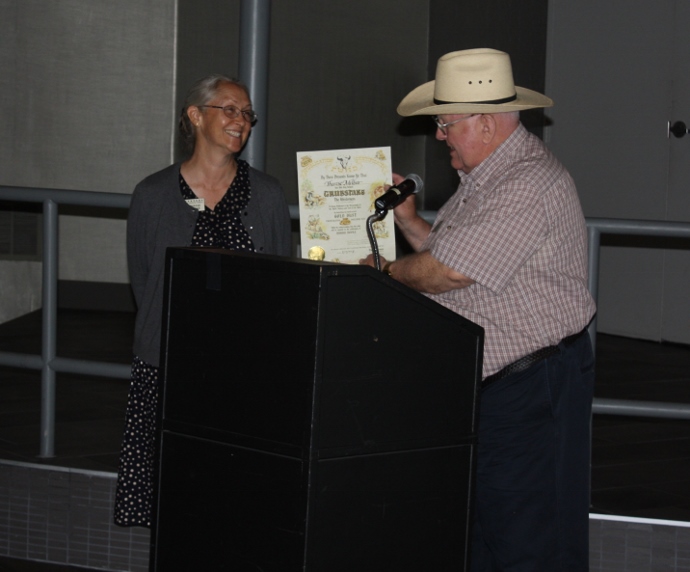
Roundup: August 8, 2018
Our Speaker: Jeff Lapides, a member presenting for the first time since joining the Corral
His Subject: Passage to Eldoardo: The Pioneering Photographs of the Mojave Road by Rudolph d’Heureuse in 1863
GOLD! SILVER! And those seeking their fortunes—at a time of the Civil War, tense relations among white settlers, Hispanics and Native Americans, military exploits, salacious news accounts, greed—and one German immigrant with a camera.
Rudolph d’Heureuse—surveyor, cartographer, civil engineer, mining engineer, oenologist, inventor—who on one momentous journey photographed the Mojave Road in the Desert West from the waters of the Pacific Ocean to the banks of the Colorado River and the mines of Eldorado Canyon in today’s Nevada. His subjects included San Bernardino, Cajon Pass, and Los Angeles’s seaport, New San Pedro (Wilmington). He did it in 1863, many years before anyone else took the next photo of the desert, its environs, miners, travelers, forts, soldiers, watering holes, and crossroads.
Jeff Lapides is a photographer and a book designer for John W. Robinson and other historians. This Roundup presentation will be his first since he joined the Los Angeles Corral in 2016. Jeff is actively involved in the history communities in Sierra Madre, where he lives, and the San Gabriel Valley. Jeff is an award-winning book designer with over 25 years of graphic arts experience. Books that he designed have won several national design awards. He specializes in the preservation and promotion of history. You may find him on occasion at Lizzie’s Trail Inn, in good spirits, supporting the efforts of the Sierra Madre Historical Preservation Society.
Roundup Synopsis
Taken From Branding Iron 291 Summer 2018.
Tonight, our guest speaker was the Corral’s very own, “all-popular” Jeff Lapides, an award-winning book designer who has had over 25 years of extensive graphic arts experience. Jeff spoke of an astounding journey to what he calls “El Dorado.” Not the alleged gold haven in South America, but the mines in California that united the world in travel and excavation. On this night we heard about one man who would experience struggles and obstacles that only few could overcome. Rudolf D’Heureuse was born in Prussia in 1828 and came to adulthood in tumultuous times. Europe in 1848 caught that particularly French infection—revolution—and Prussia was not excepted. The turmoil caused Rudolf to escape on a ship and sail off west, first to London, and then finally to New York. There he heard news of a gold strike in California, and left New York to seek his fortune. He took the fastest and most treacherous route of the time, sailing via Panama. Before the construction of the famous canal, river boats could penetrate 70 miles into the interior, but the final 20 miles to the Pacific had to be crossed by foot through dense jungle. There, Rudolf picked up another ship going north to California. Upon arriving in San Francisco, he had little success in mining gold. After an exhaustive effort at gold mining, he returned to New York where he would later become a naturalized citizen in 1855. Rudolf made one more attempt at gold mining in California, which resulted in failure and bankruptcy. He briefly moved on to Canada, but the allure of California brought him back to San Francisco for a third and final time, where he finally struck pay dirt, but not in gold mining. While in Canada, Rudolf had dedicated himself to photography and architecture. This trade would lead him to acquire business in San Francisco when in 1862, venture capitalists approached him to survey the Colorado River. In this new assignment Rudolf excelled in capturing photos and creating maps of the Mojave Road from Los Angeles to the Colorado River. He took memorable snapshots such as the only known picture of a U.S. Camel Corps dromedary. Army bases were left vacant (save for one lone sentry each “holding the fort”) due to the ensuing Civil War. He also photographed a series of water holes such as Rock Spring, and the mining camp of Lewisville where crews had been segregated based on Northern or Southern loyalties in the “Great Unpleasantness.” At Lewisville, Rudolf practiced his cartographic skills by sketching very precise maps of the canyon and each miner’s claims. Rudolf would later find work in the California Geographical Survey. Finally, he returned to New York where he lived out the rest of his days. Rudolf died unmarried and childless. He remained largely unknown due to his decision to not commercialize his work. We are fortunate to learn of his work and see it well displayed in Jeff’s lecture. We could say this meeting was a “gold-mine” of intellectual nourishment!
— Jovanny Gochez
Photos from the Roundup

Rendezvous 2018 Auction
Art
To view the items included in this year’s art auction, click here.
Books
To view the items included in this year’s book auction, click here.
Roundup: July 11, 2018
Our Speaker: Patrick Burtt, UCLA Graduate Scholar & Westerners Autry Fellow
His Subject: Challenging the Veracity of Gold Rush Era History in California & Nevada
Our speaker is an enrolled member of the Washoe Tribe of Nevada and California (Waší•šiw) and a direct descendent of the Tule River Tribe (Yokut). Mr. Burtt will describe a different perspective on history during the Gold Rush in California and the Nevada Comstock Lode (the Silver Rush). In American history, existing research on the Waší•šiw during that period is dominated by non-Waší•šiw perspectives. This has contributed to the erasure and erosion of the status of the Waší•šiw in United States history. His studies focus on including Waší•šiw perspectives and challenging the veracity of existing California and Nevada history, including white-washing of state-sanctioned genocide. In 1851, California’s last Governor as a territory and first Governor as a state, Peter H. Burnett said, “A war of extermination will continue to be waged between the two races until the Indian race becomes extinct.” The consequences of this thinking and the related actions persist to today.
The ancestral territory of the Waší•šiw encompasses the entirety of what is now referred to as Lake Tahoe and stretching north to Honey Lake, south to Sonora Pass, west to the Sierra Nevada Mountain foothills and east to the Pine Nut Mountains. Presently, the Waší•šiw are made up of approximately 1,550 enrolled tribal members, many located in four communities in what is now Nevada and California.
Patrick Burtt is the Westerners, Los Angeles Corral Autry Fellow for 2018. He recently received his Master of Arts in American Indian Studies at the University of California, Los Angeles (UCLA) and will continue his studies at the University of Nevada, Reno (UNR) towards a doctoral degree through the Department of History this fall. Burtt received a Bachelor of Arts in Native American and Indigenous Studies from Fort Lewis College. He was the Oral Histories Coordinator for a program at the Stewart Indian School by UNR. Patrick has done research for the Washoe Tribe Historic Preservation Office in Gardnerville, Nevada. He has presented papers and participated in panel discussions related to his research at various academic conferences such as the American Indian Studies Association’s Annual Conference. Patrick is currently preparing a report on hate crimes against American Indians for the American Indian Studies Center at UCLA.
Roundup Synopsis
Taken From Branding Iron 291 Summer 2018.
Our speaker at the July meeting was Patrick “Deʔileligi” Burtt, the Corral’s 2018 Fellow at the Autry National Center and a member of the Washoe tribe of Northern California and Western Nevada. In his presentation, “Waší∙šiw Genocide,” Burtt argued that the Washoe should be federally recognized as victims of genocide, defined by the 1948 United Nations Genocide Convention as “acts committed with intent to destroy, in whole or in part, a national, ethnic, racial, or religious group.”¹ While the Washoe were not victims of systematic mass murder like those of the worst crimes the 20th century, Burtt argued that 19thcentury California State policies nevertheless produced similar effects indirectly.
From the beginning of statehood, California law gave whites a “blank check” to victimize and exploit native peoples like the Washoe. One 1850 law disallowed Indians from testifying in court in cases involving white people. Another easily-abused policy fined Indians for “vagrancy” and auctioned off their labor to the highest bidder; once these Indians had worked off their debt, they were usually arrested and fined again, continuing the cycle of debt-servitude.
The majority of Burtt’s talk was devoted to a case study illustrating how such laws had deadly consequences. He recounted a Washoe oral history from Sarah Winnemucca Hopkins’ Life Among the Paiutes about the murders of two white men. The murderers, also white, jammed arrows into the bullet wounds to frame the crime on the local Washoe. News spread of the “Indian attack,” and an angry white mob demanded that the Washoe hand over the murderers. The Washoe men had all been at camp when the murders occurred, but the white men didn’t believe them. Knowing they had no legal recourse and that they could all be killed by the mob if they did not comply, the Washoe produced three volunteers who “confessed” to the deed. They were promptly lynched.
Due to policies and incidents like these, combined with Old World diseases, the Washoe pre-contact population declined from around 1500 at the beginning of the 19th century to less than 300 by 1907. To pursue the recognition of this demographic catastrophe as a genocide, Burtt intends to expand his research to the Autry Museum and the Nevada State Library and Archives. Federal recognition and restitution await more academic debate, and of course, a great deal of politics. The Westerners thank Mr. Burtt for his presentation and wish him luck in his efforts on behalf of the Washoe.
— Aaron Tate
Photos from the Roundup
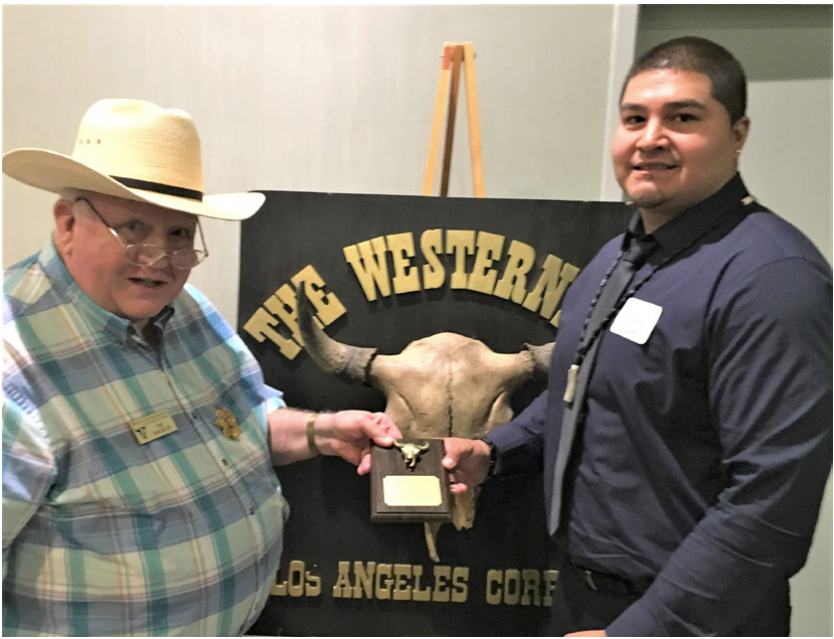
Los Angeles Corral of Westerners
Welcome to the online home of the Los Angeles Corral of Westerners. We invite you to browse our site, learn more about our organization, and even consider joining us.